Hickory Firewood Guide: High Heat & Flavor for Cooking
Explore hickory firewood guide and benefits for heating and BBQ. Learn heat output, burn characteristics, and proper seasoning tips for smokers & stoves.
There is something deeply satisfying about building a real wood fire. If you are stacking logs into a wood stove to keep your living room warm on a freezing January night, or dialing in the airflow on your backyard smoker, the wood you choose changes absolutely everything.
If you have been burning wood for any length of time, you will eventually find your way to hickory.
At 12 Point Farms LLC, folks ask us all the time: is hickory good firewood? The short answer is yes—in fact, it is easily one of the best hardwoods on the planet.
From its massive heat output to the rich, distinct aroma it kicks out into the neighborhood, premium hickory hardwood firewood is the gold standard for both heating your home and cooking great food.
Let’s break down exactly what makes this dense wood so special, how it performs in the fireplace and the smoker, and why it deserves a prime spot in your woodpile this season.
What is Hickory Wood Good For?
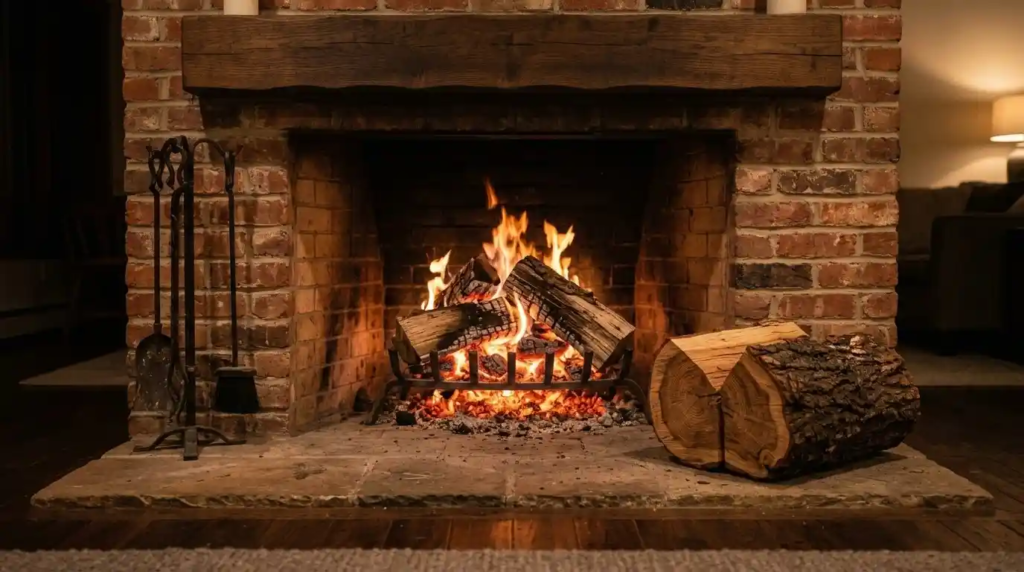
If you look at the raw physics of a piece of hickory, it is easy to see why it is so highly prized. It is incredibly dense, heavy, and packed to the brim with raw energy.
When it is seasoned properly, a single cord of hickory provides an immense amount of heat, outperforming almost every other North American wood species.
Because it is so versatile, the most common hickory firewood uses usually boil down to two main things:
- Keeping the House Warm: It is an exceptional choice for wood stoves, fireplaces, and outdoor boilers because it burns hot and leaves behind a spectacular, long-lasting coal bed.
- Backyard BBQ: Hickory is world-famous in the culinary world. It is the definitive choice for classic, traditional American smoking, offering a bold, distinct flavor profile that pairs beautifully with heavy meats.
The Real Burn Characteristics of Hickory Wood
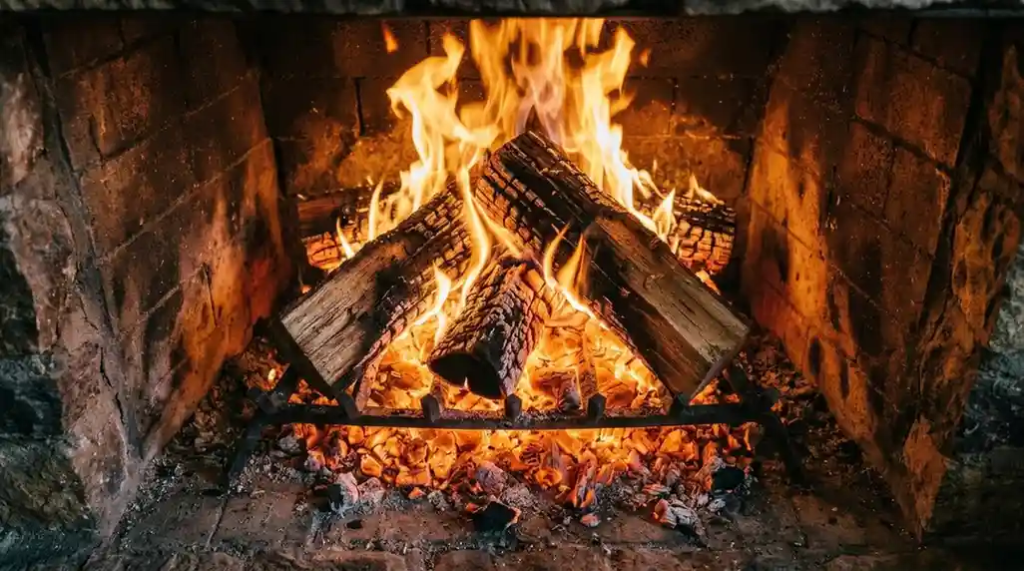
To appreciate the true hickory firewood benefits, you have to look at how it behaves once you light it up. In the wood-burning world, energy is measured in British Thermal Units (BTUs). The higher the BTU rating, the more heat the wood throws per log.
| Wood Characteristic | How It Performs | Why It Matters to You |
| Heat Output | ~27.7 Million BTUs/Cord | Maximum warmth with fewer trips out to the woodpile. |
| Burn Time | Exceptionally Long | High density means it burns low, slow, and steady. |
| Coal Bed | Heavy and Glowing | Keeps the firebox hot overnight for easy morning restarts. |
| Smoke & Sparks | Minimal (When Dry) | Clean burn with very few dangerous pops or flying sparks. |
Hickory boasts an incredible heat value of roughly 27.7 million BTUs per cord. To put that into perspective, burning a single cord of dry hickory gives you roughly the same amount of heat as burning 200 gallons of heating oil.
Because of these heavy-duty traits, choosing hickory firewood for heating is a total no-brainer.
When you load up a wood stove with seasoned hickory before bed, you can sleep soundly knowing you will wake up to a warm house and a thick bed of glowing red embers ready to ignite the next morning’s logs.
Hickory Firewood vs Oak: The Ultimate Heavyweight Matchup
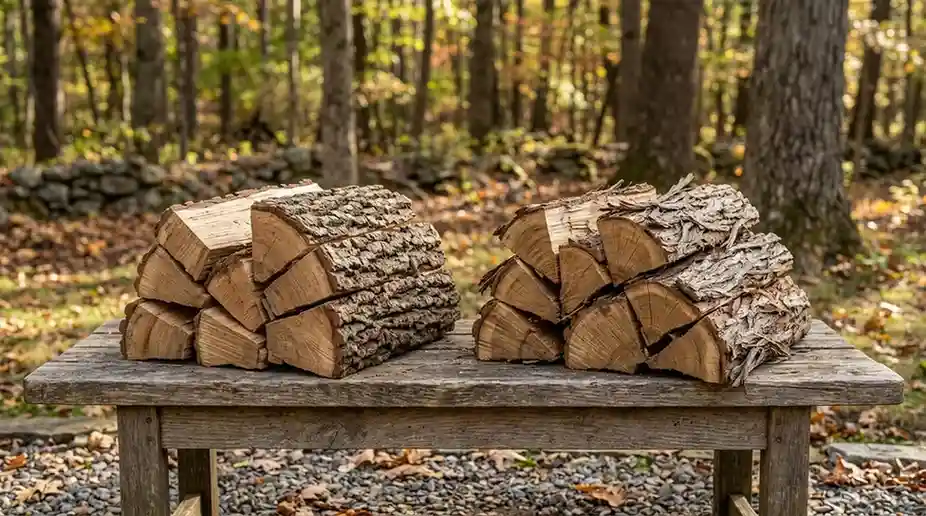
When people are shopping around for high-quality firewood, the debate almost always comes down to two choices: hickory firewood vs oak.
Both are spectacular hardwoods, but they have subtle differences that might make you choose one over the other depending on what you’re trying to do.
- Raw Heat: While high-quality white oak sits at a respectable 25.7 million BTUs per cord, hickory edges it out at 27.7 million. If raw, intense heat output is your top priority, hickory takes the crown.
- The Splitting and Seasoning: Oak is generally a bit easier to split by hand and dries out slightly faster. Hickory is notoriously stubborn to split because of its tight, interlocking grain, and it needs a solid 12 to 18 months of drying time to bring its moisture content down to where it needs to be.
- Aroma and Flavor: Oak provides a great, neutral, baseline heat and a very mild smoke. Hickory, on the other hand, fills the air with a rich, sweet, dynamic aroma that you can smell from blocks away.
For general, all-winter heating, a lot of folks love to mix the two—using oak for everyday warmth and saving the premium hickory for the coldest snaps of winter or for weekend cooking sessions.
Smoking and Grilling: Hickory Wood for BBQ
While it is an absolute beast in a heating stove, hickory is arguably most famous when it is placed under a rack of ribs or a beef brisket.
Using hickory wood for BBQ is a tradition deeply rooted in Southern and Midwestern styles of cooking.
Our Favorite Food Pairings for Hickory:
- Pork Shoulder & Ribs: The absolute classic pairing. The natural sweetness of pork cuts through the heavy smoke beautifully.
- Beef Brisket: Hickory holds up perfectly against heavy beef fats and coarse pepper rubs.
- Whole Chickens & Turkeys: Gives poultry a gorgeous mahogany color and a deeply savory, rich skin.
Quick Pitmaster Tip: Because hickory smoke is incredibly powerful, a little goes a long way. If you are new to cooking with it, try mixing it 50/50 with a milder wood like oak or apple.
This gives you the intense heat and clean burn of hickory, but ensures the flavor profile won’t accidentally overwhelm a delicate cut of meat.
Three Golden Rules for Burning Hickory Wood
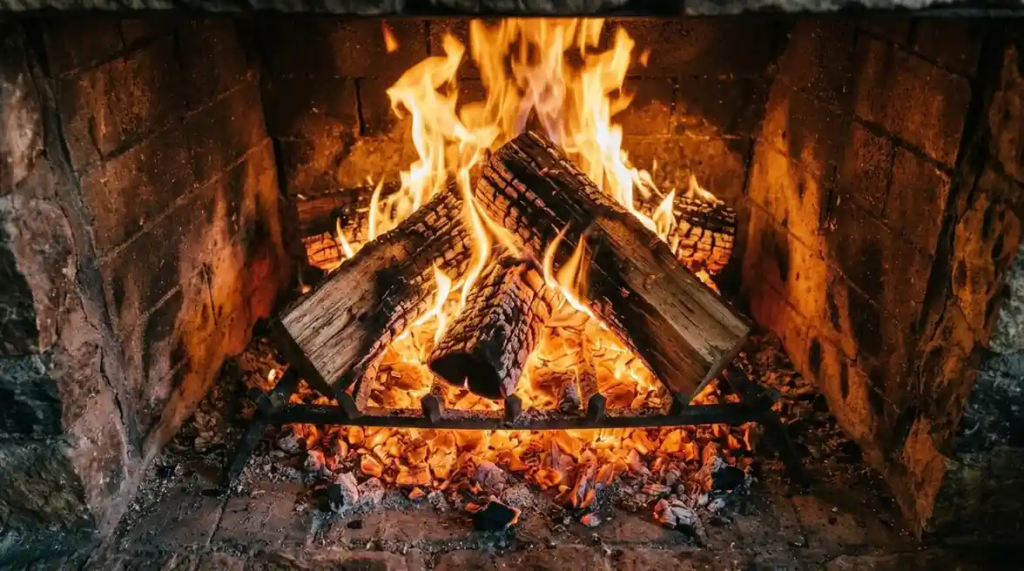
To get the most out of your logs without any of the frustration, keep these simple tips in mind:
1. Never Burn It Wet
Because hickory is so incredibly dense, it holds onto its internal moisture like a sponge. Burning green or unseasoned hickory is a recipe for a headache.
It will hiss, bubble, struggle to stay lit, and create a lot of messy creosote buildup in your chimney. Always make sure your wood is properly seasoned to under 20% moisture before throwing it on the fire.
2. Keep It Off the Dirt
Stack your hickory up on pallets or a dedicated wood rack, with the top covered to shield it from rain and snow, but keep the sides open to the breeze.
Good airflow is everything when it comes to keeping this heavy hardwood dry and ready to burn.
3. Give It Plenty of Air to Start
When you first light up a piece of hickory, it takes a bit more coaxing to get going compared to softwoods like pine or birch.
Use plenty of dry kindling and leave your stove’s air vents wide open until the logs fully catch. Once hickory gets going, its density creates a self-sustaining fire that requires almost no maintenance.
Why Get Your Wood from 12 Point Farms LLC?
At 12 Point Farms LLC, we take pride in sourcing, splitting, and supplying premium hardwood firewood that handles your toughest winter nights and your longest weekend cooks.
We know the difference between mediocre wood and premium fuel, and we make sure our wood is cut, split, and handled to deliver maximum heat and incredibly clean smoke.
Whether you need a steady supply of hickory hardwood firewood to keep your family cozy all winter long, or you’re just looking for a bundle of clean-burning logs for your backyard smoker, we’ve got your back.
Don’t settle for fast-burning softwoods or mystery wood piles that leave you with a cold house and a bitter taste. Invest in the strength, longevity, and incredible aroma of premium American hickory.
Frequently Asked Questions
Is hickory okay to use in an indoor open fireplace?
Absolutely. Hickory is excellent for indoor fireplaces because it burns very clean and doesn’t pop or throw wild sparks as softwoods do.
Just keep in mind that it puts out a ton of heat, so start with just a couple of logs until you see how your fireplace handles it.
How can I tell if my logs are actually seasoned?
Look at the ends of the logs—you should see deep cracks or “checks” spreading across the grain.
Seasoned hickory also turns a lighter, weathered gray color compared to the bright cream color of freshly cut wood. Finally, smack two logs together; if they make a sharp, hollow “clinking” sound like a baseball bat, they’re dry. If they make a dull, wet thud, they need more time.
Can I use hickory to cook delicate things like fish or veggies?
You can, but be careful with your portions. Because fish and vegetables absorb smoke flavor incredibly fast, heavy hickory smoke can overwhelm them quickly and leave a bitter taste.
For seafood or greens, we usually recommend sticking to milder fruitwoods, or using just a tiny piece of hickory alongside a bed of regular charcoal.
Does burning hickory create a lot of chimney buildup?
If it is fully dry, hickory burns incredibly hot and clean, leaving very little creosote behind.
However, if you try to burn wet or unseasoned hickory, the fire temperature drops, causing unburnt gases to smoke and condense inside your chimney. As long as your wood is dry, your chimney will stay in great shape.
Ready to Stock Up Your Woodpile?
Get in touch with the team at 12 Point Farms LLC today. Let us know what you’re burning for—whether it’s home heating or a weekend cookout—and we will help you get the perfect batch of seasoned hardwood firewood delivered straight to your door.