
Cherry Firewood for Cooking: Best Flavor & BBQ Use 2026-27
Cherry Firewood for Cooking delivers a mild, sweet smoke with a signature reddish tint, best for pork, poultry, and fish — 12 Point Farms LLC breaks down flavor, BTU, and best pairings here.
Cherry wood is a favorite among grillers and smokers for one simple reason: it delivers big flavor without overpowering whatever’s on the grate. Its mild and slightly smoky flavor pairs well with almost anything and leaves meat with its signature red mahogany tint.
If you’re wondering whether cherry firewood for cooking is worth adding to your wood rotation, this guide explains its flavor profile, heat output, best food pairings, and how it stacks up against heavier-hitting hardwoods like oak and hickory.
What Makes Cherry Firewood Unique
Here are the characteristics that make cherry firewood unique in its own way.
- Fruitwood category: Cherry belongs to the same family as apple and peach. This gives it a naturally milder character than dense forest hardwoods
- Moderately dense: It burns hotter and longer than most fruitwood, but still lighter than oak or hickory.
- Mild, sweet aromatic profile: It has a subtle smoke that makes it easy to pair with a wide variety of food.
- Signature color: Imparts a deep reddish-mahogany hue to smoked meats, a visual cue experienced pitmasters look for.
- Versatile cooking firewood: It works well on its own or blended with stronger woods to round out any harsh smoke flavors.
Heat Output and Burn Performance
Cherry firewood produces moderate heat output, enough to hold its own for most cooking uses. However, it is noticeably less than denser hardwood types like oak and hickory. Here’s how:
| Species | BTU per Cord (20% MC) | Heat Tier |
| Black cherry | ~20.5 million | Moderate |
| Black locust | ~28.3 million | Top-tier |
| White oak | ~27.9 million | High |
| Sugar maple | ~25.9 million | High |
| Red oak | ~25.9 million | High |
| Ash | ~24.6 million | Mid-to-upper |
| Hickory | ~29.3 millionTop-tier | Top-tier |
| Sycamore | ~20.2 million | Moderate |
Best Foods for Cherry Firewood
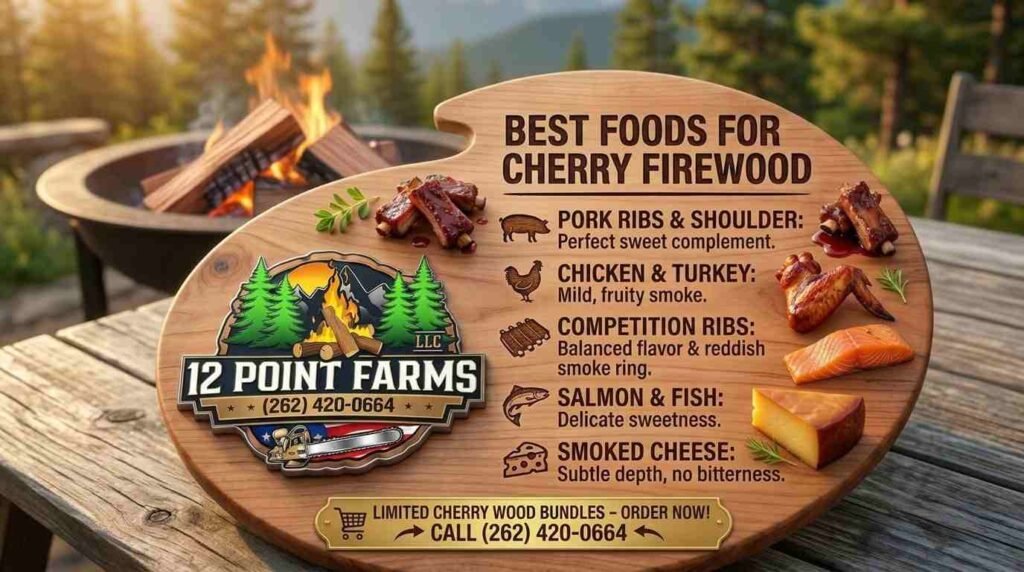
Here is a list of the top foods you can pair with cherry firewood:
- Pork: ribs, shoulder, and chops all take well to cherry’s sweetness, which complements pork’s natural richness
- Poultry: chicken and turkey pick up a mild, fruity smoke without getting overpowered
- Ribs: a favorite among BBQ competitors for the reddish smoke ring and balanced flavor it produces
- Salmon and other fish: the delicate sweetness pairs well with fish without masking its natural flavor
- Cheese: cold-smoking cheese with cherry wood adds subtle depth without bitterness
- Why it’s a competition favorite: its mild profile makes it hard to overdo, even for less experienced pitmasters
Best Uses: BBQ & Smoking & Pizza Ovens

- Perfect for low and slow cooking: cherry’s steady, low burn works well for extended smoking sessions rather than quick high heat grilling.
- Chunks and chips over splits: for smoking, it’s used in chunks and chips form added to gas setups or charcoals.
- Split works for dedicated smokers: offset smokers and stick-burners can use cherry splits as a supplemental or primary wood, especially blended with a hotter base wood
- Blending ratios: a common approach is 1 part cherry to 2–3 parts oak or hickory, letting cherry add color and sweetness without dominating the smoke profile
- Good starter smoking wood: its subtle, smoky flavor makes it a safe choice for those new to wood-fired cooking who want to avoid over-smoking.
- Pizza oven (use with caution): Cherry’s lower BTU output means it burns lower than other denser hardwoods that most pizza ovens are calibrated for. Blending it with oak or hickory would work well, as it can struggle to reach or hold ideal baking temperatures on its own.
- Best as a flavor accent in a pizza oven: As mentioned above, mixing a small amount of cherry with a hotter primary firewood adds a subtle sweetness to the smoke without sacrificing oven temperature
Hardwood Comparison Table
Cherry firewood sits at the milder, lower-BTU end of this lineup. This means it won’t bring the same bold, smoky punch as hickory or the sustained heat of oak. But that’s exactly its appeal.
| Species | BTU per Cord | Flavor Intensity | Best Use Case |
| Cherry | ~20.0 million | Mild, fruity-sweet | Poultry, pork, fish, blending |
| White oak | ~25.7 million | Medium, earthy | All-purpose smoking, pizza ovens |
| Apple | ~26.5 million | Mild, sweet | Pork, poultry, long smokes |
| Hickory | ~27.7 million | Strong, bacon-like | Beef, ribs, bold BBQ |
Cherry is easy to pair with almost anything without overwhelming the food, which is why it’s so often used as an accent wood blended with a hotter, more assertive species rather than as a standalone fuel for high-heat or extended cooks.
Seasoning Requirements
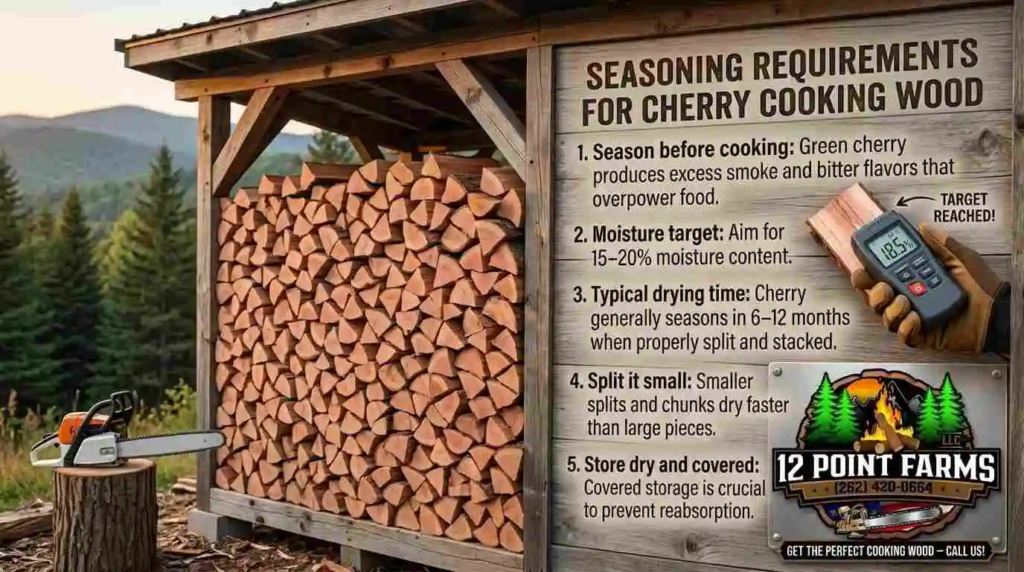
- Season before cooking: green or unseasoned cherry produces excess smoke and bitter, acrid flavors that overpower food
- Moisture target: aim for 15–20% moisture content before using cherry for cooking or smoking
- Typical drying time: cherry generally seasons in 6–12 months when split and stacked properly, similar to other moderate-density hardwoods
- Split it small: smaller splits and chunks dry faster than large pieces, which matters more for cooking wood than heating wood
- Store dry and covered: moisture reabsorption from rain or humidity can undo months of seasoning, so proper covered storage matters especially for cooking-grade wood
Cooking Safety Tips
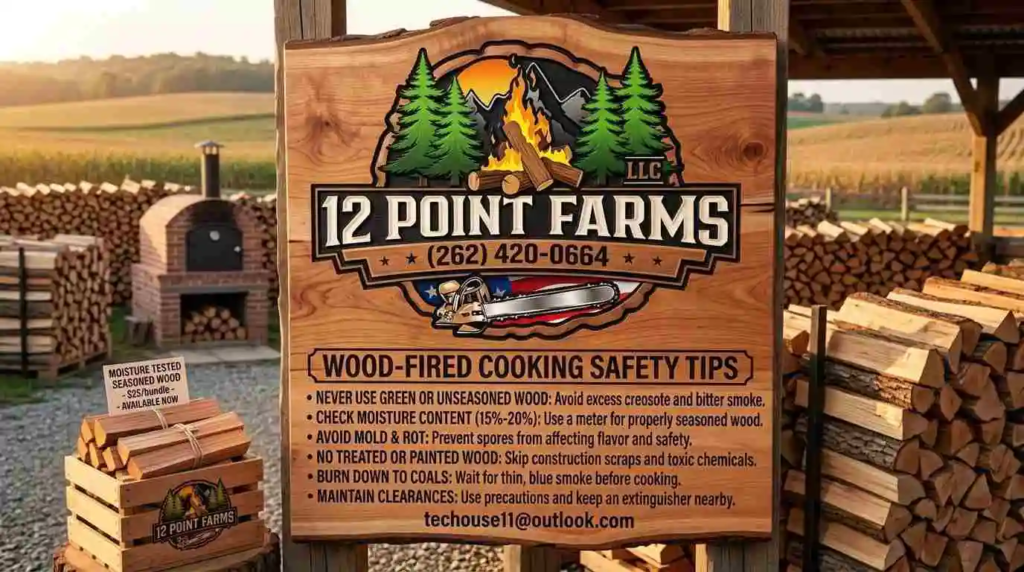
- Never cook with green or unseasoned wood: it produces excess creosote and bitter, acrid smoke. This can ruin food and create a fire/chimney hazard in enclosed cooking spaces.
- Check moisture content before use: A moisture meter reading of 15% – 20% indicates that the wood is properly seasoned and safe to burn.
- Avoid wood with mold or rot: Mold or punky wood releases spores into the smoke, which can affect both the flavor and safety of food.
- Skip painted, treated, or reclaimed wood: Only use cherry that is sourced specifically as firewood or cooking wood. Construction pallets or scraps may contain toxic chemicals.
- Let the fire burn down to coals or clean smoke: thick, white or black smoke means incomplete combustion. Always wait for thin, blue smoke before adding food.
- Keep proper clearance and a fire extinguisher nearby: standard precautions apply for any wood-fired grill, smoker, or pizza oven.
Common Mistakes
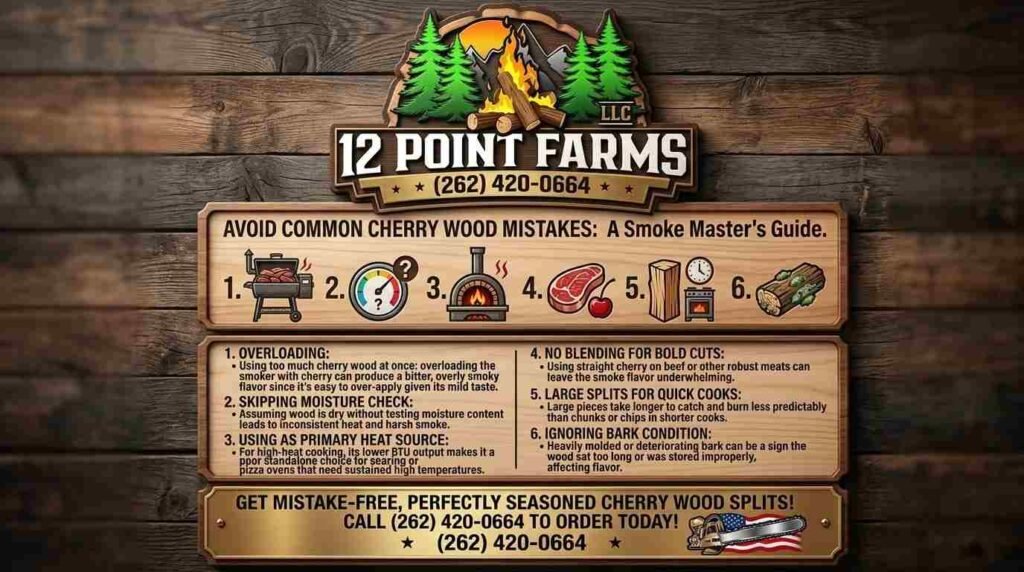
- Using too much cherry wood at once: overloading the smoker with cherry can produce a bitter, overly smoky flavor since it’s easy to over-apply given its mild taste
- Skipping the seasoning check: assuming wood is dry without testing moisture content leads to inconsistent heat and harsh smoke
- Treating cherry like a primary heat source: for high-heat cooking, its lower BTU output makes it a poor standalone choice for searing or pizza ovens that need sustained high temperatures
- Not blending with a stronger wood for bold cuts: using straight cherry on beef or other robust meats can leave the smoke flavor underwhelming
- Using large splits for quick smoking sessions: big pieces take longer to catch and burn less predictably than chunks or chips in shorter cooks
- Ignoring bark condition: heavily molded or deteriorating bark can be a sign the wood sat too long or was stored improperly, affecting flavor.
Expert Recommendations
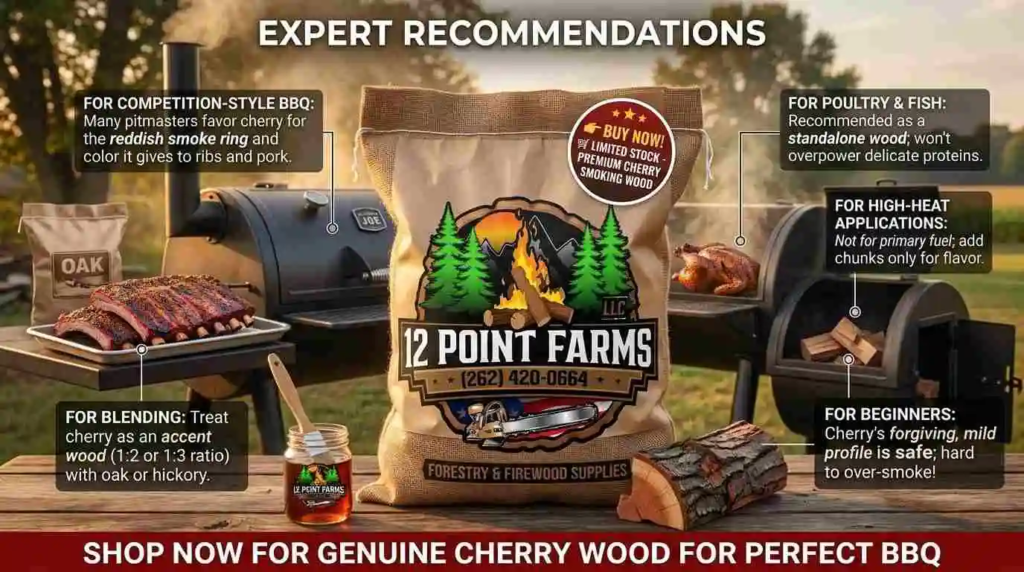
- For beginners: cherry’s forgiving, mild profile makes it one of the safest woods to experiment with; it’s hard to over-smoke food to the point of ruining it
- For competition-style BBQ: many pitmasters favor cherry specifically for the reddish smoke ring and color it gives to ribs and pork, alongside its balanced flavor
- For blending: pros often treat cherry as a “finishing” or accent wood, using it at a 1:2 or 1:3 ratio with oak or hickory to round out a bolder base smoke
- For poultry and fish: recommended as a standalone wood, since these proteins are delicate enough that a bolder smoke would overpower them
- For high-heat applications: not recommended as a primary fuel; pair it with a hotter wood or use a dedicated heat source and add cherry chunks only for flavor.
FAQs – cherry firewood for cooking
Is cherry firewood good for cooking?
Yes. Its mild, sweet smoke pairs well with a wide range of foods and is especially forgiving for beginners.
What does cherry wood taste like when smoking?
Mildly sweet and fruity, with a subtler profile than hickory or mesquite.
Is cherry wood good for grilling?
Yes, though it’s better suited to smoking and low-heat cooking than high-heat searing.
What foods pair best with cherry wood smoke?
Pork, poultry, fish, and cheese all pair well with its mild, sweet flavor.
Can I use cherry wood in a pizza oven?
Only as an accent wood. Its lower BTU output can’t sustain the high heat pizza ovens need on its own.
How does cherry compare to hickory or oak?
Cherry is milder in flavor and lower in BTU output than both, making it better for delicate proteins than high-heat cooking.
Does cherry firewood need seasoning?
Yes, 6 to 12 months of proper seasoning is typical before it’s ready to use.
Can I mix cherry wood with other woods?
Yes, and it’s often recommended. Blending with oak or hickory balances flavor and heat output.
Conclusion
Cherry firewood earns its place in any cook’s wood rotation thanks to its mild, sweet smoke and forgiving nature.
While it’s not the wood to reach for when you need serious heat, it’s hard to beat for adding color and flavor to pork, poultry, and fish.
Ready to start smoking? 12 Point Farms LLC offers properly seasoned cherry firewood ready for your next cook.