Maple Firewood Qualities: Best Heat & Aroma Guide 2026-27
Maple firewood qualities include solid density, long burn time, and a sweet aroma that sets it apart from other hardwoods — 12 Point Farms LLC breaks down heat output, seasoning, and more here.
If you’ve ever stood near a fire and caught a faint, sweet smell mixed in with the woodsmoke, there’s a good chance maple firewood was doing the work.
It’s one of those firewoods that quietly checks every box: solid heat, a burn that lasts, and a smell that makes the whole experience feel a little more special.
In this guide, we’re breaking down the real maple firewood qualities that make it such a popular choice: heat output, burn time, moisture behavior, how it stacks up against other hardwoods, and how to get the most out of it whether you’re using a fireplace or a wood stove.
What Makes Maple Firewood Stand Out?
Maple sits in a bit of a sweet spot among firewoods. It’s dense enough to burn hot and slow, but not so dense that it’s a hassle to season or split.
The core maple firewood characteristics that stand out:
- Solid density: burns hotter and longer than softer woods like pine or spruce
- Clean, consistent burn: doesn’t tend to spark or pop excessively
- Noticeable sweet aroma: subtle but distinct, especially compared to the sharper smell of woods like pine
- Reasonable splitting difficulty: easier to split than something like elm, but still firm enough to hold together while seasoning
Basically, it’s a wood that performs well without asking a lot in return — which is a big part of why it’s such a common go-to when deciding on the best wood for firewood.
Is Maple Good Firewood? Answering the Big Question
Maple is a hardwood, which already puts it ahead of softwoods like pine, cedar, or fir when it comes to sustained heat and burn quality.
Maple hardwood firewood burns denser and slower than softwoods, which means fewer trips out to reload the stove and a more consistent temperature throughout the burn.
Softwoods tend to burn fast and hot upfront, then fade quickly, while maple holds a steadier line.
That said, “good firewood” also depends on how it’s seasoned. Even the best hardwood burns poorly if it’s cut too green, which we’ll get into shortly.
Maple Firewood Heat Output & Burn Time
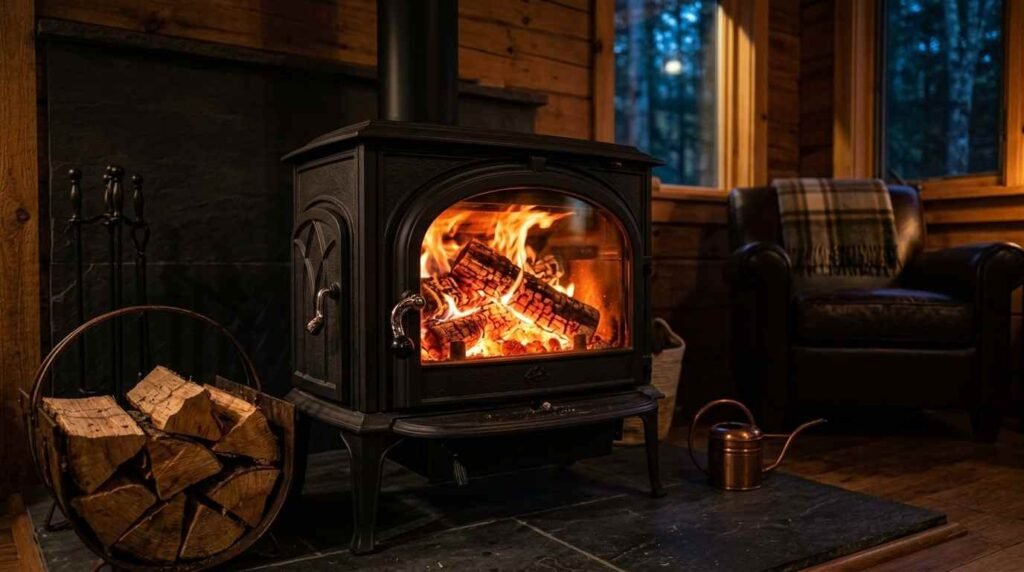
This is the factor that earns maple its reputation. Here’s a breakdown:
Maple firewood heat output typically falls in the 24–27 million BTUs per cord range, depending on the specific maple variety (sugar maple runs a tad bit hotter than red or silver maple).
That places it comfortably in the “solid mid-to-upper tier” of common firewoods — hotter than ash or birch, though still a step behind something like oak or hickory.
As for maple firewood burn time, its density means logs burn down more slowly than softwoods, giving you longer stretches of heat per load. This makes it a strong pick for:
- Overnight burns in a wood stove, where you want heat that lasts without constant reloading
- Extended evening fires where you don’t want to babysit the flame every 30 minutes
For most households, that combination of solid heat and longer burn time is exactly what makes maple such a practical everyday firewood.
Maple Firewood Moisture Content & Seasoning
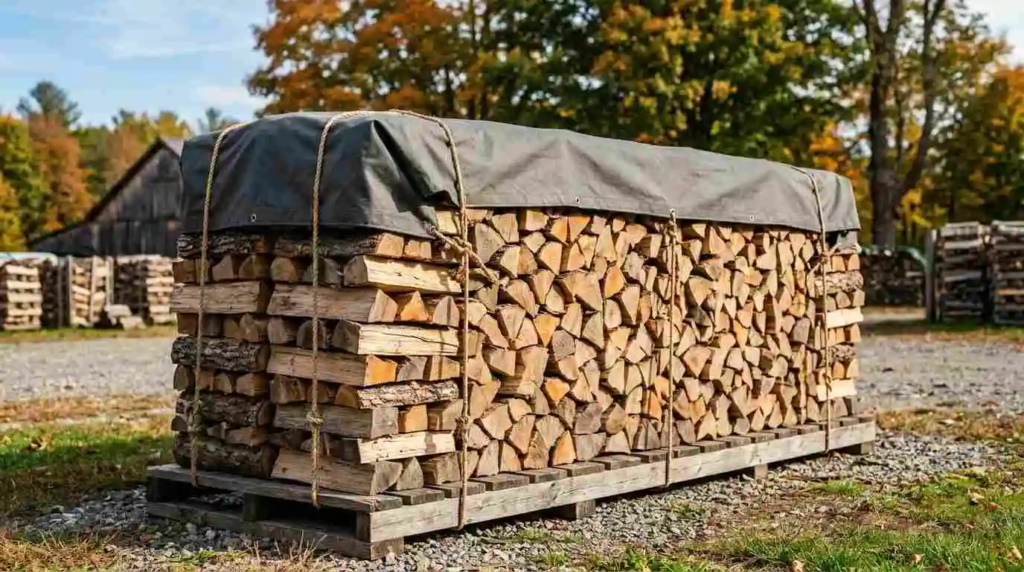
Moisture content might be the single most important factor in how well any firewood performs — maple included.
Ideal maple firewood fireplace for burning sits around 20% or lower. Freshly cut (“green”) maple can start well above 50% moisture, which means it needs proper time to season before it’s ready to burn efficiently. For more details on checking your wood, refer to our comprehensive firewood moisture contenft guide.
Burning wood that’s too wet causes a handful of problems:
- More smoke, less heat
- Creosote buildup in chimneys and flues (a real fire hazard over time)
- A weaker, less consistent burn overall
Maple typically needs 6 months to a year of proper seasoning — split, stacked, and covered — to reach that ideal moisture range.
This is exactly why sourcing from a supplier who properly seasons their wood matters so much; even great firewood underperforms badly if it hasn’t had the time (or conditions) to dry out correctly.
Maple Firewood for Fireplaces vs. Wood Stoves
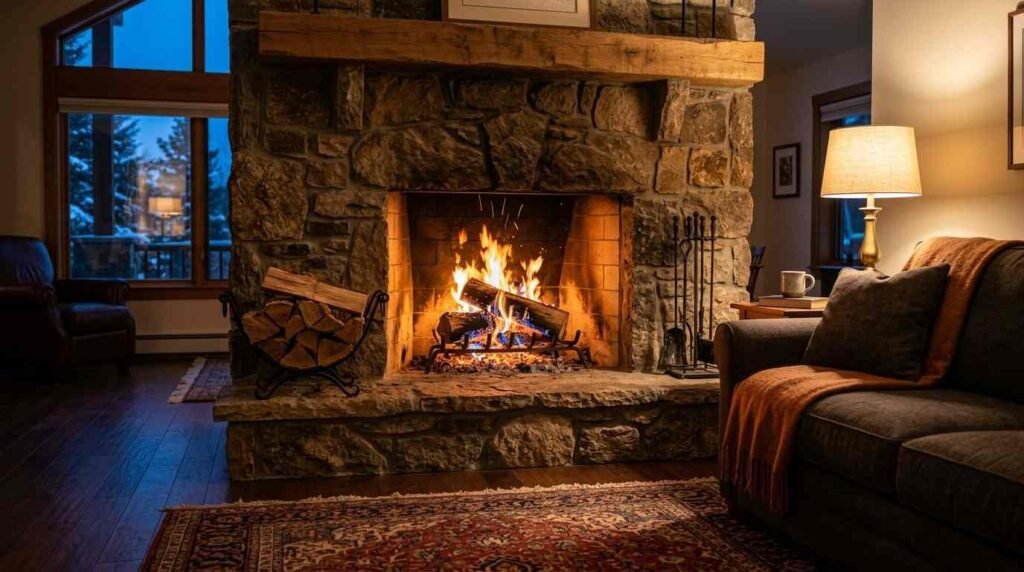
Maple performs well in both settings, though the experience differs slightly.
Maple firewood for fireplaces
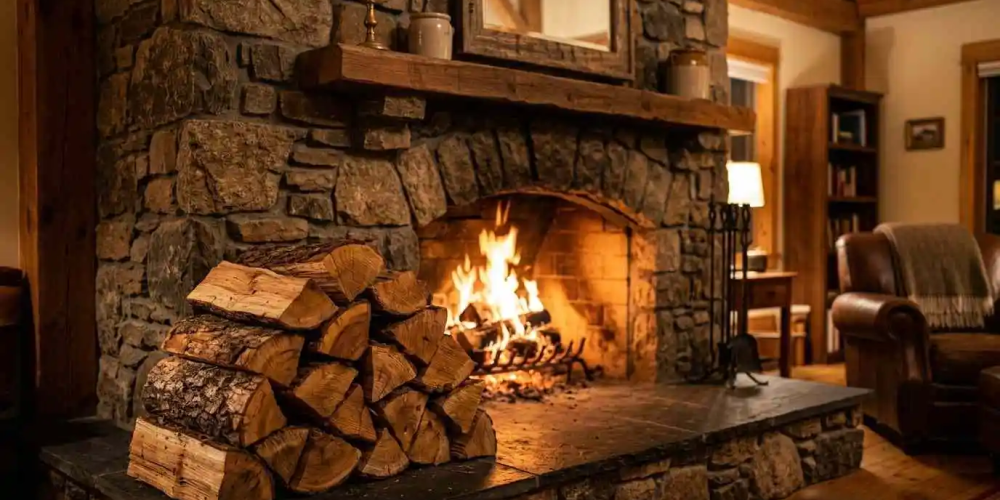
The open airflow of a traditional fireplace lets that sweet aroma really come through, making maple a popular choice of firewood for indoor fireplaces for ambiance-focused fires, think holiday gatherings or a relaxed evening at home.
Maple firewood for wood stoves
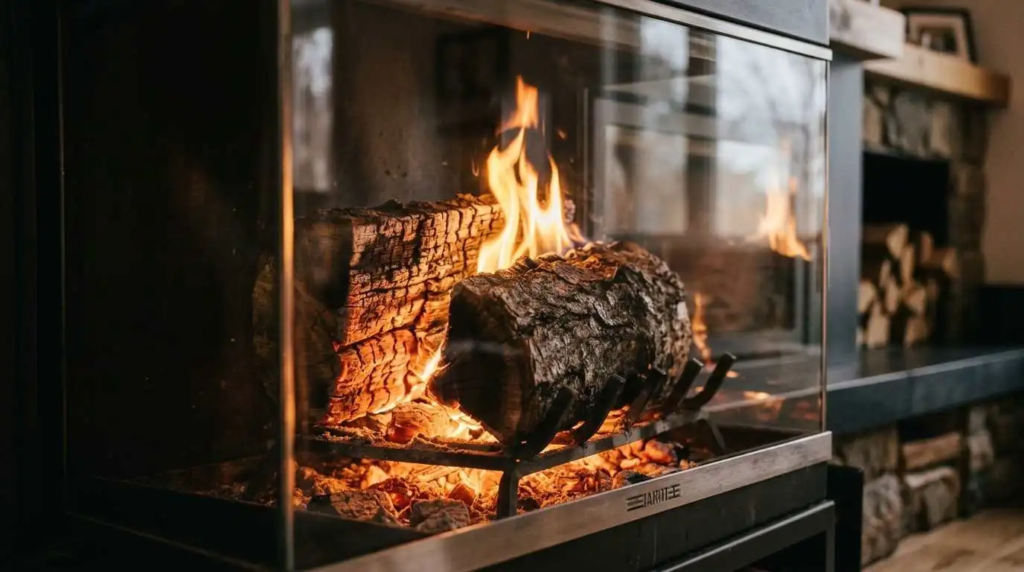
In a closed-combustion setup, selecting high-quality firewood for wood stove use makes maple’s longer burn time a massive advantage. The steady, sustained heat output works well for keeping a home warm over extended periods, especially overnight.
Either way, well-seasoned maple tends to deliver a clean, manageable burn — which is a big part of why it works across such a wide range of setups.
Maple Firewood Pros and Cons
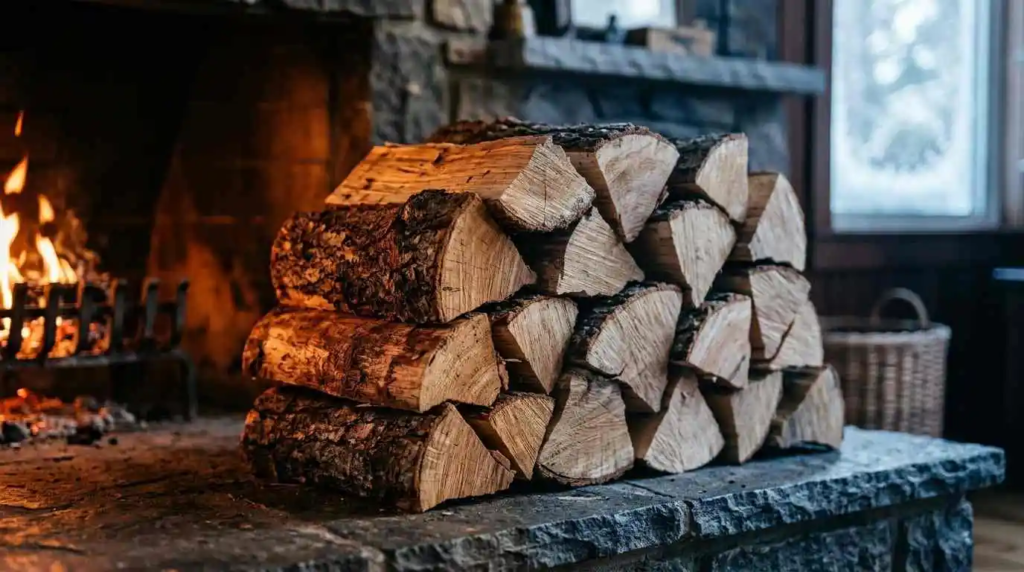
No firewood is perfect for every situation, so here’s an honest breakdown of maple firewood pros and cons:
Pros
- Strong heat output. Solidly mid-to-upper tier among common firewoods
- Long burn time, good for overnight stove use
- Pleasant, mild sweet aroma that isn’t overpowering
- Splits more easily than denser hardwoods like oak or elm
- Widely available in most regions with hardwood forests
Cons
- Takes longer to season than softwoods (6 months to a year)
- Costs more than softwood options like pine, due to demand and density
- Not quite as hot or long-burning as top-tier hardwoods like oak or hickory
- Performance drops noticeably if it isn’t fully seasoned
Overall, the pros stack up well against the cons for most everyday burning needs; the main thing to watch for is proper seasoning, which is really more about the supplier than the wood itself.
Maple vs. Oak Firewood
Oak is considered the gold standard of firewood, so it is only natural to compare the two:
| Qualities | Maple Firewood | Oak Firewood |
| Burn time | Long | Longer than maple |
| Heat output | -24-27 million BTU/cord | -26-30 million BTU/cord |
| Aroma | Sweet and mild | Neutral and mild smoke smell |
| Seasoning time | 6 – 12 months | 12 – 24 months |
| Splitting difficulty | Easy | Hard |
The takeaway: maple vs oak firewood comes down to patience versus performance. Oak burns slightly hotter and longer, but takes considerably more time to season properly.
Maple, on the other hand, offers a faster turnaround and easier splitting, while still delivering strong, reliable heat, making it a more practical choice for many households.
Maple vs. Birch Firewood
Birch is another popular option, especially known for its appearance and easy-lighting bark.
| Qualities | Maple Firewood | Birch Firewood |
| Burn time | Long | Shorter, burns faster |
| Heat output | -24-27 million BTU/cord | -20-24 million BTU/cord |
| Aroma | Sweet and mild | Light, slightly sweet |
| Seasoning time | 6 – 12 months | 12 – 24 months |
| Best use | Sustained heat, stoves. | Quick starts, fireplace |
Maple generally wins on heat output and burn time. Birch tends to burn faster and is often prized for how easily it lights, making it a nice complement to maple rather than a true substitute.
Many people actually use birch for kindling or quick starts, then maple for the sustained burn.
Tips for Burning Maple Firewood
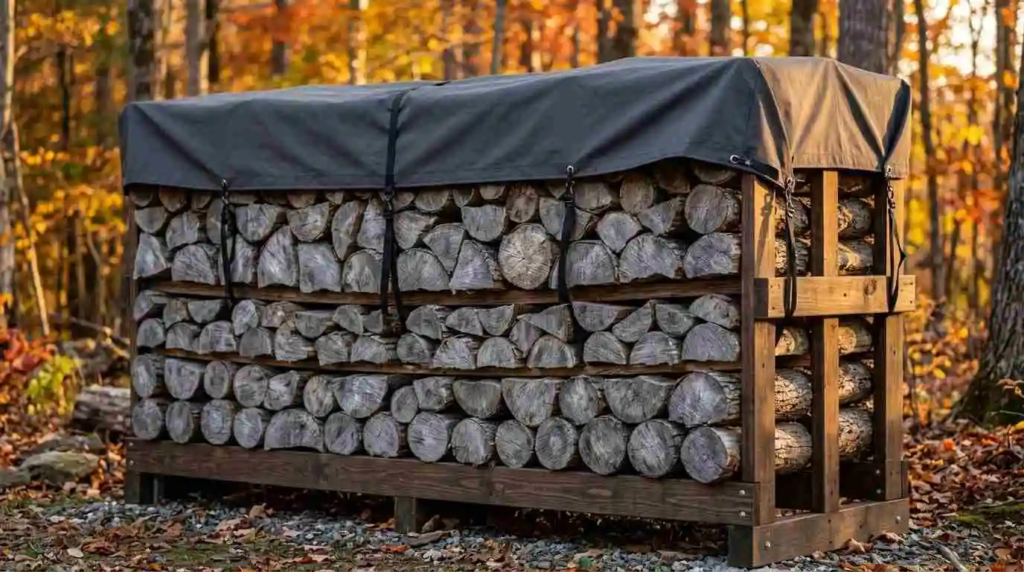
A few practical pointers to get the best results out of burning maple firewood:
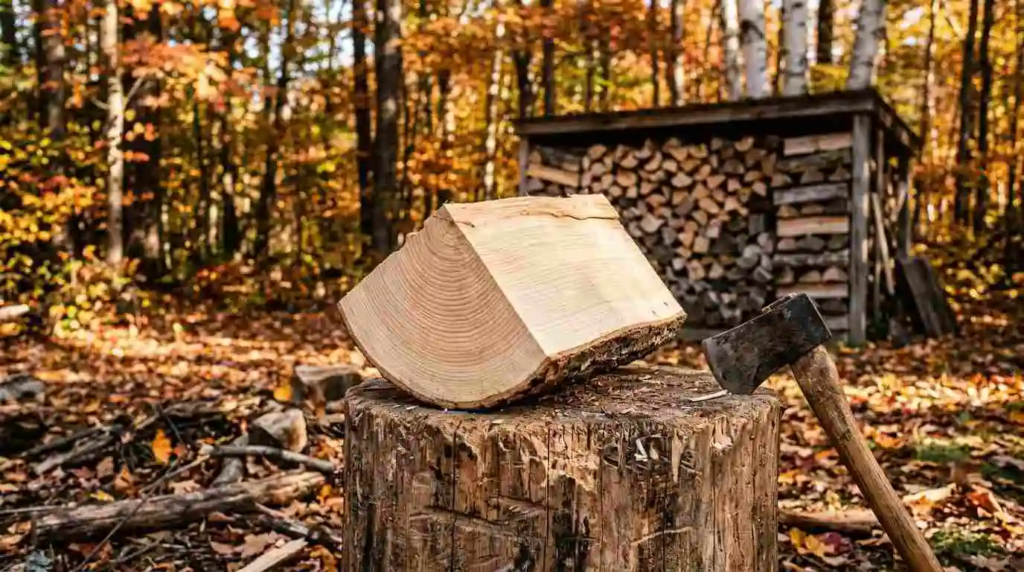
- Check for readiness before burning: properly seasoned maple should look grayish rather than fresh-cut tan, feel noticeably lighter than green wood, and often has small cracks radiating from the cut ends.
- Stack it right: Learn the best techniques for properly stacking firewood off the ground with good airflow between rows, and cover the top while leaving the sides open to prevent trapped moisture.
- Give it time: resist the urge to burn maple early; underseasoned logs will smoke heavily and burn far less efficiently.
- Mix burn sizes: smaller splits catch faster for starting a fire, while larger splits are better saved for maintaining a long, steady burn overnight.
Getting these basics right makes a noticeable difference in how well maple performs, regardless of whether it’s going into a fireplace or a wood stove.
Why Choose 12 Point Farms for Maple Firewood
Good maple firewood starts with proper seasoning, careful splitting, and storage that actually protects the wood from moisture. At 12 Point Farms LLC, that’s exactly the process behind every cord of premium seasoned firewood we sell.
If you’re looking for maple firewood that’s ready to burn clean and hot from the moment it arrives, we’ve got you covered — no guesswork, no underseasoned surprises.