Best Firewood for Winter Evenings
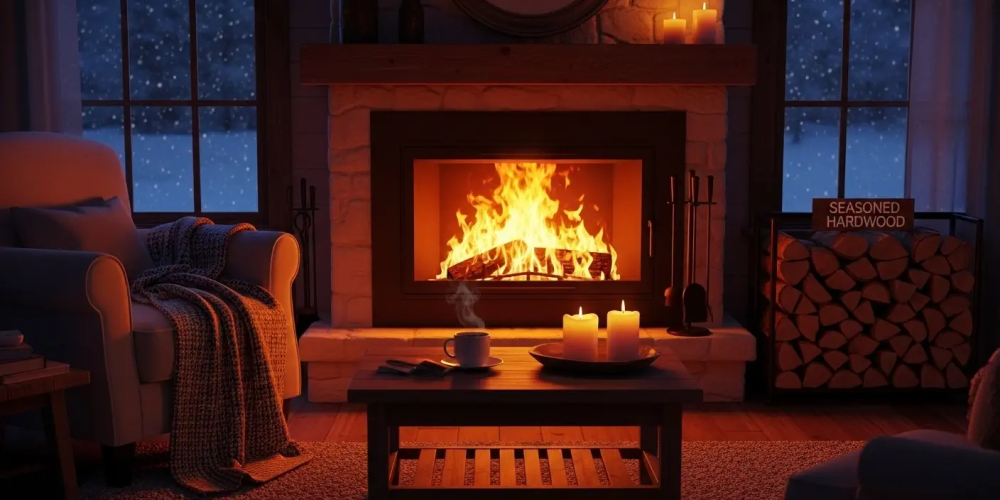
The best firewood for winter evenings is dense hardwood — specifically oak, hickory, or hard maple — dried to below 20% moisture content. These species produce the highest heat output, the longest burn time, and the cleanest, most consistent flame of any firewood available in the United States.
At 12 Point Farms LLC, we source, dry, and deliver premium hardwood firewood to homeowners, fireplace owners, and cabin owners across Wisconsin every winter season. In this guide, we break down exactly which firewood species perform best in cold weather, what makes a fire burn longer, how to avoid the most common winter burning mistakes, and how to store your firewood supply so it stays dry and ready all season long.
Whether you are heating your home with a wood stove, enjoying a crackling fireplace on a cold Wisconsin evening, or warming up around an outdoor fire pit, this guide gives you the practical knowledge to build a better, longer-lasting winter fire every single time.
Why Choosing the Right Firewood Matters in Winter
Most people do not realize how dramatically firewood quality affects winter heating performance — until they are sitting in front of a smoky, sluggish fire on the coldest night of the year.
Here is the reality: not all firewood delivers the same heat. Two logs that look identical in size can produce wildly different amounts of warmth, burn for completely different lengths of time, and generate very different levels of smoke — depending entirely on the species, density, and moisture content of the wood.
In winter, the stakes are higher than any other season:
- Cold weather demands sustained, high-output heat — not a quick burst that burns out in 45 minutes
- Indoor air quality matters — wet or low-quality wood produces excessive smoke that is dangerous indoors and harmful to your chimney
- Efficiency equals cost savings — the right firewood means fewer reloads, less kindling wasted, and more warmth per log
- Chimney safety is a real concern — poorly dried wood generates creosote buildup at a rate that dramatically raises chimney fire risk during heavy winter use
Choosing the right firewood for winter evenings is not just about comfort. It is about efficiency, safety, and getting real, reliable warmth from every single log you burn.
Quick Answer: The best firewood for winter evenings is dense hardwood (oak, hickory, or maple) with moisture content below 20%. It burns hotter, lasts longer, and produces less smoke than softwood or wet wood.
Best Types of Firewood for Winter Evenings
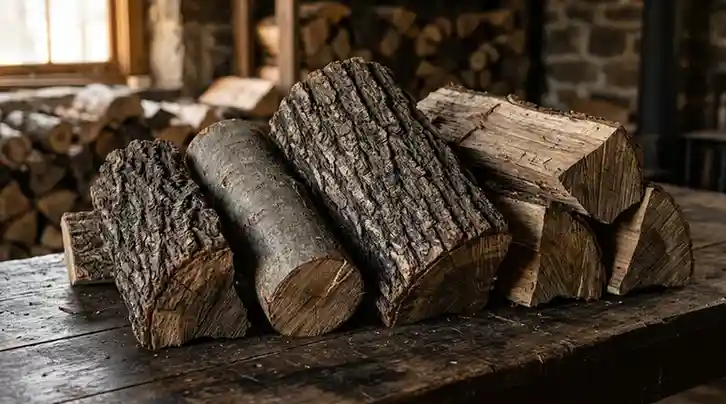
Bottom line up front: For winter evenings, choose the densest hardwood species available to you. Density equals heat storage, and heat storage equals longer, hotter burns with fewer reloads.
Here are the top-performing firewood species for cold-weather use, ranked by overall winter performance:
| Species | Heat Output (BTU/cord) | Burn Time | Ember Quality | Best Use |
|---|---|---|---|---|
| Oak | 24–29 million BTU | Very Long | Excellent | Home heating, wood stoves |
| Hickory | 25–28 million BTU | Very Long | Excellent | Cooking, heating, fire pits |
| Hard Maple | 24–27 million BTU | Long | Very Good | Fireplaces, home heating |
| Birch | 20–23 million BTU | Moderate | Good | Ambiance, supplemental heat |
| Ash | 20–24 million BTU | Long | Good | All-purpose, easy ignition |
| Softwood (Pine) | 14–17 million BTU | Short | Poor | Kindling only |
Oak Firewood
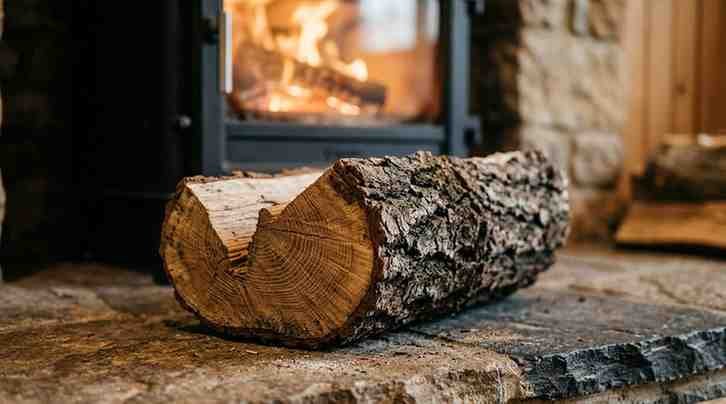
Oak is the #1 firewood for winter evenings in the United States — and it has earned that reputation through consistent, measurable performance.
Oak is one of the densest hardwood species available, which means every log stores an enormous amount of energy. When properly seasoned or kiln-dried, oak:
- Burns at the highest sustained temperature of any common firewood species
- Produces a long, steady ember bed that holds heat for hours after the visible flame dies down
- Requires minimal reloading — a well-stocked wood stove with oak can hold heat through an entire cold night
- Generates very low smoke output and minimal creosote buildup compared to softwoods
- Creates a satisfying, deep crackling sound and a warm, amber flame that makes any winter evening more enjoyable
Who should choose oak: Homeowners using a wood stove or fireplace for primary or supplemental home heating. Anyone who wants to load the firebox once and not reload it for several hours. The best choice for overnight burns.
One thing to know about oak: Dense wood requires a longer seasoning time — typically 12 to 24 months for air-drying, or kiln treatment to achieve optimal moisture levels. Always confirm your oak firewood has been properly dried before purchase.
Maple Firewood
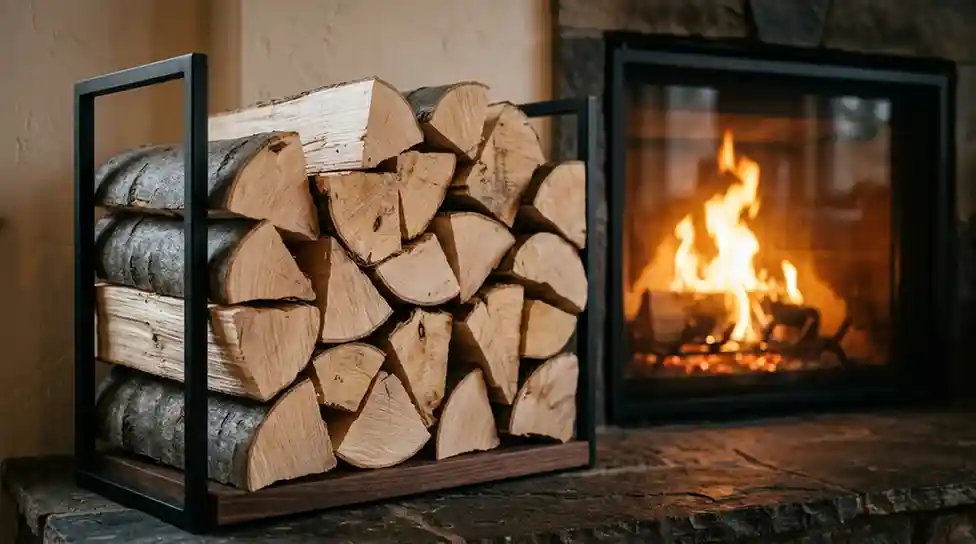
Hard maple is the most versatile winter firewood — outstanding heat output, easy ignition, a beautiful bright flame, and a mild, pleasant natural aroma that makes it a perennial favorite for indoor fireplaces.
Hard maple is slightly easier to light than oak while still delivering heat output that competes closely with the top-performing species. For homeowners who want an excellent all-around winter firewood that works well for both ambiance and serious heat production, hard maple is the top recommendation.
- Excellent heat output — only slightly below oak and hickory
- Brighter, more visually appealing flame than oak
- Mild natural aroma — completely pleasant and non-intrusive indoors
- Easy to split, stack, and handle
- Outstanding choice for wood stoves and indoor fireplaces alike
Curious about whether silver maple performs as well as hard maple? Read our guide: Is Silver Maple Firewood Good?
Hickory Firewood
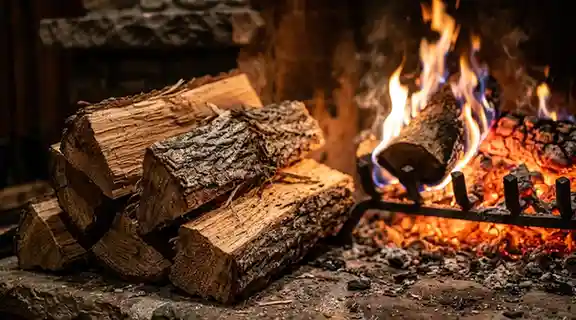
Hickory is the hottest-burning hardwood you can put in a firebox — and if your primary goal is maximum heat output for a cold Wisconsin evening, hickory delivers.
Hickory wood is extraordinarily dense, producing heat outputs that rival or slightly exceed even oak in BTU per cord. Its characteristic quality is the intensity and consistency of its heat — hickory burns with a deep, powerful heat that penetrates a room quickly and holds temperature with impressive staying power.
Hickory also produces a distinctive, slightly smoky natural aroma that many people find particularly appealing for indoor fireplaces and outdoor fire pit use. It is also the top choice for wood-fired cooking — pizza ovens, smoking, and grilling applications all benefit from hickory’s intense, aromatic heat.
- Highest heat output of all common firewood species
- Deep, powerful, consistent burn
- Distinctive natural aroma — excellent for cooking and indoor ambiance
- Long burn time with outstanding ember production
- Best for: maximum heat demands, wood-fired ovens, fire pit entertaining
Learn more about firewood for wood-fired ovens and why hickory leads the field for cooking applications.
Birch Firewood
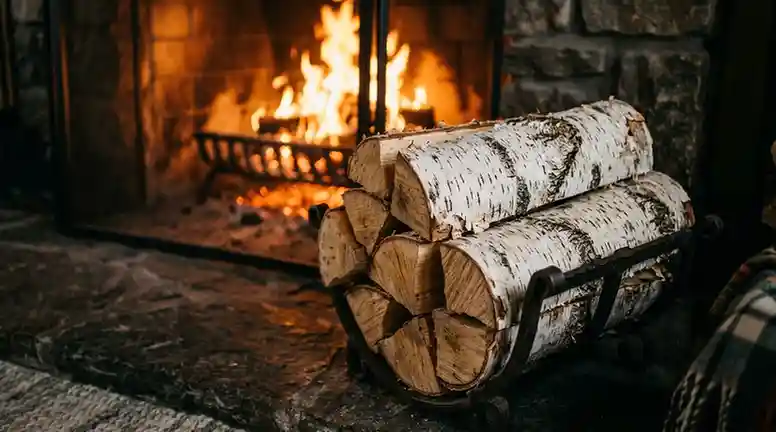
Birch firewood is the best choice when ambiance matters as much as heat — it burns with a bright, cheerful flame, ignites easily, and produces a pleasant mild aroma that makes it a favorite for recreational evening fires.
Birch is less dense than oak, hickory, or maple, which means it burns through more quickly. However, its fast, bright burn makes it an excellent complement to denser hardwoods — birch lights quickly and gets the fire established fast, while a following oak or hickory log takes over for the long, sustained burn.
- Burns brighter and more visually dramatic than oak or hickory
- Excellent ignition — one of the easiest hardwoods to light
- Mild, pleasant natural aroma
- Lower burn time than oak — requires more frequent reloading
- Best used in combination with denser hardwoods for a complete winter fire experience
Pro tip: Start your winter fire with birch for fast ignition and an immediate bright flame, then add oak or hickory logs once the fire is fully established for a long, sustained overnight burn.
What Makes Firewood Burn Longer?
Three factors determine how long a piece of firewood burns — and all three are within your control as a buyer.
Heat Output
Heat output is measured in BTUs (British Thermal Units) per cord — the higher the BTU rating, the more heat the wood produces per unit volume. Wood density is the primary driver of BTU output: denser wood stores more energy, releases more heat when burned, and sustains higher fire temperatures for longer periods.
Dense hardwoods like oak, hickory, and maple deliver 24–29 million BTUs per cord. Softwoods like pine and spruce deliver 14–17 million BTUs per cord — roughly half the heat energy for the same volume of wood.
What this means practically: A wood stove loaded with quality oak hardwood will heat a room significantly warmer for significantly longer than the same stove loaded with the same volume of pine. You will reload less often, burn through your supply less quickly, and stay warmer per dollar spent on firewood.
Burn Time
Burn time is directly tied to wood density and moisture content. Dense hardwood with low moisture content produces the longest burn times — this is why oak and hickory are the preferred choices for overnight wood stove use and long winter evenings.
Factors that extend burn time:
- ✔ Choose dense hardwood species — oak, hickory, maple over birch, ash, or any softwood.
- ✔ Use properly dried wood — below 20% moisture content burns longer and more efficiently.
- ✔ Load the firebox correctly — larger pieces burn longer than small splits; avoid overloading.
- ✔ Manage airflow through damper control — restricting airflow slows combustion and extends burn time on wood stoves.
- ✔ Let an ember bed establish before adding new logs — a strong coal base sustains new logs much more effectively.
Coal Production
The quality of a firewood’s coal bed is one of the most overlooked performance factors — but for home heating, it may be the most important of all.
Dense hardwoods like oak and hickory do not just produce a flame — they produce a deep, long-lasting coal bed that radiates intense heat long after the visible flame has died down. A good coal bed from a load of quality oak can maintain comfortable room temperature for hours with no new wood added.
Poor coal production — common with softwoods and low-density hardwoods — means the fire goes cold quickly the moment the flame dies. For overnight wood stove use, coal production quality is the difference between waking up to a warm house and waking up to a cold one.
Answer: Dense hardwoods like oak and hickory produce the best coal beds for long-lasting winter heat. Their high density creates sustained, radiant heat that continues warming a space for hours after the visible flame subsides.
Hardwood vs Softwood for Cold Weather
For winter evenings, always choose hardwood. No exceptions.
This is not a preference — it is a performance and safety recommendation based on measurable wood science.
| Factor | Hardwood | Softwood |
|---|---|---|
| Heat Output | High (24–29M BTU/cord) | Low (14–17M BTU/cord) |
| Burn Time | Long | Short |
| Creosote Risk | Low | High |
| Coal Quality | Excellent | Poor |
| Indoor Safety | Very Good | Poor |
| Kindling Use | Supplemental | Excellent |
| Winter Heating | ✅ Recommended | ❌ Not Recommended |
Why softwood fails in winter:
Softwood species — pine, spruce, cedar, fir — contain high levels of resin and sap that burn at lower temperatures and produce significantly more creosote than hardwood. Creosote is a flammable residue that accumulates inside your chimney or wood stove flue with every burn. Regular softwood use in an indoor fireplace or wood stove creates a chimney fire risk that no homeowner should accept.
Additionally, softwood burns through so quickly at low density that maintaining a consistent room temperature becomes impractical — you would need to reload constantly and still achieve lower heat output than a single well-loaded firebox of oak.
The one legitimate use for softwood in winter: as kindling. Small, dry softwood splits light fast and generates a quick flame that helps hardwood logs catch. Use softwood to start the fire — then switch entirely to hardwood for the burn.
For a complete, detailed species comparison, read our guide on choosing between hardwood and softwood firewood.
How to Build a Long-Lasting Winter Fire
Building a winter fire that burns for hours — rather than flaring up briefly and dying — requires the right technique as much as the right wood. Here is the method that works:
Step 1 — Start with a clean firebox.
Remove old ash before starting (leaving a thin one-inch ash bed is fine and actually helps insulate the coal bed). A clean firebox allows proper airflow from the start.
Step 2 — Lay a kindling foundation.
Place a base layer of dry kindling — small softwood splits, kindling bags, or a quality fire starter kit — in the center of the firebox. Use the top-down fire lay method for cleaner ignition and less smoke.
Step 3 — Add medium splits first.
Once kindling is lit and burning steadily, add two or three medium-sized hardwood splits. Do not rush to the large logs — let the medium splits establish a solid flame and begin forming an early coal bed.
Step 4 — Load with large hardwood logs.
Once a genuine coal bed is glowing — typically 15 to 20 minutes into the fire — add your main hardwood logs. Larger pieces of dense hardwood (oak, hickory, maple) placed on a strong coal bed will catch quickly and burn for hours.
Step 5 — Control airflow for duration.
For a wood stove, partially close the damper once the fire is fully established. Reduced airflow slows combustion, extends burn time, and maintains steady heat output without constant reloading. For a fireplace, use the damper to adjust draft.
Step 6 — Reload on coals, not on cold grate.
Never let the fire go completely cold before adding new wood. Add fresh hardwood logs when the coal bed is still active — new logs on a hot coal bed catch within minutes and maintain uninterrupted heat.
For specific guidance on firewood for indoor fireplaces versus firewood for wood stoves, we have dedicated resources for each application.
Tips for Storing Firewood During Winter
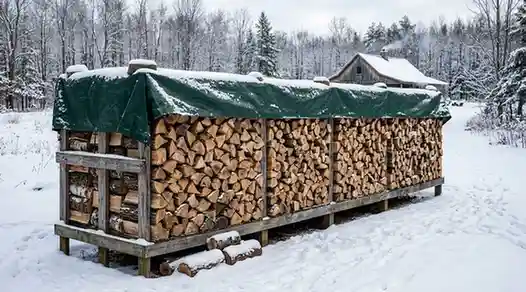
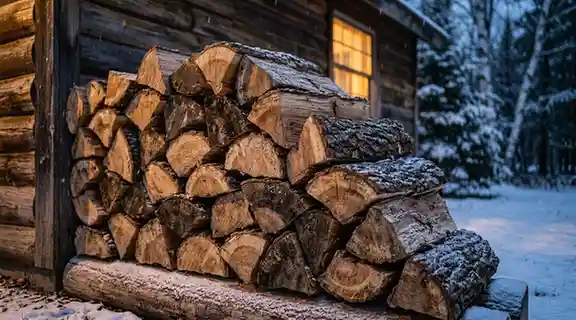
Winter storage presents unique challenges — rain, snow, freezing temperatures, and limited sunlight all work against keeping your firewood supply dry and ready to burn. Here is how to protect your investment through the coldest months:
Keep Firewood Dry
Moisture is firewood’s primary enemy — and winter precipitation creates constant exposure risk. The goal is not to eliminate all contact with outdoor air, but to prevent rain and snow from soaking into your wood supply.
Practical steps to keep winter firewood dry:
- Cover only the top of your firewood stack with a tarp or firewood cover — never wrap the sides, which traps moisture and prevents airflow
- Use a dedicated firewood shed or lean-to for large supplies — it is the most effective long-term storage solution in Wisconsin winters
- Check your cover after heavy snowfall and clear accumulated snow from tarps before weight causes pooling
- Bring only 24–48 hours worth of wood inside at a time — indoor air is dry and will maintain wood quality perfectly for short-term storage
Proper Airflow
Many homeowners unknowingly damage their firewood supply by stacking it too tightly against walls, in enclosed spaces, or wrapped entirely in plastic. Without airflow, firewood absorbs atmospheric moisture, develops surface mold, and gradually loses the dryness you paid for.
Airflow best practices for winter storage:
- Stack firewood in a single row whenever possible — maximum surface exposure to air on both sides
- Maintain at least 3 to 5 inches of clearance between the stack and any wall or fence
- Use a rack or pallet system that elevates wood off the ground and allows air to circulate beneath the bottom layer
- If using a shed, ensure the structure has adequate ventilation — a fully sealed firewood shed traps moisture as effectively as a tarp
For a complete technique guide, visit our resource on properly stacking firewood.
Indoor vs Outdoor Storage
The question is not which is better — both serve a purpose, and the smart answer is using both correctly.
Outdoor storage is where the bulk of your firewood supply should live throughout the winter season. A well-protected outdoor stack — elevated, covered on top, with good airflow — keeps large quantities of firewood in excellent condition through even a harsh Wisconsin winter.
Indoor storage is for the wood you plan to burn in the next 24 to 48 hours. Bringing firewood inside:
- Eliminates any remaining surface moisture from outdoor exposure
- Warms the wood to room temperature, which improves ignition
- Keeps your firebox accessible without going outside repeatedly during cold weather
The critical indoor storage rule: never bring more than a 1–2 day supply inside at once. Firewood can harbor insects, beetles, and other pests that become active at indoor temperatures. Kiln-dried firewood is safer for indoor storage because the kiln process eliminates insects and eggs present in the wood. Learn more about firewood safety indoors.
For our complete seasonal storage guide, visit firewood storage tips.
Common Mistakes That Reduce Heat Output
These are the errors that turn a quality firewood purchase into a frustrating, underperforming winter. Avoid every one of them:
Burning Wet Firewood
This is the single most common and costly firewood mistake made by homeowners every winter.
Wet firewood — wood with moisture content above 25% — does not burn. It smolders. The energy that should be heating your room is instead being consumed by evaporating the water trapped inside the wood. The visible result: a fire that produces enormous amounts of thick white smoke, struggles to maintain a flame, generates minimal heat, and deposits heavy creosote inside your chimney at a rate that creates a serious chimney fire risk.
How to know if your wood is wet:
- It hisses or sizzles when placed on the fire
- It produces thick white or gray smoke rather than a clean, mostly clear exhaust
- It is difficult to light and keeps going out
- It feels heavy for its size
- The end grain looks fresh and bright rather than faded and cracked
The solution: Always verify moisture content before purchasing firewood. Ask suppliers directly what the moisture level is and how the wood was dried. A moisture reading below 20% is the minimum acceptable standard for quality winter firewood. Below 15% is kiln-dried quality and optimal for performance. Read our detailed firewood moisture content guide for everything you need to know.
Using Softwood for Overnight Fires
Softwood burns fast, cool, and dirty compared to hardwood. For an overnight wood stove burn — or even a three- to four-hour winter evening fire — softwood simply cannot deliver. You will spend the evening reloading constantly, the room will never reach a comfortable temperature, and your chimney will accumulate creosote far faster than it would with hardwood.
The rule is simple: Use softwood for kindling only. Once the fire is established, every log you add for sustained winter heating should be hardwood.
For detailed guidance on the best wood for your specific heating setup, read firewood for heating home — a comprehensive resource covering the top-performing species for whole-home wood heat.
Poor Firewood Storage
You can purchase the highest-quality kiln-dried hardwood available — and ruin it completely within a few weeks through improper storage. Here are the storage mistakes that most frequently destroy firewood quality:
- Stacking on bare ground — direct soil contact wicks moisture into the bottom layers within days
- Wrapping entirely in plastic tarp — traps atmospheric moisture and promotes mold growth throughout the stack
- Stacking too close to structures — restricts airflow and creates persistent moisture pockets
- Leaving the stack uncovered during heavy precipitation — allows rain and snow to soak through multiple layers
- Storing large quantities indoors year-round — pest risk and indoor humidity can re-dampen wood over time
Proper storage is as important as proper buying. A great firewood purchase protected poorly performs no better than mediocre firewood. Visit firewood storage tips for our complete seasonal storage protocol.
Choosing the Right Firewood for Your Fireplace or Wood Stove
Different heating applications have different firewood requirements. Here is a quick, direct reference guide:
For indoor fireplaces:
Choose kiln-dried hard maple or oak. Both produce clean, low-smoke burns that are safe for indoor air quality. Maple offers a brighter, more visually appealing flame. Oak offers longer burn time and a stronger coal bed. Avoid all softwoods indoors. Read our complete firewood for indoor fireplaces guide.
For wood stoves:
Oak or hickory is the top recommendation. Wood stoves operate at higher sustained temperatures than open fireplaces, and dense hardwoods with low moisture content perform best in this environment. The deep coal bed produced by oak and hickory makes overnight heating genuinely practical. Read our firewood for wood stove guide for detailed sizing and loading recommendations.
For outdoor fire pits:
Mixed hardwood is the best value choice for outdoor use. The performance demands of an outdoor fire pit are lower than indoor heating — you want warmth and ambiance without necessarily maximizing burn time or minimizing smoke. Our Mixed Hardwood Full Cord gives you an excellent blend of oak, maple, hickory, birch, and cherry at outstanding value for outdoor entertaining use.
For wood-fired ovens and cooking:
Hickory or cherry for flavor-forward cooking applications. Hickory delivers intense, consistent heat with a distinctive aroma. Cherry burns slightly cooler with a mild, sweet smoke that pairs beautifully with food. Both are excellent for pizza ovens and grilling applications.
For cabin heating:
If you are heating a cabin through an entire Wisconsin winter, stock the densest hardwood available in quantity — a full cord of oak or a mixed hardwood blend weighted toward oak and hickory will serve you best. For cabin-specific guidance, read firewood for camping trips and eco-friendly firewood options.
Answer: For fireplaces, use kiln-dried maple or oak. For wood stoves, use oak or hickory. For outdoor fire pits, mixed hardwood is the best value. For cooking, hickory or cherry delivers the best results.
As a Trusted Firewood Supplier with deep expertise in Wisconsin firewood sourcing and delivery, 12 Point Farms LLC can help you identify the right species, quantity, and drying method for your specific winter heating situation before you place your first order.
Frequently Asked Questions — Best Firewood for Winter Evenings
What is the best firewood for winter evenings?
The best firewood for winter evenings is dense hardwood — specifically oak, hickory, or hard maple — dried to below 20% moisture content. These species deliver the highest heat output, the longest burn time, the best coal production, and the cleanest burn of any firewood available. Oak is the top overall recommendation for sustained winter evening heating.
Which firewood burns the longest in cold weather?
Oak firewood burns the longest in cold weather due to its exceptionally high wood density and excellent coal bed production. Hickory is a close second. Both species produce sustained, high-temperature burns that can heat a room for several hours on a single load. Hard maple is the third-best option for long cold-weather burns.
Is hardwood better than softwood for winter fires?
Yes — significantly and without exception for indoor use. Hardwood produces 40–70% more heat per cord than softwood, burns far longer, generates a quality coal bed, and produces dramatically less creosote buildup in your chimney. Softwood is appropriate only for kindling. Never use softwood as a primary fuel source for indoor fireplaces or wood stoves during winter.
What type of firewood produces the most heat?
Hickory produces the highest heat output of all common North American firewood species, at approximately 25–28 million BTUs per cord. Oak is a very close second at 24–29 million BTUs per cord depending on species variety. Both significantly outperform all softwoods and lower-density hardwoods like birch or poplar.
Can seasoned firewood keep a fire burning longer?
Yes. Properly seasoned firewood — dried to below 20% moisture — burns significantly longer and more efficiently than green or improperly dried wood. When wood is dry, the energy released by combustion goes directly into producing heat rather than being consumed evaporating trapped moisture. Kiln-dried firewood at 12–15% moisture burns even longer and hotter than conventionally seasoned wood.
How should firewood be stored during winter?
Store firewood elevated off the ground on a rack or pallet. Stack in a single row for maximum airflow. Cover only the top of the stack — never wrap the sides — to allow air circulation while protecting against rain and snow. Keep the stack at least three to five inches away from walls or fences. Bring only a 24–48 hour supply indoors at a time to minimize pest risk.
Which firewood is best for fireplaces and wood stoves?
For indoor fireplaces: kiln-dried hard maple or oak. For wood stoves: oak or hickory. Both applications demand clean-burning, low-moisture hardwood to protect indoor air quality and chimney health. Avoid all softwoods and any firewood with moisture above 20% for indoor heating use.
What mistakes should I avoid when burning firewood in winter?
The three most impactful mistakes to avoid: burning wet or green wood (leads to poor heat, excessive smoke, and dangerous creosote buildup), using softwood as a primary fuel source (burns too quickly at low heat), and poor outdoor storage (allows dry firewood to re-absorb moisture). Always verify moisture content before purchasing, choose dense hardwood for your primary fuel, and store your supply elevated, covered on top, and with good airflow.
Final Recommendation — Best Firewood for Every Winter Situation
| Winter Need | Best Firewood Choice | Why |
|---|---|---|
| Primary home heating | Oak or Hickory | Maximum BTU, longest burn, best coal bed |
| Indoor fireplace ambiance | Hard Maple | Bright flame, pleasant aroma, excellent heat |
| Wood stove overnight | Oak | Sustained coal production, hours of heat |
| Outdoor fire pit | Mixed Hardwood | Best versatility and value |
| Wood-fired cooking | Hickory or Cherry | Intense heat, distinctive aroma |
| Quick evening fire | Birch + Oak combination | Fast ignition + sustained heat |
| Budget winter supply | Mixed Hardwood Cord | Multiple species, consistent performance |
The bottom line: Dense hardwood, dried below 20% moisture, stored properly, and loaded correctly into a clean firebox — that is the complete formula for the best firewood experience on any winter evening.
For expert guidance on every aspect of buying and burning firewood, visit the complete Firewood Info resource library from 12 Point Farms LLC — your Wisconsin firewood source for premium seasoned hardwood, kiln-dried firewood, full cords, half cords, and everything in between.