Eucalyptus Firewood: Best BTU, Seasoning & Safety 2026-27
Eucalyptus Firewood is a solid hardwood choice with 20-22 million BTUs per cord, but needs 12-18 months of seasoning for a clean burn — 12 Point Farms LLC covers heat, safety, and splitting tips.
Eucalyptus is quickly becoming a go-to option for homeowners looking to switch up their firewood supply on a budget.
However, before you stack up your rack, it helps to know the type of wood you’re burning. This eucalyptus firewood guide covers everything from BTU output and seasoning time to splitting difficulty, indoor safety, and how it stacks up against classic hardwoods like oak and hickory.
Is Eucalyptus Good Firewood?
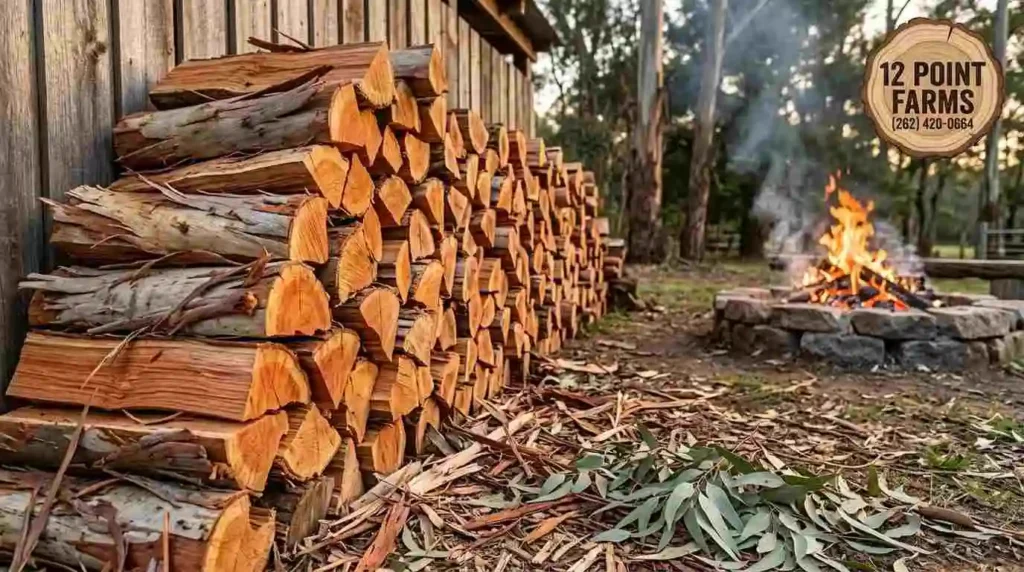
Eucalyptus is a solid firewood choice as it offers a strong heat output and a distinct, pleasant burn.
- Burns hot: Comparable BTU output to many popular hardwoods
- Widely available: Fast-growing tree, increasingly common in US firewood markets
- Trade-off: Requires longer, more careful seasoning than softer woods to burn cleanly
Pros:
- High heat output per cord
- Renewable, fast-growing source
- Distinct aromatic scent
Cons:
- Longer seasoning time required
- Can be difficult to split when green
- Higher creosote risk if burned under-seasoned.
Eucalyptus Firewood BTU Rating
Eucalyptus holds its own against traditional hardwoods in terms of heat output, making it a strong contender for cold-weather burning.
| Wood Type | BTU per Cord (million) | Burn Time | Coal Quality |
| Eucalyptus | ~20–22 | Long | Good, steady coals |
| Oak | ~24–26 | Long | Excellent, dense coals |
| Hickory | ~26–28 | Long | Excellent, dense coals |
Eucalyptus falls just below oak and hickory in raw BTU output, but it still qualifies as a high-heat hardwood, well above softer options like pine or fir.
How Long Does Eucalyptus Firewood Burn?
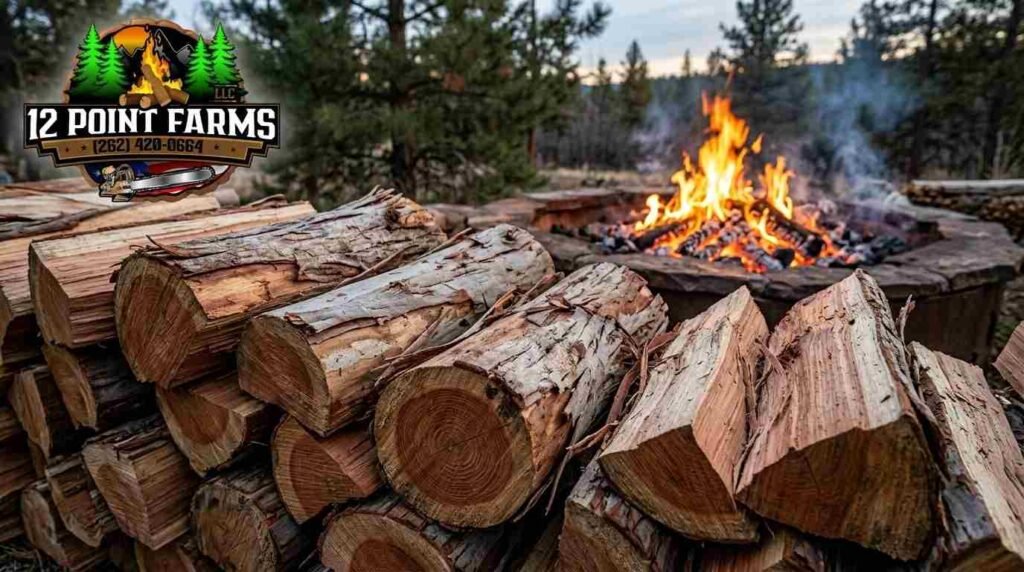
Properly seasoned eucalyptus burns for a long, steady stretch, making it a solid choice for overnight fires.
- Split size: Smaller splits catch faster but burn shorter; larger splits burn longer
- Seasoning level: Under-seasoned wood burns hotter initially but shorter and dirtier
- Airflow: Well-ventilated fires extend burn efficiency and reduce smoldering.
Seasoning Eucalyptus Wood
Eucalyptus needs more patience than most firewoods –proper seasoning is what separates a clean-burning fire from a smoky, creosote-heavy one.
- Recommended seasoning time: 12–18 months for optimal moisture content
- Target moisture content: Below 20% before burning
- Drying speed: Slower than softer woods due to dense grain and natural oils
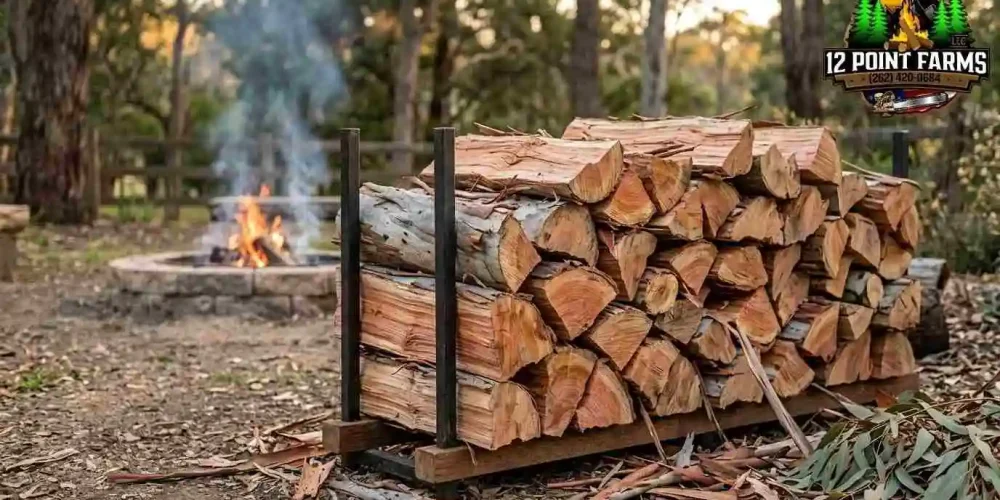
- Stacking tips: Split before stacking, keep off the ground, stack in a single row with airflow on all sides, and cover the top while leaving sides open
Skipping the full seasoning period is the most common reason people report poor results with eucalyptus firewood.
Eucalyptus Firewood Splitting Difficulty
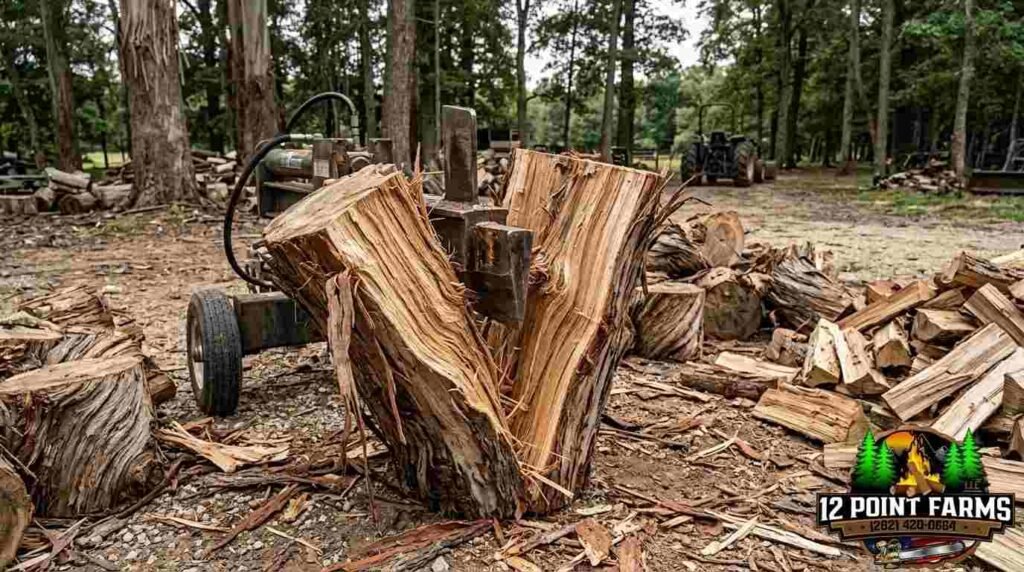
Eucalyptus has a reputation for being tough to split, and that reputation is earned — especially when the wood is green.
- Interlocked grain: Many eucalyptus species have twisted, interlocking fibers that resist splitting along straight lines
- Green vs. seasoned: Splitting is noticeably harder when the wood is freshly cut; letting it dry partially first can ease the process
- Best tools: A hydraulic log splitter is far more efficient than an axe or maul for larger rounds
- Workaround: Cutting rounds slightly smaller than usual reduces strain when hand-splitting.
Smoke, Creosote & Indoor Safety
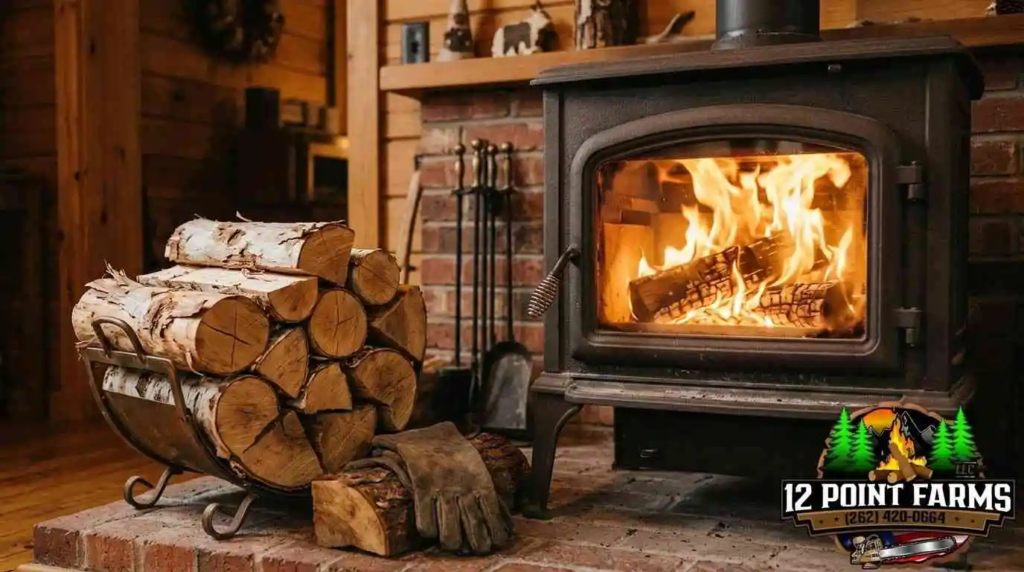
Eucalyptus can be burned safely indoors but only when it’s fully seasoned, since moisture content is the biggest factor behind smoke and creosote issues.
- Creosote risk: Under-seasoned eucalyptus produces more smoke, which increases creosote buildup in chimneys and flues
- Chimney maintenance: Regular sweeping is recommended for any wood-burning setup, but especially important if eucalyptus isn’t fully dried
- Indoor safety verdict: Safe for fireplaces and wood stoves when seasoned to below 20% moisture; avoid burning green eucalyptus indoors
- Warning signs of under-seasoning: Hissing or sizzling sounds, excessive smoke, difficulty keeping the fire lit
Eucalyptus isn’t inherently riskier than other hardwoods; however, safety comes down to proper seasoning and routine chimney care.
Aroma & Ambiance
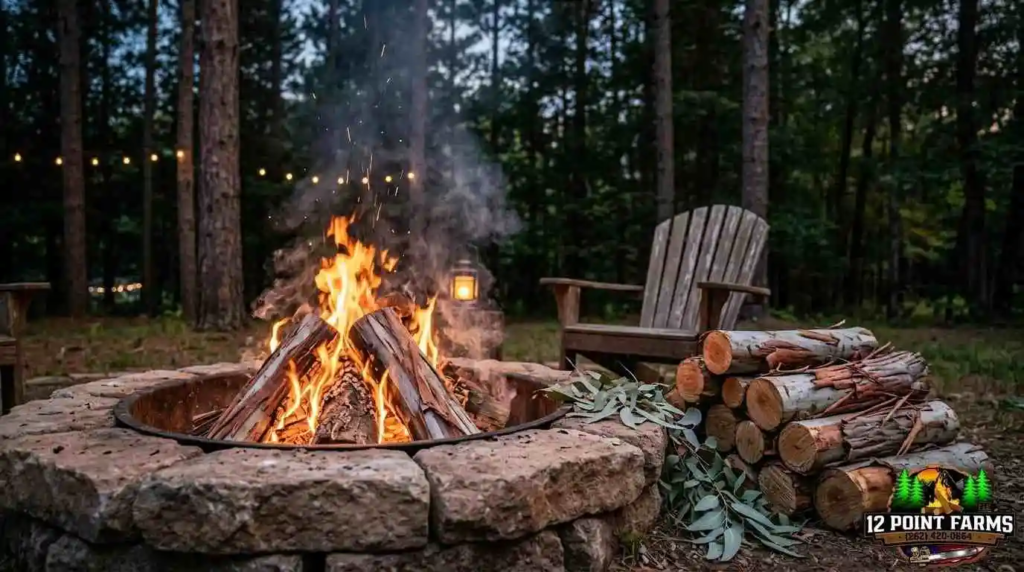
One of eucalyptus firewood’s standout features is its scent: a crisp, menthol-like aroma that’s noticeably different from typical hardwood smoke.
- Releases a fresh, slightly medicinal fragrance as it burns
- Popular for outdoor fire pits and open fireplaces where the smell can be appreciated
- Some users find the scent similar to a natural air freshener, adding ambiance beyond just heat.
Eucalyptus vs Oak/Hickory: Which Is Best for Your Fireplace or Wood Stove?
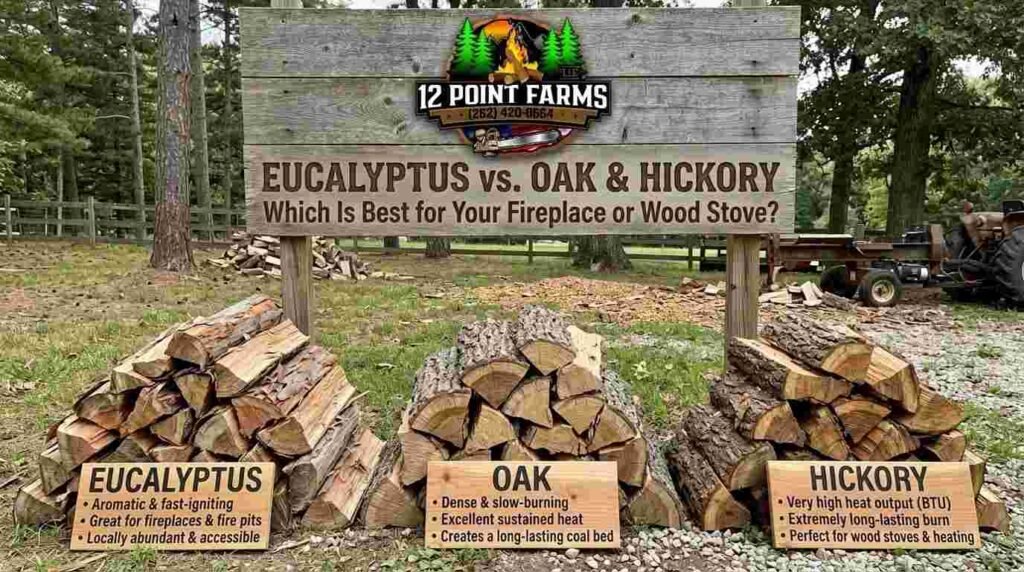
Choosing between eucalyptus, oak, and hickory often comes down to what you’re using the fire for and how much prep time you’re willing to put in.
- Fireplace use: Eucalyptus works well for regular fireplace burning once seasoned — its aroma is a bonus for open-hearth setups
- Wood stove use: Oak and hickory’s slightly higher BTU output and denser coal bed make them marginally better for sustained wood-stove heating, but eucalyptus is a close competitor
- Fire pits: Eucalyptus’s scent makes it a favorite for outdoor fire pits and gatherings
- Availability factor: In regions where eucalyptus grows locally, it’s often more accessible and affordable than trucked-in oak or hickory
The heat output gap is small enough that seasoning quality matters more than species choice for most everyday users.
Sustainability: A Renewable Firewood Source
Beyond performance, eucalyptus stands out as one of the more sustainable firewood options available today.
- Fast growth cycle: Eucalyptus trees mature and regenerate significantly faster than traditional hardwoods like oak
- Regional sourcing: Reduces the need for long-distance transport in areas where it’s cultivated
- Environmental upside: A renewable, quick-replenishing source helps ease pressure on slower-growing hardwood forests.
Where to Buy Eucalyptus Firewood Near Me
Sourcing quality, properly seasoned eucalyptus-firewood makes all the difference in how well it burns, which is where 12 Point Farms LLC comes in.
- We supply eucalyptus firewood that’s cut, split, and seasoned to the right moisture level before it reaches you
- Available by the cord or split load, ready for fireplace, wood stove, or fire pit use
- Local sourcing means fresher stock and lower environmental impact than long-haul delivery
Skip the guesswork on seasoning and splitting; get eucalyptus firewood that’s ready to burn clean from day one.
FAQs – eucalyptus firewood guide
Is eucalyptus good firewood?
Yes, eucalyptus is a good firewood choice once properly seasoned, offering strong heat output and a distinct aroma. It performs comparably to many popular hardwoods when dried to the right moisture level.
Does eucalyptus make good firewood?
Eucalyptus makes good firewood thanks to its high BTU output and long burn time. The main requirement is patience, and it needs a longer seasoning period than softer woods.
Can you use eucalyptus wood for firewood?
Yes, eucalyptus wood is commonly used as firewood in the US and other regions where it grows. It burns cleanly and efficiently as long as it’s fully seasoned first.
How long to season eucalyptus firewood?
Eucalyptus typically needs 12–18 months to season properly. This allows moisture content to drop below the 20% threshold needed for a clean, efficient burn.
How long does eucalyptus firewood take to dry?
Drying time is similar to seasoning time; around 12–18 months under proper stacking and airflow conditions. Split wood dries faster than whole rounds.
Is eucalyptus firewood safe to burn indoors?
Yes, eucalyptus firewood is safe to burn indoors when fully seasoned to below 20% moisture content. Burning it green increases smoke and creosote buildup, so proper drying is essential.
Does eucalyptus firewood cause creosote buildup in chimneys?
Under-seasoned eucalyptus can contribute to creosote buildup due to excess moisture and smoke. Fully seasoned eucalyptus burns cleanly and poses no greater creosote risk than other hardwoods.
How does eucalyptus firewood compare to oak or hickory?
Eucalyptus has a slightly lower BTU rating than oak or hickory but still qualifies as a high-heat hardwood. The performance gap is small enough that seasoning quality matters more than species for most users.
Is eucalyptus firewood hard to split?
Eucalyptus can be challenging to split due to its interlocked, twisted grain, especially when green. A hydraulic log splitter makes the process significantly easier than manual splitting.
What is the BTU rating of eucalyptus firewood?
Eucalyptus firewood produces roughly 20–22 million BTUs per cord. That places it just below oak and hickory but well above softer woods like pine.
Conclusion
Eucalyptus firewood earns its growing popularity – strong heat output, a distinctive aroma, and a renewable growth cycle make it a smart addition to any wood-burning setup.
The key is patience: give it the full 12–18 months to season properly, and it’ll reward you with a clean, long-lasting burn that holds its own against oak and hickory.
Ready to stock up on properly seasoned eucalyptus firewood? Browse 12 Point Farms LLC’s selection and get a cord delivered, ready to burn.