Birch is one of the most common and cost-effective choices for businesses and homeowners. But is birch firewood better than other, more favored firewood on the market? And how do I know which firewood works best for my needs?
Here’s what we’ll cover in this guide — birch firewood pros and cons, what it really is, and best uses, plus how it stacks up against oak, maple, and other varieties.
Let’s get into it.
What Is Birch Firewood?
Birch hardwood firewood comes from birch trees, known for their pale white bark and rapid growth.
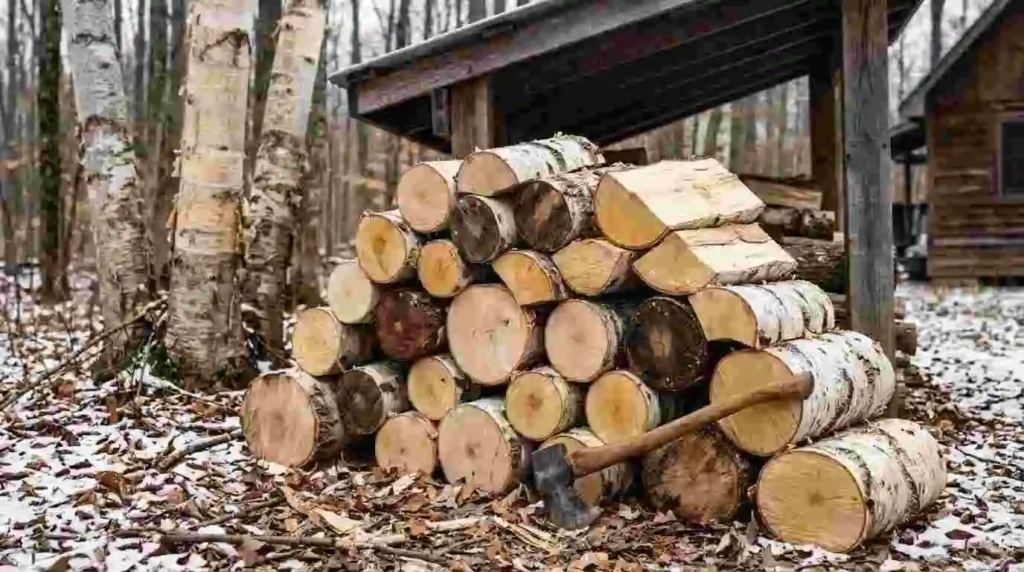
It is a popular choice among homeowners and businesses thanks to its moderate-to-high heat output and pleasant aroma when burned.
Here are some of the common types of birch hardwood used for firewood:
- Yellow birch
- White Birch (Paper Birch)
- Black Birch (Sweet Birch)
- River Birch
Each species varies in qualities such as heat output, burn time, and availability. Here’s a comparison to explain how:
| Birch Type | Heat Output (per cord) | Burn Duration | Availability | Best Used For |
| Black birch (sweet birch) | ~26.8 million BTUs per cord | Longest of the birches, dense fibers | Less common, mostly eastern U.S. | Wood stoves, long overnight burns |
| Yellow birch | ~21.8 million BTUs per cord | Moderate | Widely available | Balanced everyday firewood |
| White birch (paper birch) | ~20.2 million BTUs per cord | Shorter, burns fast | Most common/easy to source | Fireplaces, quick fires, kindling |
| River birch | Lower density, softer wood | Shortest | Common in southern/wetter regions | Fire starters, mixed loads (not a primary heat source) |
Pros of Burning Birch Firewood
If you’re wondering “is birch good firewood for my home?”, the pros make a strong case. Here’s what makes burning birch firewood worth considering.
- Solid heat output
Birch firewood heat output lands in the moderate-to-high range, especially with black or yellow birch.
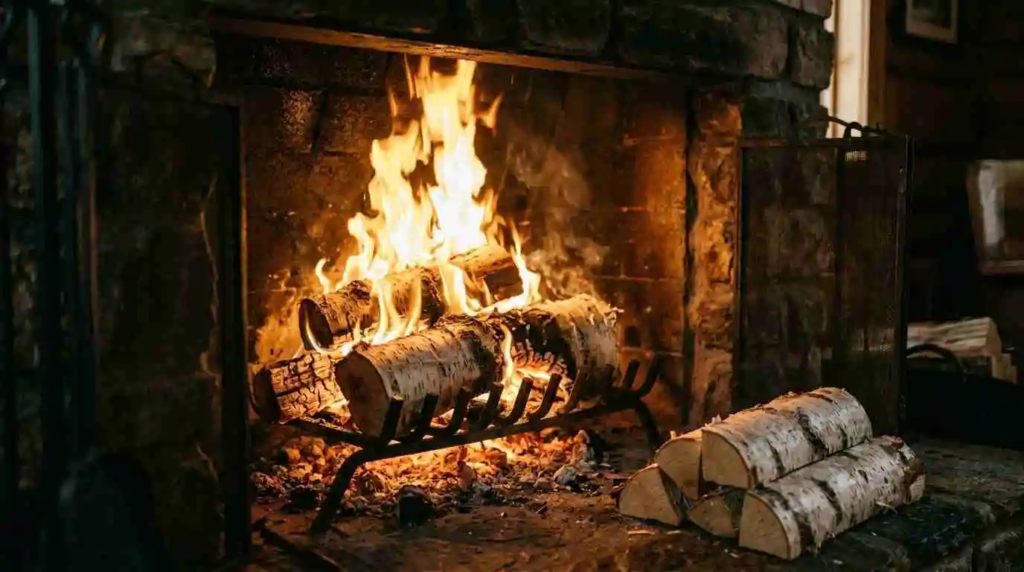
It won’t out-burn oak or hickory, but it holds its own for most heating needs, and it’s more than enough for a cozy night by the fire.
- Easy to split and season
Birch has straight grain and relatively low density compared to woods like oak, which makes it easier to split by hand or with a splitter.
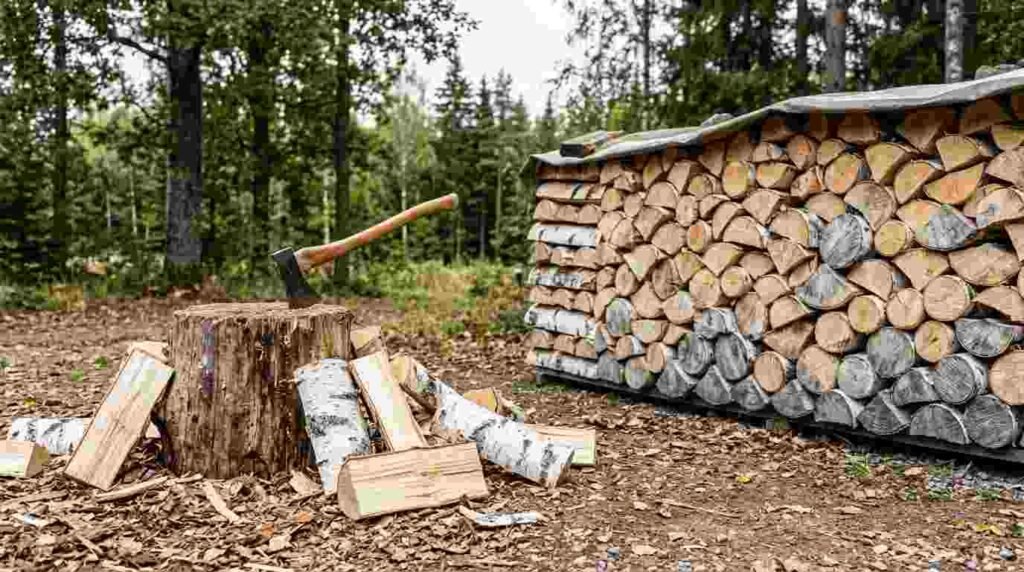
It also seasons faster than denser hardwoods, so you’re not waiting a year or two before it’s ready to burn.
- Clean-burning when seasoned
Properly seasoned birch firewood burns hot and clean, with minimal smoke and low creosote buildup.
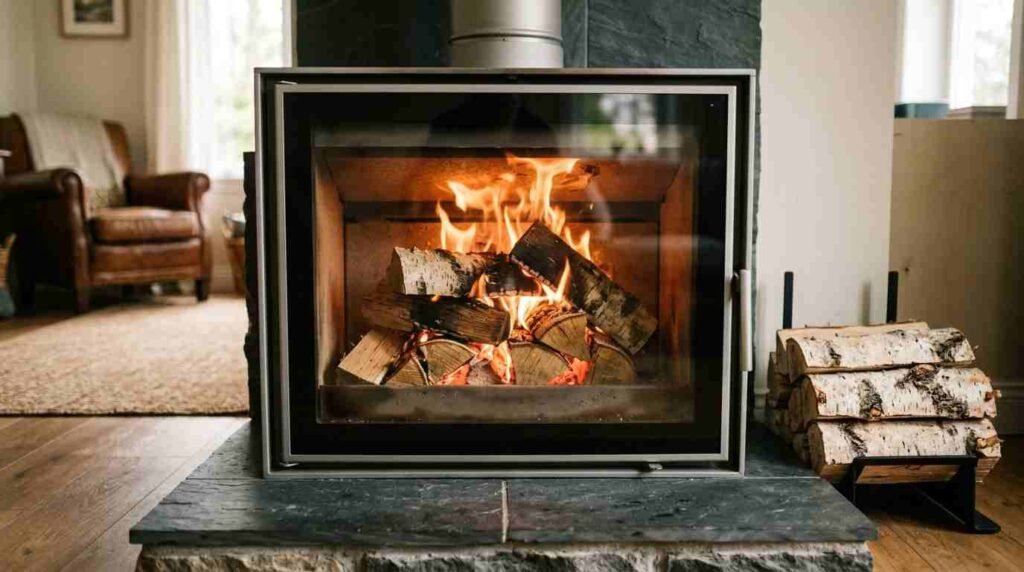
That’s a real advantage if you’re burning indoors regularly and want to keep your chimney or flue in good shape.
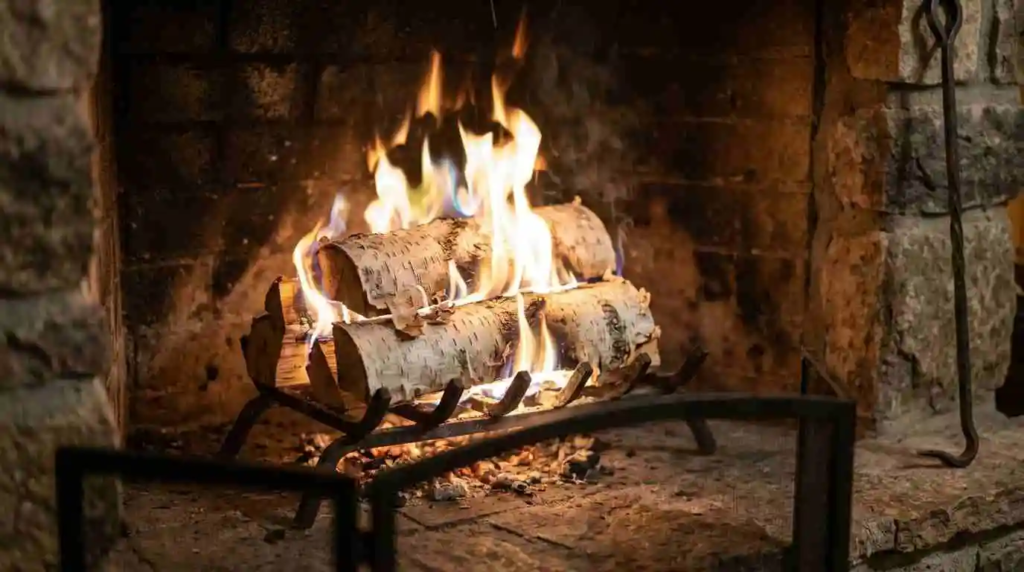
- Pleasant aroma and bright flame
Birch has a light, natural scent when burned, and its flame tends to be bright and lively — a big reason it’s a favorite for birch firewood for fireplaces and backyard fire pits alike.
- Great natural fire starter
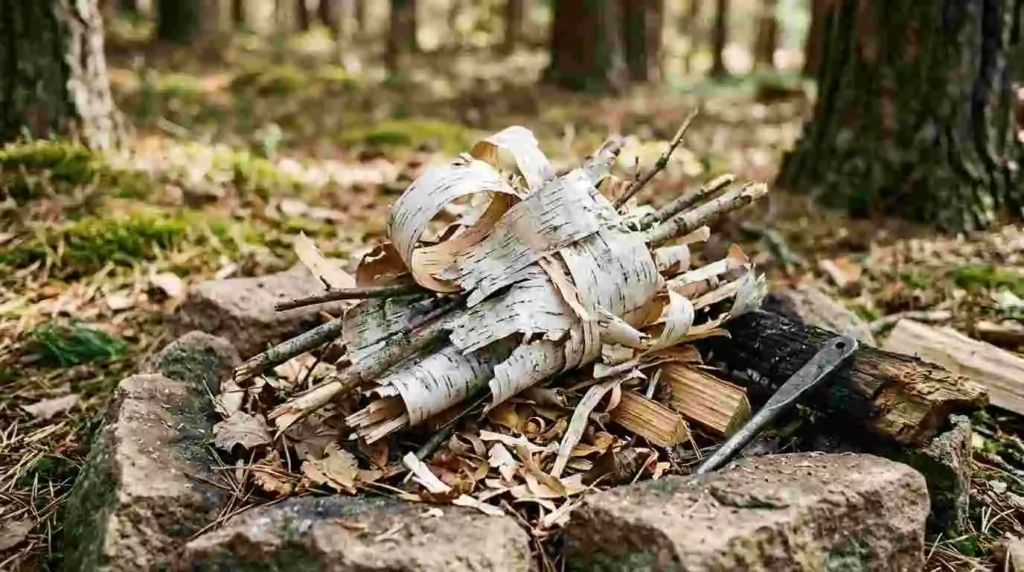
Birch bark is practically made for starting fires. It’s thin, oily, and catches quickly even when slightly damp, which makes birch a convenient fire starter wood to keep on hand for getting a fire going fast.
- Attractive stacked wood
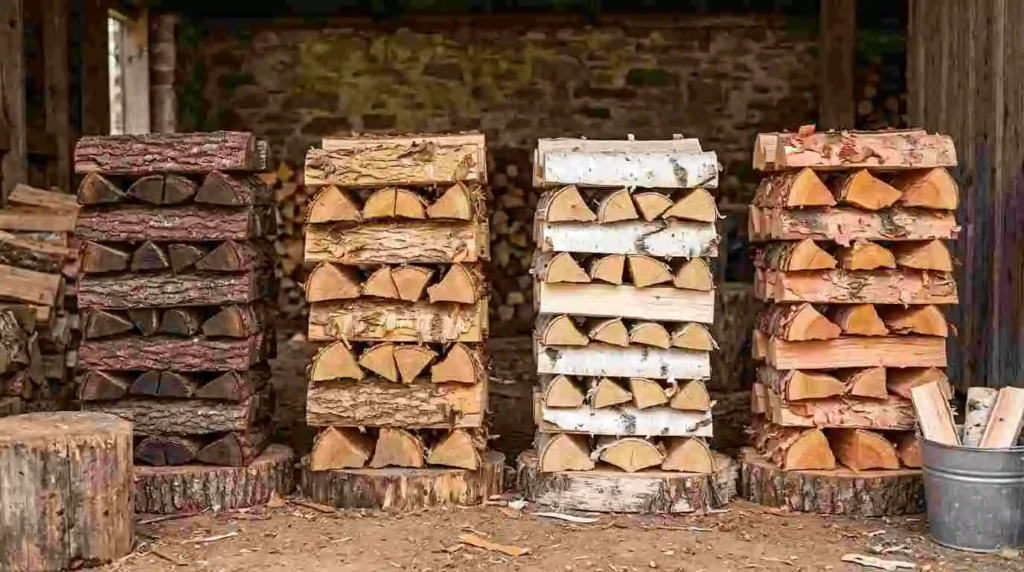
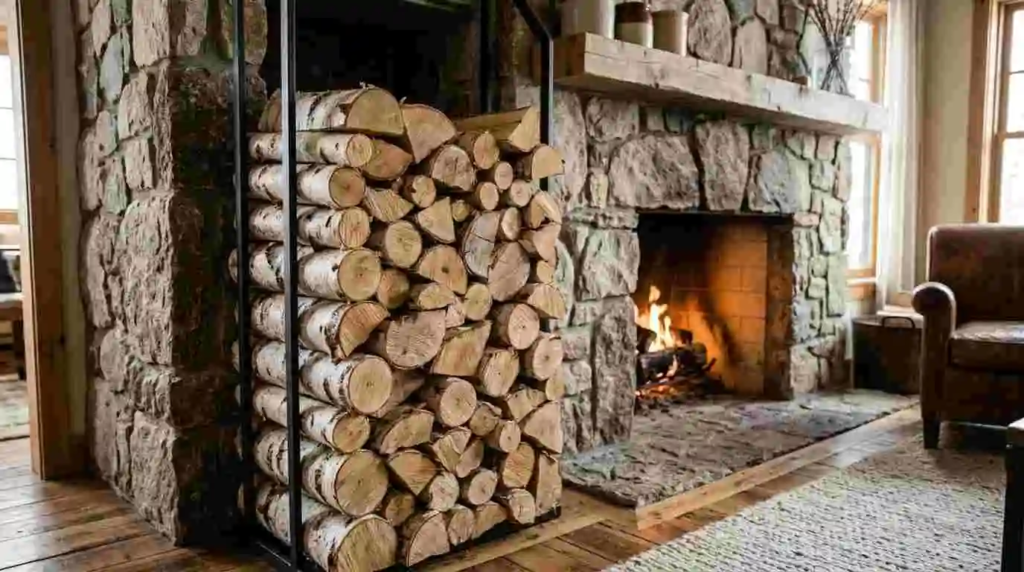
Birch’s pale, often peeling bark looks great in a wood rack or fireplace stack, which matters more than people expect if presentation is part of the appeal (think restaurants, cabins, or rental properties going for that cozy aesthetic).
Cons of Burning Birch Firewood
Birch has plenty going for it, but it’s not without drawbacks. Here’s what to watch out for before you commit to a full cord.
- Burns faster than denser hardwoods
Because birch is lighter and less dense than oak or hickory, it burns through faster. That means more frequent reloading if you’re using it as your primary heat source, especially overnight.
- Bark can flare up
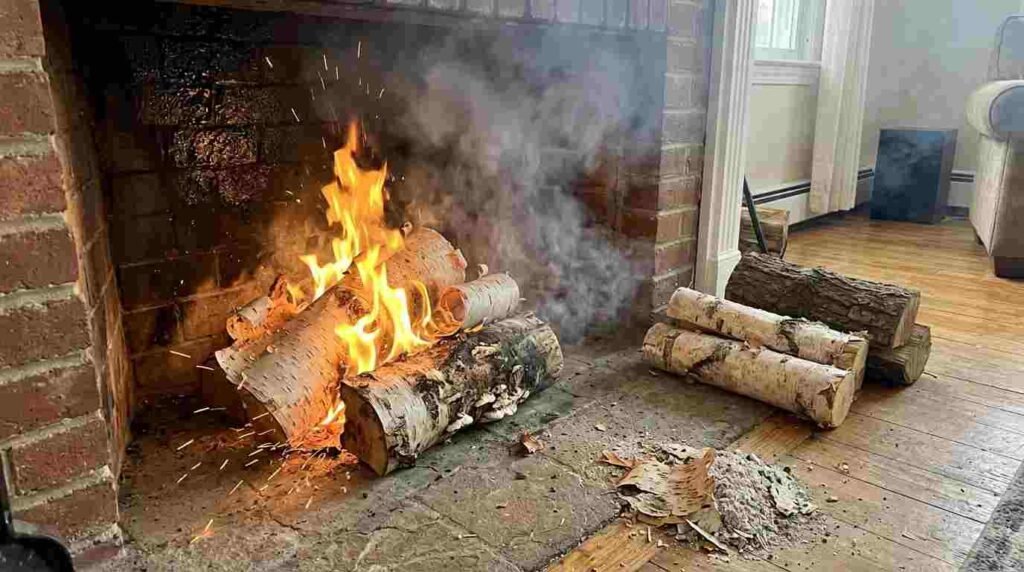
Birch bark is loaded with natural oils, which is great for fire-starting but can cause quick, hot flare-ups and occasional sparking if too much bark-heavy wood is loaded at once. Worth keeping an eye on, especially in an open fireplace.
- Smoke and creosote if unseasoned
This is one of the most common questions people have: Does birch produce a lot of smoke? The answer depends almost entirely on seasoning.
Green or under-seasoned birch has high moisture content, which leads to heavy smoke, weak heat, and faster creosote buildup in your chimney.
Properly seasoned birch, on the other hand, burns clean. The wood itself isn’t the problem – insufficient drying time is.
- Prone to rot if not processed quickly
Birch has a high sap and moisture content, which means logs left whole for too long can start rotting from the inside before they’re ever split. If you’re sourcing birch, it’s best split and stacked soon after cutting.
- Shorter burn time means less efficiency for large spaces
For bigger homes, commercial spaces, or anyone relying on wood heat through a full winter, birch alone may not be efficient enough.
This is why it’s more often better mixed with a denser wood to balance quick heat with longer burn times.
Birch Firewood for Fireplaces vs. Wood Stoves
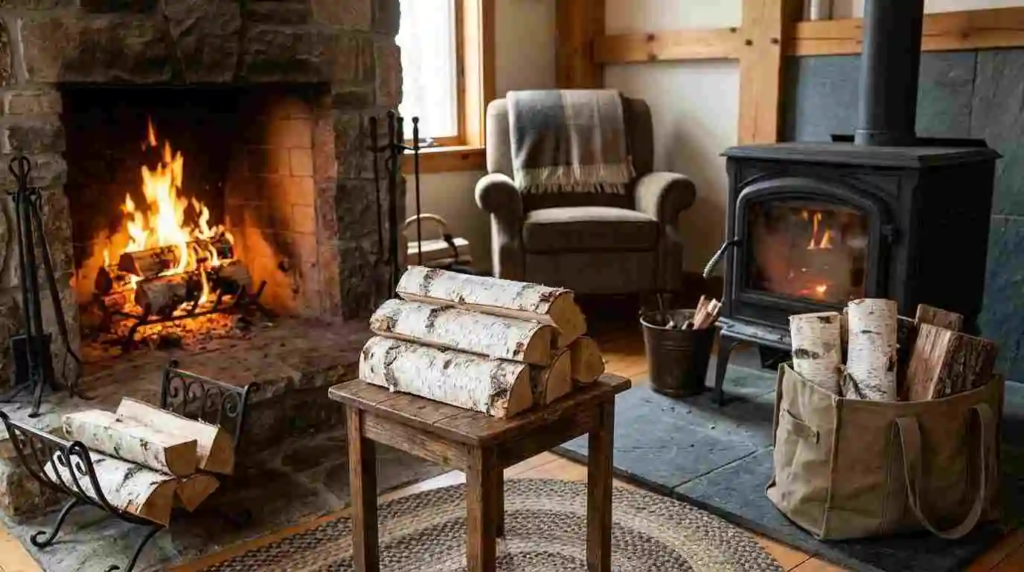
Where you’re burning birch matters just as much as how you season it. Here’s how it performs in each setting.
Birch firewood for fireplaces
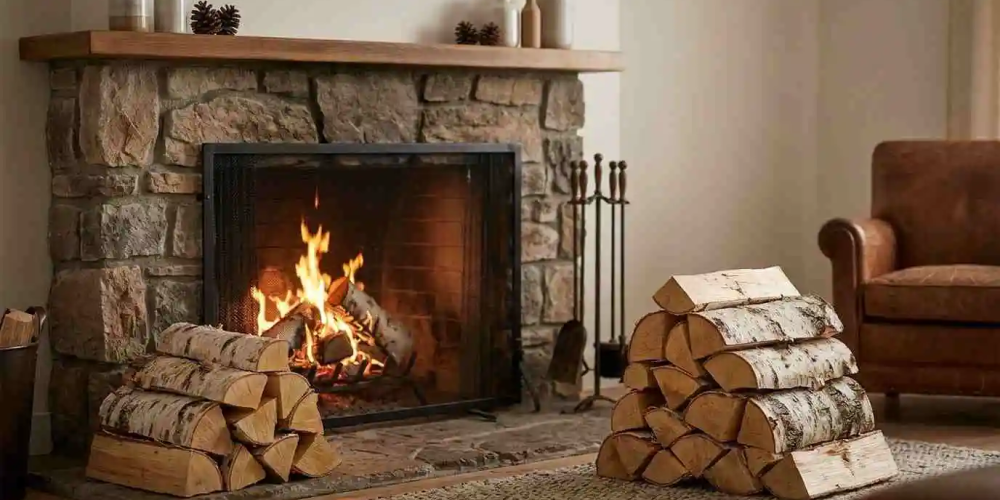
This is where birch really shines. Its bright flame, pleasant aroma, and attractive bark make it a favorite for open fireplaces, whether it’s for ambiance, a quick evening fire, or entertaining guests.
Because birch burns fast and hot, it’s ideal for shorter fires where you want strong visual appeal and heat without tending a fire for hours.
Birch firewood for wood stoves
So, can birch be used in a wood stove? Yes, birch works well in a wood stove, but with a caveat. Since it burns faster than denser hardwoods, using birch alone means more frequent reloading to maintain consistent heat.
Many wood stove owners get the best results by mixing birch with a slower-burning hardwood like oak: birch to get the fire going quickly and pump out early heat, and the denser wood to sustain the burn overnight or through colder stretches.
The bottom line: If your priority is a fast, attractive, low-maintenance fire, birch is an excellent standalone choice for fireplaces.
If you’re heating a home through a full wood stove season, birch is best used as part of a mixed wood strategy rather than your sole fuel source.
Seasoned Birch Firewood — Why It Matters
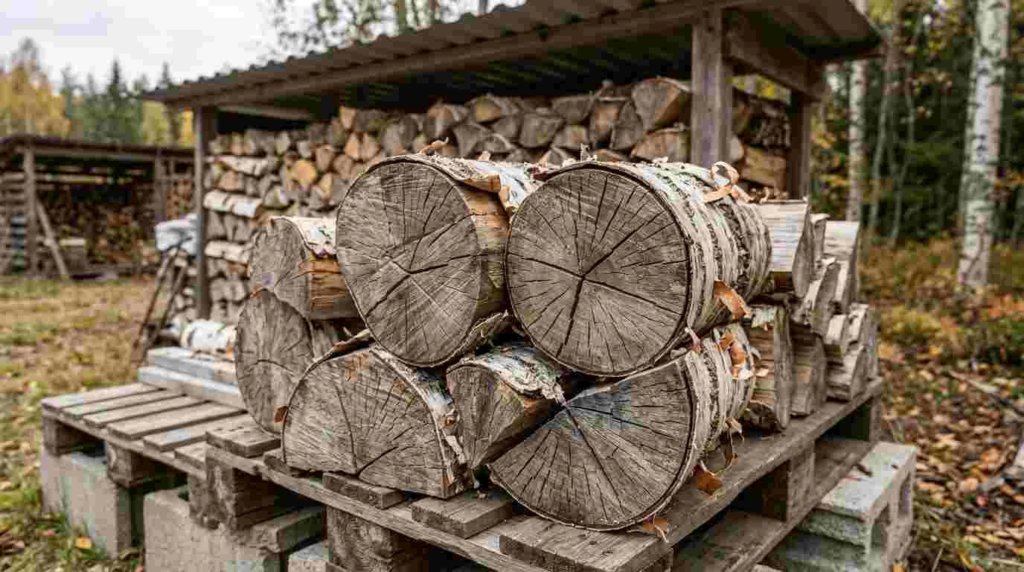
If there’s one factor that determines whether birch performs well or poorly, it’s seasoning. Properly seasoned birch firewood is the difference between a clean, efficient fire and a smoky, inefficient one.
- Seasoning Time: Most birch needs about 6 to 12 months of seasoning time, though this varies by species. Black birch, being denser, tends to be ready around the 6-month mark under good drying conditions. Yellow and white birch, with their higher moisture and sap content, often need closer to a full year to season properly.
- Moisture content: Freshly cut birch can have a moisture content of 30–40% or more. Burning wood at that level wastes most of the fire’s energy just evaporating water instead of producing heat, which leads to weak flames, excessive smoke, and faster creosote buildup in your chimney or flue.
Well-seasoned birch, by contrast, typically sits at 20% moisture or lower — the sweet spot for a clean, efficient burn.
Signs birch is properly seasoned:
- Lighter weight compared to freshly cut wood
- Darker, drier-looking wood with visible cracks on the cut ends
- A hollow sound when two pieces are knocked together
- Bark that’s starting to loosen or peel
A quick note on storage: Birch is more prone to rot than most hardwoods if it’s left in log form too long or stacked directly on the ground.
For best results, split it soon after cutting, stack it off the ground with good airflow, and cover the top while leaving the sides exposed to let moisture escape.
Birch vs. Oak vs. Maple — Which Burns Best?
Birch hardwood firewood holds its own weight against other firewoods. But it is not a one-size-fits-all answer. Here’s a comparison table to help you make the right choice for your needs.
| Wood Type | Heat Output (BTU/cord) | Burn Time | Ease of Splitting | Seasoning Time |
| White Oak | ~25.7 million | Longest | Harder to split | 12+ months |
| Sugar Maple | ~24.0 million | Long, steady | Moderate | 6-12 months |
| Black Birch | ~26.8 million | Moderate-long | Easy | 6-12 months |
| White Birch | ~20.2 million | Shorter | Easy | 6-12 months |
The takeaway: If you have access to black birch, it’s genuinely competitive with oak and maple. White birch, the most commonly available type, burns hotter than softwoods but doesn’t match the heat output or burn time of top-tier hardwoods.
For the best results in a wood stove or all-winter heating setup, many people mix birch with oak or maple — birch for quick heat, denser wood for sustained burns.
Best Uses for Birch Firewood
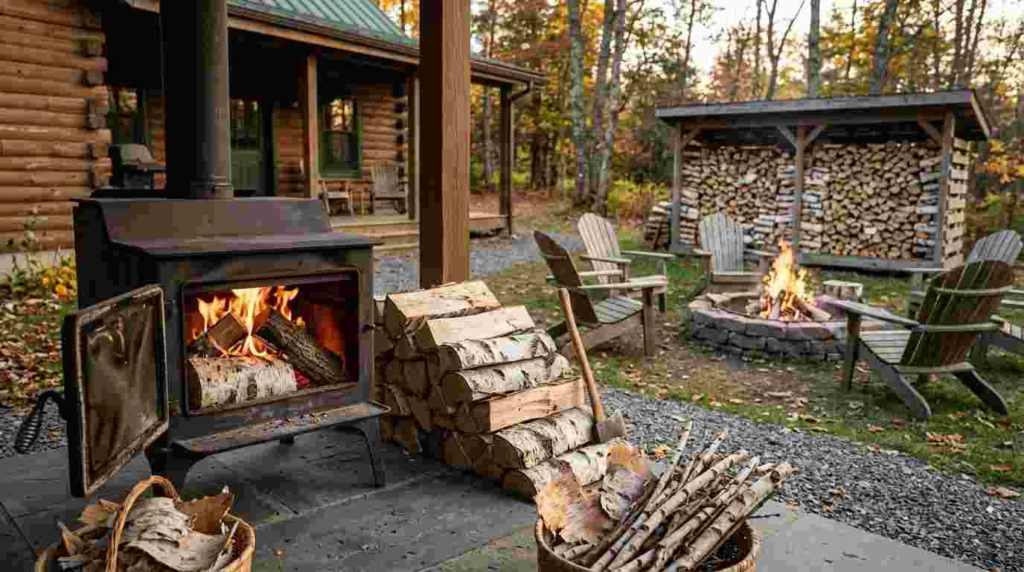
Birch firewood is a versatile option for various applications. Such as:
- Fireplace and Indoor Ambiance Fire: Birch’s light flame, comforting aroma, and well-seasoned burn make it the perfect choice for creating a cozy indoor fireplace.
- Mixed Loads in Wood Stoves: Pair it with a denser hardwood like oak or maple for quick and easy ignition, while the denser wood extends the burn.
- Firepits and Outdoor Gatherings: Its quick igniting ability and pleasant scent make it a great choice for chimineas and casual outdoor fires where long burn time isn’t the priority.
- Kindling and Fire Starting: Birch bark itself is one of the best natural fire starters. It ignites fast even when slightly damp, making it useful to keep on hand regardless of what wood you’re using as your main fuel
- Short-Term or Occasional Heating Needs: Ideal for cabins, guest houses, or anyone who isn’t looking to heat a space around the clock, making it a practical, low-hassle option.
If you’re stocking up for the season, 12 Point Farms LLC carries seasoned birch firewood ready to burn.
FAQs – Birch Firewood Pros and Cons
Is birch good firewood?
Yes. Birch is a solid choice for firewood, offering moderate-to-high heat output, a pleasant aroma, and a clean burn when properly seasoned.
What are the pros and cons of birch firewood?
Birch’s biggest advantages are its ease of splitting, quick seasoning time, pleasant smell, and bright flame. Its bark also makes excellent kindling.
The main downsides are a faster burn rate compared to denser hardwoods, a tendency to rot if not split soon after cutting, and the risk of smoke or creosote buildup if burned before it’s fully seasoned.
Does birch burn hotter than oak?
It depends on the species. Black birch produces slightly more heat per cord than white oak, making it genuinely competitive with oak. White birch, the more common variety, burns noticeably cooler and faster than oak.
Is birch good for fireplaces?
Yes, birch is one of the best woods for fireplaces. It burns with a bright, lively flame, has a pleasant natural aroma, and looks attractive stacked or burning thanks to its pale, peeling bark.
How long should birch firewood be seasoned?
Most birch needs 6 to 12 months to season properly, depending on the species and drying conditions.
Does birch produce a lot of smoke?
Only if it’s not properly seasoned, Green or under-dried birch has high moisture content, which leads to heavy smoke and creosote buildup.
Fully seasoned birch, with moisture content around 20% or lower, burns clean with minimal smoke.
Can birch be used in a wood stove?
Yes. Birch works well in a wood stove, though it burns faster than denser hardwoods, meaning more frequent reloading.
Is birch better than maple for firewood?
It varies by species. Black birch slightly outperforms sugar maple in heat output, but maple generally offers a longer, more consistent burn overall. White birch, the most widely available birch type, produces less heat and burns faster than maple.
Birch firewood earns its popularity for good reason. It’s easy to split, seasons quickly, burns clean, and brings a pleasant aroma and bright flame to any fire.
Black birch even holds its own against oak and maple in heat output, while white birch shines as a fast, low-maintenance option for fireplaces and fire pits.
The one thing that makes or breaks birch every time: proper seasoning. Give it the 6 to 12 months it needs, and you’ll get a clean, efficient burn every time.
If you’re ready to stock up, 12 Point Farms LLC has properly seasoned birch firewood ready to burn. Browse our selection today and get your next cord delivered straight to your door.