Best Firewood for Chimneys: Keep Your Home Warm and Cozy
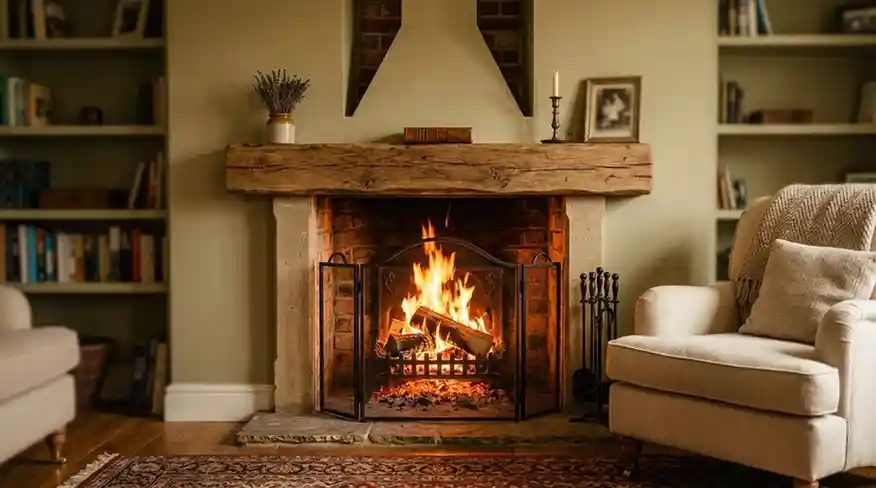
The best firewood for chimneys is properly dried hardwood — specifically oak, maple, ash, or hickory — with a moisture content below 20%. These dense hardwood species produce the cleanest possible combustion, generate the least creosote of any firewood available, and protect your chimney and flue from the gradual damage that comes with burning wet, resin-heavy, or low-quality wood.
Firewood for chimney safety is not just about heat output — it is about what your wood leaves behind inside your flue after every burn. Creosote, the dark, flammable residue that accumulates on chimney walls, is directly caused by incomplete combustion — which is directly caused by burning wood that is too wet, too resinous, or too low in density. Choose the wrong firewood, and every fire you build is slowly damaging the structure designed to protect your home.
At 12 Point Farms LLC, we help homeowners across Wisconsin make smarter firewood decisions every season. In this complete chimney firewood guide, we cover which species are safest for indoor use, how moisture content affects your chimney, the most common mistakes that accelerate creosote buildup, and how to store firewood so it burns cleanly every single time.
Answer: The safest firewood for chimneys is kiln-dried or properly seasoned hardwood (oak, maple, ash, hickory) with moisture below 20%. Avoid softwoods, green wood, and any wood above 25% moisture — all generate dangerous creosote levels in residential chimneys.
Why Choosing the Right Firewood Matters for Chimney Safety
Most homeowners think about firewood in terms of heat — how warm it burns, how long it lasts. Very few think about what that firewood is doing to their chimney every time they light a fire. That gap in awareness is where most chimney problems begin.
What happens inside your chimney when you burn firewood:
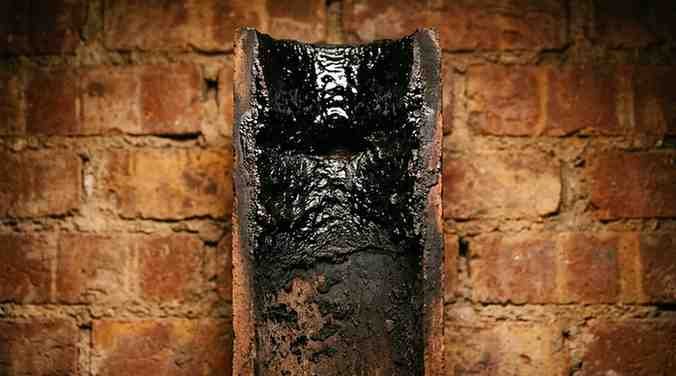
Every time you burn wood, combustion produces a mix of gases, water vapor, unburned wood particles, and chemical compounds that rise through your flue. As these hot gases cool while traveling up the chimney, they condense on the interior chimney walls — forming creosote.
Creosote exists in three stages of severity:
Stage 1 — Flaky creosote: Light, sooty deposits. Easiest to brush away during routine chimney cleaning. Common result of occasional light fires with reasonably dry wood.
Stage 2 — Tar-like creosote: Harder, shinier deposits that have begun to cure. Requires more aggressive cleaning tools. Starts appearing with more regular burning, especially with wood above 25% moisture.
Stage 3 — Glazed creosote: Dense, hardened, highly flammable coating on chimney walls. Extremely difficult to remove. Serious chimney fire risk. This stage results from chronic burning of wet wood, softwood, or green wood.
Why this matters:
The National Fire Protection Association (NFPA) identifies creosote buildup as one of the leading causes of residential chimney fires in the United States. A chimney fire can burn at temperatures exceeding 2,000°F — hot enough to crack chimney liners, damage mortar, and in worst cases, spread to the surrounding home structure.
The single most effective way to prevent chimney fire risk is choosing the right firewood from the start. Properly dried hardwood burns at higher combustion temperatures, produces cleaner exhaust gases, and deposits a fraction of the creosote that wet wood or softwood leaves behind.
Creosote buildup is the primary chimney fire risk. It is caused by burning wet, green, or resin-heavy wood at incomplete combustion temperatures. Dry hardwood below 20% moisture produces the least creosote of any firewood type.
Best Types of Firewood for Chimneys
For chimney safety, always choose dense hardwood with low moisture content. Here is how the best chimney-safe firewood species compare:
| Species | Creosote Risk | Heat Output | Burn Time | Chimney Safety Rating |
|---|---|---|---|---|
| Oak | Very Low | Very High | Very Long | ⭐⭐⭐⭐⭐ |
| Hickory | Very Low | Very High | Very Long | ⭐⭐⭐⭐⭐ |
| Hard Maple | Low | High | Long | ⭐⭐⭐⭐⭐ |
| Ash | Low | High | Long | ⭐⭐⭐⭐ |
| Birch | Low–Moderate | Moderate | Moderate | ⭐⭐⭐ |
| Softwood (Pine) | Very High | Low | Short | ❌ Not Recommended |
| Green/Wet Wood | Extreme | Very Low | Poor | ❌ Never Use Indoors |
Oak Firewood
Oak is the gold standard for chimney safety — and it has earned that reputation through measurable, consistent performance across every indoor heating application.
Oak’s exceptionally high wood density means it burns at sustained high temperatures — the precise condition that produces the most complete combustion and the least creosote. When a fire burns hot and completely, very little unburned material reaches your chimney walls. The result is a cleaner flue after every fire, a longer interval between professional chimney cleanings, and significantly lower long-term chimney fire risk.
Why oak is the safest firewood for chimneys:
- Burns at sustained high temperatures — produces the most complete combustion
- Very low smoke output — clean exhaust gases carry minimal condensable compounds
- Excellent ember bed production — maintains high firebox temperature throughout the burn
- Extremely low moisture when properly dried — minimizes water vapor in the flue
- Long burn time — fewer fire starts means fewer periods of cooler, creosote-producing combustion
One important note: Oak must be properly seasoned or kiln-dried before burning. Green oak — freshly cut and not yet dried — actually has very high moisture content and should never be burned indoors. Confirm your oak firewood has been dried to below 20% moisture before purchase.
For guidance on identifying quality dried oak, read our complete guide on identifying quality firewood.
Maple Firewood
Hard maple is the most versatile chimney-safe firewood — excellent heat output, low creosote production, easy ignition, and a beautiful bright flame that makes it a consistent favorite for indoor fireplace use across the United States.
Hard maple burns at high, sustained temperatures with minimal smoke production. Its natural density — comparable to oak but slightly less — means combustion is nearly as complete, and creosote deposits are nearly as minimal. For homeowners who want the chimney safety benefits of a top-tier hardwood combined with the visual appeal of a bright, crackling flame, hard maple is the outstanding recommendation.
- Produces very low creosote deposits during regular use
- Burns hot and consistently with minimal smoke
- Beautiful bright flame — excellent for ambiance-focused fireplace use
- Easier to ignite than oak — a practical advantage for casual users
- Works equally well in fireplaces, wood stoves, and insert systems
Wondering whether silver maple performs as well as hard maple for fireplace safety? Our guide on is silver maple firewood good breaks down the differences in detail.
Ash Firewood
Ash is the most forgiving chimney-safe hardwood — and for first-time fireplace owners or homeowners who do not always have fully seasoned wood on hand, that forgiving quality is genuinely valuable.
Unlike oak or hickory, ash can be burned at slightly higher moisture levels without catastrophic performance degradation. It ignites more easily than most dense hardwoods, splits cleanly, and produces good heat output with low to moderate creosote production even in less-than-ideal drying conditions.
- One of the easiest hardwoods to ignite — excellent for beginners
- Good heat output and burn time — below oak but well above softwoods
- Low creosote production — safe for regular indoor chimney use
- Burns well even at 25% moisture — the most forgiving of the major hardwood species
- Excellent all-purpose hardwood for homeowners building their first wood-burning season
That said: ash performs significantly better when properly dried to below 20% moisture. Like all firewood, the drier the wood, the cleaner the burn and the safer the chimney.
Hickory Firewood
Hickory is the hottest-burning hardwood you can put in a fireplace — and that intense combustion temperature is exactly what makes it so safe for chimneys.
High combustion temperature equals complete burning. Complete burning equals minimal unburned compounds reaching your flue. Hickory’s extraordinary density and naturally low resin content produce some of the cleanest possible exhaust gases of any firewood species — making it one of the most chimney-friendly options available when properly dried.
- Hottest-burning of all common hardwood species
- Extremely complete combustion — minimal creosote at high burn temperatures
- Excellent ember bed — maintains high firebox temperatures throughout
- Low smoke output when properly dried
- Produces a distinctive, mild natural aroma — particularly appealing for indoor fireplace use
Note: Hickory is also the preferred firewood for wood-fired cooking and smoking applications due to its intense, aromatic heat. Explore firewood for wood-fired ovens for more on cooking-specific applications.
How Moisture Content Affects Chimney Performance
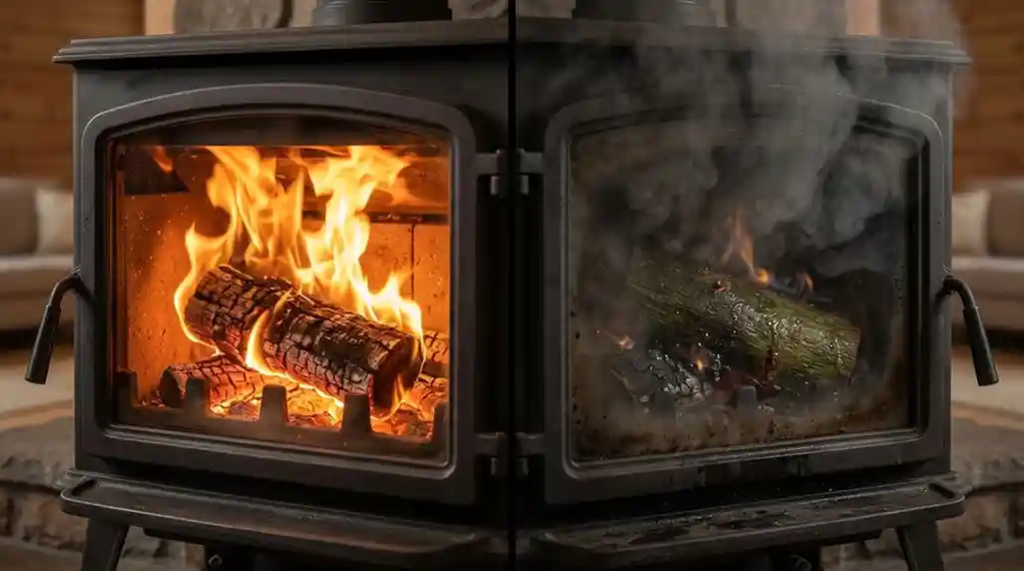
Moisture content is not just a firewood quality metric — it is the single most important chimney safety variable under your control as a homeowner.
Why Dry Firewood Matters
Here is what actually happens inside your firebox when you burn wood with high moisture content:
The fire’s energy — which should be heating your room — is first consumed evaporating the water trapped inside every log. This process drops combustion temperature dramatically. Lower combustion temperature means incomplete burning. Incomplete burning means more unburned compounds, more smoke, more particulate matter, and more condensable gases reaching your chimney walls.
The direct result: accelerated creosote buildup after every single fire.
A homeowner burning properly dried hardwood (below 20% moisture) and a homeowner burning wood at 35% moisture may be using the exact same species — but the homeowner burning wet wood can accumulate Stage 2 or Stage 3 creosote in a single heating season that requires aggressive professional cleaning to remove safely.
Dryness is not optional for indoor chimney use. It is a safety requirement.
Ideal Moisture Levels
| Moisture Level | Wood Status | Chimney Safety | Recommendation |
|---|---|---|---|
| Below 15% | Kiln-dried | Excellent | Best choice for chimneys |
| 15–20% | Well-seasoned | Very Good | Recommended for indoor use |
| 20–25% | Adequately seasoned | Acceptable | Use with caution |
| 25–35% | Under-seasoned | Poor | Not recommended indoors |
| Above 35% | Green/freshly cut | Dangerous | Never burn indoors |
How to measure moisture content:
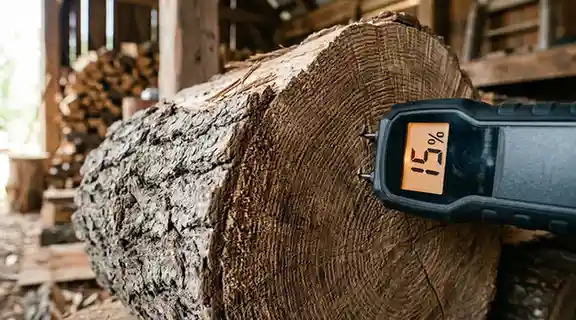
A handheld wood moisture meter is the most reliable and affordable tool for this job — available at most hardware stores for under $25. Insert the pins into a freshly split face of the wood and read the digital display. Below 20% is your minimum threshold for indoor chimney use. Below 15% is the kiln-dried quality range and optimal for chimney safety.
For our complete technical guide, visit the firewood moisture content guide.
Signs of Properly Seasoned Firewood
Before purchasing any firewood for indoor chimney use, perform this quick quality check:
- ✔ End grain cracking — visible, well-developed radial cracks across the cut face of the wood
- ✔ Faded color at end grain — dried wood looks gray and weathered, not bright and fresh
- ✔ Light weight — noticeably lighter than green wood of the same species and size
- ✔ Hollow sound — strike two pieces together; dry wood rings with a sharp crack, wet wood thuds dully
- ✔ Bark separates easily — loose or partially detached bark is a positive dryness indicator
- ✔ No hissing when placed on fire — wet wood audibly sizzles and steams; dry wood does not
If the firewood you are considering fails more than one of these checks, it needs more drying time before it is safe for indoor chimney use.
Seasoned vs Kiln-Dried Firewood for Fireplaces
Both seasoned and kiln-dried firewood are acceptable for indoor chimney use — but they are not equal in performance or chimney safety. Understanding the difference helps you make the right choice for your fireplace.
Seasoned Firewood is wood that has been cut, split, and air-dried naturally outdoors for a minimum of 6 to 12 months. When done correctly under good conditions — proper stacking, adequate airflow, protected from rain — seasoned hardwood reaches moisture levels between 20% and 25%. Properly seasoned hardwood burns cleanly, produces acceptable heat output, and generates low to moderate creosote when used correctly.
The limitation of seasoning in Wisconsin:
Our short, often wet summers make achieving consistent low moisture through air-drying alone genuinely difficult. Wood that appears seasoned on the outside may still contain high moisture in its core — especially with dense species like oak that require longer drying times.
Kiln-Dried Firewood is processed in a controlled, high-heat kiln environment — typically between 250°F and 280°F — that uniformly reduces moisture content to below 20%, and in many cases to 12–15%, in just 24 to 72 hours. The kiln process does not just dry the wood faster — it dries it more completely and more consistently than natural seasoning can achieve.
For chimney safety specifically, kiln-dried firewood offers measurable advantages:
| Factor | Seasoned Firewood | Kiln-Dried Firewood |
|---|---|---|
| Moisture Content | 20–25% | 12–20% |
| Combustion Completeness | Good | Excellent |
| Creosote Production | Low–Moderate | Very Low |
| Smoke Output | Low | Minimal |
| Chimney Safety | Good | Excellent |
| Bug/Pest Risk | Present | Eliminated |
| Indoor Storage Safety | Acceptable | Excellent |
| Ignition Speed | Moderate | Fast |
Bottom line for chimney owners: Kiln-dried hardwood is the safest and highest-performing choice for regular indoor fireplace and wood stove use. It burns more completely, produces less creosote, generates less smoke, and protects your chimney more effectively than conventionally seasoned wood.
Explore our kiln-dried firewood guide and seasoned firewood resource for a complete comparison and buying guidance.
Common Firewood Mistakes That Damage Chimneys
These are the errors that silently damage chimneys — most homeowners never connect the symptom (chimney problem) to the cause (firewood choice). Avoiding these mistakes is the most effective preventative chimney maintenance you can do.
Burning Green Wood
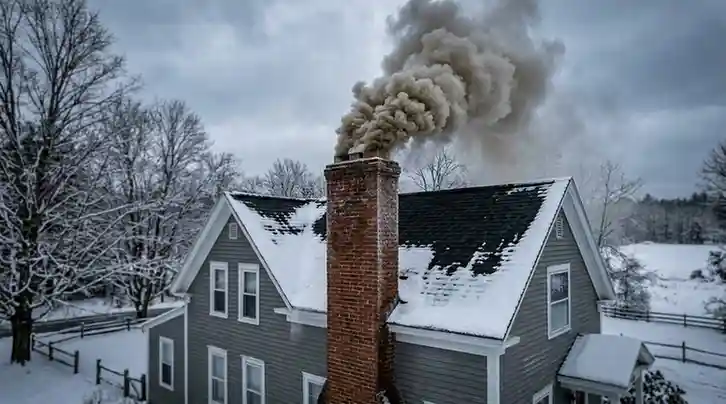
Green wood is freshly cut wood that has not been dried — it contains moisture levels between 40% and 60% or higher depending on species and time of year. Burning green wood in an indoor fireplace is one of the most damaging things a homeowner can do to their chimney.
The problems with green wood are compounding: extremely high moisture content drives combustion temperature down to the point where burning is barely more than smoldering. At these low temperatures, the large volume of water vapor and unburned compounds produced travels up the flue and condenses heavily on chimney walls before it can escape. A single season of regular green wood burning can produce Stage 3 glazed creosote deposits that require dangerous and expensive professional removal.
Additional risks of green wood:
- Produces heavy, acrid smoke that is harmful to indoor air quality
- Creates thick white or gray smoke visible from the chimney exterior
- Fires are extremely difficult to maintain — constant relighting
- Accelerates deterioration of chimney mortar and liner through excessive moisture cycling
- Can trigger smoke backdrafts into the living space due to low draft temperatures
Rule: Never burn green wood in an indoor fireplace or wood stove. Always confirm seasoning or kiln-drying before purchasing firewood for indoor chimney use. Read our firewood seasoning time guide to understand drying timelines by species.
Using Wet Firewood
Wet firewood is different from green wood — it is wood that was once properly dried but has been re-exposed to moisture through improper outdoor storage. Rain-soaked firewood, snow-covered stacks without proper covering, and wood stored directly on bare ground are all common sources of re-wetted firewood.
The chimney damage from wet firewood is nearly identical to green wood: low combustion temperature, excessive steam and unburned compounds in the flue, and accelerated creosote accumulation. The frustrating reality for many homeowners is that they purchased quality firewood — then stored it poorly and created the exact problem they paid for quality wood to avoid.
Signs your firewood has gotten wet:
- Heavier than expected for its size
- Surface feels damp or cold to the touch
- Dark moisture staining visible on the cut face
- Hisses or sizzles when placed on the fire
- Produces thick white smoke rather than a clean, thin gray exhaust
If your outdoor stack has been exposed to heavy rain or snow, allow it adequate drying time before burning. Splitting exposed pieces and stacking them under a proper cover in a dry, airy location can restore most wet firewood to burnable quality — it just takes time. For faster results, read our guide on how to dry wood quickly.
Ignoring Chimney Cleaning
Even the best firewood — properly dried, premium hardwood — will gradually deposit some amount of creosote over a full heating season of regular use. Ignoring annual chimney inspection and cleaning allows even minimal creosote accumulation to build into something more serious over multiple seasons.
Recommended chimney cleaning schedule:
- Annual inspection: Every chimney used for residential heating should be professionally inspected at least once per year — typically at the end of the heating season or before the next season begins
- Cleaning frequency: Based on usage. Light users (under 1 cord per season) may go two seasons between cleanings with proper dry hardwood. Heavy users (2+ cords per season) should clean annually without exception
- Immediate inspection triggers: Visible black residue falling into the firebox, strong smoky smell from the fireplace when not in use, smoke entering the room during a fire, any visible cracking of the chimney liner or exterior
Important note: Annual professional chimney inspection is not a substitute for choosing the right firewood — it is a complement to it. A chimney cleaned annually but loaded regularly with wet wood will re-accumulate dangerous creosote within one season.
How to Reduce Creosote Buildup
The most effective creosote reduction strategy is simply burning the right firewood the right way. Beyond wood selection, these practices reduce creosote accumulation between professional cleanings:
1. Always burn dry hardwood below 20% moisture.
This is the foundational step. Everything else is secondary to moisture content and wood density.
2. Build hot fires, not smoldering ones.
Creosote forms most rapidly during the cool-down and smoldering phases of a fire, not during active burning. Build fires that burn hot and bright rather than slow-smoldering overnight. On wood stoves, use damper control to moderate burn rate rather than letting the fire cool to a smolder.
3. Warm up the flue before adding large logs.
A cold flue creates a cold zone near the top of the chimney where condensation forms most rapidly. Start with kindling and small splits to warm the flue, then add larger hardwood logs once the draft is well established.
4. Use a fire starter kit for clean ignition.
Clean, fast ignition means the fire reaches high temperatures more quickly — reducing the duration of the low-temperature smoldering phase where creosote forms most aggressively.
5. Never restrict airflow too aggressively on wood stoves.
While damper control extends burn time, closing the damper too far drops combustion temperature into creosote-producing ranges. Keep enough airflow to maintain visible flame activity.
6. Burn one hot, well-maintained fire rather than multiple small smoldering ones.
Multiple short, poorly maintained fires produce more creosote per unit of wood burned than a single well-managed hot fire.
7. Schedule annual professional chimney sweeping.
No matter how carefully you choose and burn your firewood, schedule annual inspection and cleaning by a certified chimney sweep.
How to reduce chimney creosote buildup: Burn dry hardwood below 20% moisture, build hot fires rather than smoldering ones, warm the flue before loading large logs, and schedule annual professional chimney sweeping. Wood moisture content is the single most controllable factor in creosote reduction.
Firewood Storage Tips for Cleaner Burning
Proper storage directly protects your chimney. Firewood that arrives dry and is stored poorly burns wet — and wet wood destroys chimney cleanliness. Here is how to protect your firewood investment from purchase to firebox:
Keep Firewood Dry
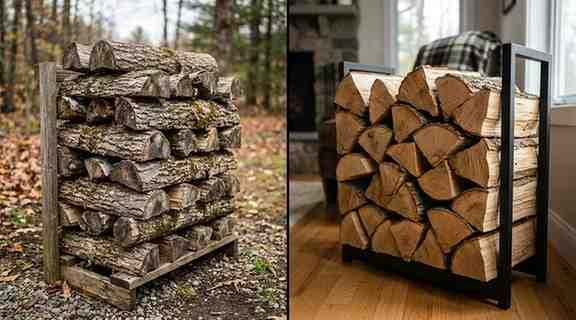
The goal of outdoor winter storage is simple: keep the top protected from precipitation while maintaining airflow through the sides and beneath the stack.
Practical steps:
- Cover only the top of your firewood stack — use a purpose-built firewood cover or a tarp secured over the top surface only
- Never fully wrap the stack in plastic — this traps atmospheric moisture and dramatically accelerates mold and re-wetting
- After heavy snow, clear snow accumulation from your firewood cover before it melts and penetrates the stack
- Use a proper firewood storage shed for large supplies — the most effective long-term chimney-safe storage solution
Improve Airflow
Airflow through your stored firewood is what maintains dryness between deliveries and during the heating season. Without it, surface moisture becomes trapped and penetrates into the wood — raising moisture content and chimney risk.
Airflow best practices:
- Stack in a single row whenever possible — one log deep with both faces exposed to air and sun
- Elevate the entire stack at least 4 to 6 inches off the ground using a rack, pallets, or pressure-treated lumber
- Keep at least 3 to 5 inches of clearance between the stack and any wall, fence, or structure
- Orient your stack in a location that receives direct sunlight for part of the day — sun exposure is one of the most effective passive drying forces available
For a complete illustrated guide to correct outdoor storage technique, visit properly stacking firewood.
Protect Firewood from Moisture
Beyond rain and snow, ground moisture is a silent and persistent threat to stored firewood. Wood stacked directly on bare soil absorbs moisture continuously through direct contact — even in dry weather — and the bottom layers of an improperly stored stack can remain dangerously wet even when the top layers appear dry.
Moisture protection checklist:
- ✔ Elevate all wood immediately upon delivery — never leave it on bare ground even temporarily
- ✔ Use a rack, pallet, concrete blocks, or pressure-treated lumber as your base layer
- ✔ Inspect the bottom layer of your stack periodically through the season — feel for dampness and check with a moisture meter if uncertain
- ✔ Bring only 24 to 48 hours worth of wood inside at a time — indoor warmth and low humidity will fully dry the surface of incoming wood before it reaches the firebox
- ✔ Rotate older stock to the front — use the oldest, most fully dried wood first
Visit our complete firewood storage tips resource for our full seasonal storage protocol.
Choosing the Right Firewood for Long-Term Chimney Health
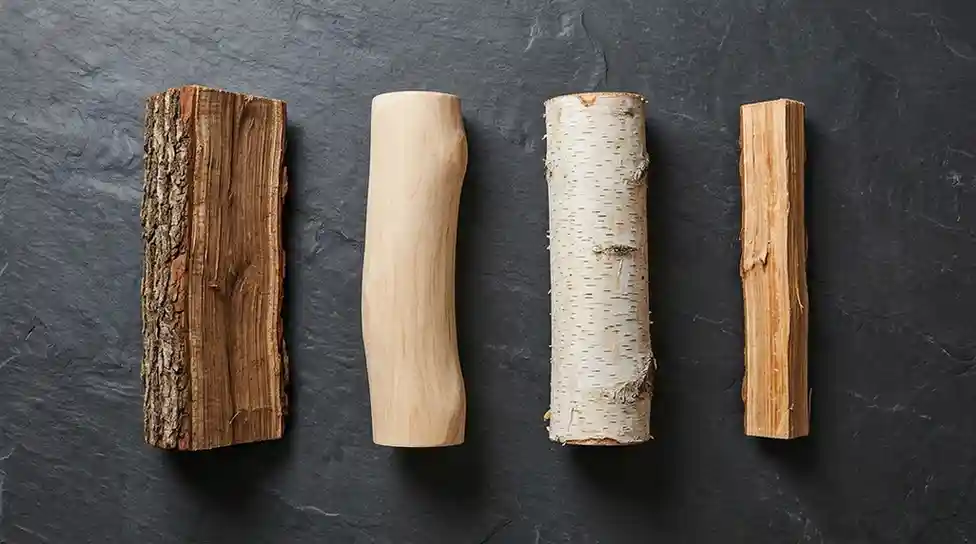
Long-term chimney health is built on consistent, correct firewood choices — not on one-time luck. Here is a practical, direct reference guide for matching firewood choice to your specific fireplace or wood stove situation:
For traditional open fireplaces:
Choose kiln-dried hard maple or oak. Both burn at sustained high temperatures with minimal smoke output and low creosote production. Maple offers a brighter, more visually appealing flame. Oak offers longer burn time and a deeper, hotter coal bed. Avoid all softwoods and any wood above 20% moisture for indoor chimney use. Read our dedicated guide on firewood for indoor fireplaces.
For high-efficiency wood stoves:
Oak or hickory is the top recommendation. High-efficiency wood stoves operate at sustained high temperatures — and they perform best with the densest, driest hardwood available. Hickory and oak both produce the deep coal beds and sustained high-temperature combustion that these stoves are designed to utilize. Read our firewood for wood stove guide for detailed loading and sizing recommendations.
For fireplace inserts:
Hard maple, oak, or ash. Fireplace inserts are more efficient than open fireplaces but are also more sensitive to smoke and creosote issues because their enclosed design traps exhaust gases at lower initial temperatures. Dry hardwood below 18% moisture is strongly recommended for insert systems.
For all indoor chimney systems:
Our Mixed Hardwood Full Cord — a carefully blended mix of oak, maple, hickory, birch, and cherry — provides an excellent, versatile chimney-safe firewood option that delivers consistent heat output, low creosote production, and outstanding value for homeowners who use their fireplace or wood stove regularly throughout the heating season.
As a Trusted Firewood Supplier serving Wisconsin firewood buyers across the region, 12 Point Farms LLC supplies properly dried, quality-tested hardwood firewood to homeowners who want both performance and chimney safety from every single load. Explore our complete Firewood Info resource library for guides on every aspect of buying, burning, and storing chimney-safe firewood.
FAQ
What is the best firewood for chimneys?
The best firewood for chimneys is properly dried hardwood — specifically oak, hickory, hard maple, or ash — with a moisture content below 20%. These dense species burn at sustained high temperatures, produce the most complete combustion, and generate the least creosote of any firewood type available. Kiln-dried hardwood at 12–15% moisture is the safest and highest-performing option for regular indoor chimney use.
Which firewood creates the least creosote?
Oak and hickory create the least creosote of all common firewood species when properly dried. Their high wood density produces sustained, high-temperature combustion — which burns exhaust compounds more completely before they reach the flue. Hard maple and ash are close alternatives. Softwoods like pine create the most creosote due to their high resin content and low combustion temperatures, and should never be used as primary fuel for indoor chimneys.
Is seasoned firewood better for fireplaces?
Yes — significantly better than green or improperly dried wood. Properly seasoned firewood burns at higher temperatures, produces less smoke, and deposits far less creosote than wood with high moisture content. Kiln-dried firewood performs even better than conventionally seasoned wood, reaching lower moisture levels more consistently and producing the cleanest possible combustion for chimney safety.
Can wet firewood damage a chimney?
Yes. Wet firewood is one of the leading causes of chimney damage in residential homes. Burning wood with moisture above 25% produces low-temperature, incomplete combustion that deposits heavy creosote on chimney walls with every fire. Over time, this accelerates Stage 2 and Stage 3 creosote accumulation — the most dangerous and most difficult types to remove. It also exposes chimney mortar and liners to excessive moisture cycling, which degrades the structure over multiple heating seasons.
What moisture level is ideal for fireplace firewood?
Ideal moisture content for fireplace firewood is below 20%. Kiln-dried firewood at 12–15% moisture is the optimal range for chimney safety — it ignites fast, burns at maximum temperature, produces minimal smoke, and deposits the least possible creosote. Anything above 25% moisture should not be burned in an indoor fireplace or wood stove. A handheld moisture meter is the most reliable way to verify before burning.
Which hardwood burns the cleanest in a fireplace?
Oak and hickory burn the cleanest of all common hardwood species due to their very high wood density and naturally low resin content. Hard maple is a close third. All three produce highly complete combustion at sustained high temperatures — the conditions that result in the cleanest possible exhaust gases and minimal chimney deposits.
How can I reduce chimney smoke?
To reduce chimney smoke: burn properly dried hardwood below 20% moisture, build hot and active fires rather than slow smoldering ones, warm the flue before loading large logs, ensure adequate airflow through the firebox, and never burn softwood, green wood, or treated lumber indoors. The single most impactful change most homeowners can make is switching from wet or poorly seasoned wood to properly dried hardwood.
How often should a chimney be cleaned when using firewood?
Chimneys used for regular residential heating should be professionally inspected at least once per year — ideally at the end of the heating season or just before the next one begins. Cleaning frequency depends on usage volume and firewood quality. Homeowners burning quality dry hardwood in moderate quantities may clean every one to two seasons. Heavy users burning 2 or more cords per season should plan for annual professional cleaning regardless of wood quality. Annual inspection is a non-negotiable safety practice regardless of firewood type.