Which Firewood Is Ideal for Indoor Fireplaces?
Firewood for Indoor Fireplaces: What Really Matters in 2026-2027
Firewood for Indoor Fireplaces should be seasoned hardwood with under 20% moisture, like oak, hickory, or ash — 12 Point Farms LLC explains how to choose, season, and burn it safely at home.
Here’s the thing. Choosing the right wood for your fireplace isn’t just about heat — it’s about safety, air quality, and how clean your hearth stays. The wrong wood creates excess smoke, creosote buildup, and wasted heat. Properly seasoned firewood burns hotter, cleaner, and more efficiently, giving you steady warmth without filling your home with smoke or odors. This one choice quietly controls how well everything else works.
There’s a specific kind of magic that happens when you light a fire. The world outside gets a little quieter, the room glows, and suddenly, your living room is the only place anyone wants to be.
But as any homeowner knows, that “cozy” dream can quickly turn into a living room full of smoke and a frantic search for the window keys if you aren’t burning the right wood. At 12 Point Farms LLC, we’re big believers that a fireplace should be a source of relaxation, not a chore.
To help you get it right every time, we’ve put together everything you need to know about picking the best wood for indoor use — so you can spend less time fussing with the matches and more time enjoying the warmth. (If you’re heating your whole home with wood rather than just running an evening fire, our complete guide to firewood for heating a home covers BTU ratings and seasonal cord planning in more depth.)
Hardwood vs. Softwood: What’s the Real Difference?
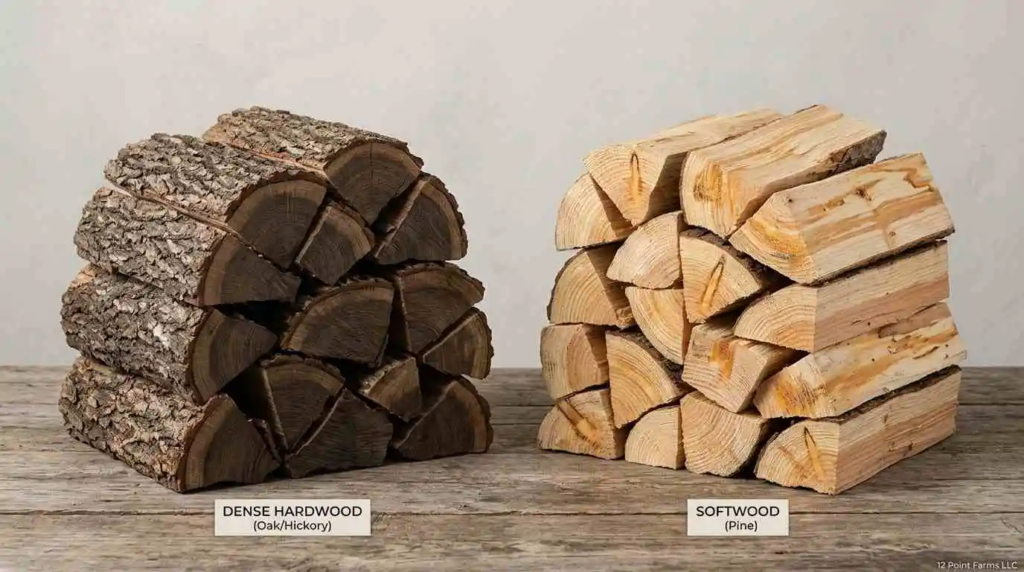
If you’ve ever walked through a lumber yard, you know there’s a massive variety of trees out there. But for indoor burning, we generally split them into two camps: hardwoods and softwoods.
Hardwoods (The “Set It and Forget It” Choice)
Coming from deciduous trees like Oak, Hickory, and Maple, hardwoods are dense and heavy. Because they’re so packed with fiber, they provide strong, steady heat for efficient burning.
They take a little longer to get going, but once they’re lit, they burn for hours. If you’re looking for a fire that will last through a whole movie — or the whole night — hardwood is your best friend.
Softwoods (The “Quick Start” Assistants)
Trees like Pine, Fir, and Spruce grow fast and are filled with resin (sap). This makes them great for outdoor bonfires, but they aren’t what we’d recommend for a main indoor burn. They pop, they spark, and they burn out in a flash.
Our Advice: Keep a few sticks of softwood around as kindling to get the flames started, but feed the fire with hardwoods to keep it steady.
The Golden Rule: Seasoned Wood Only
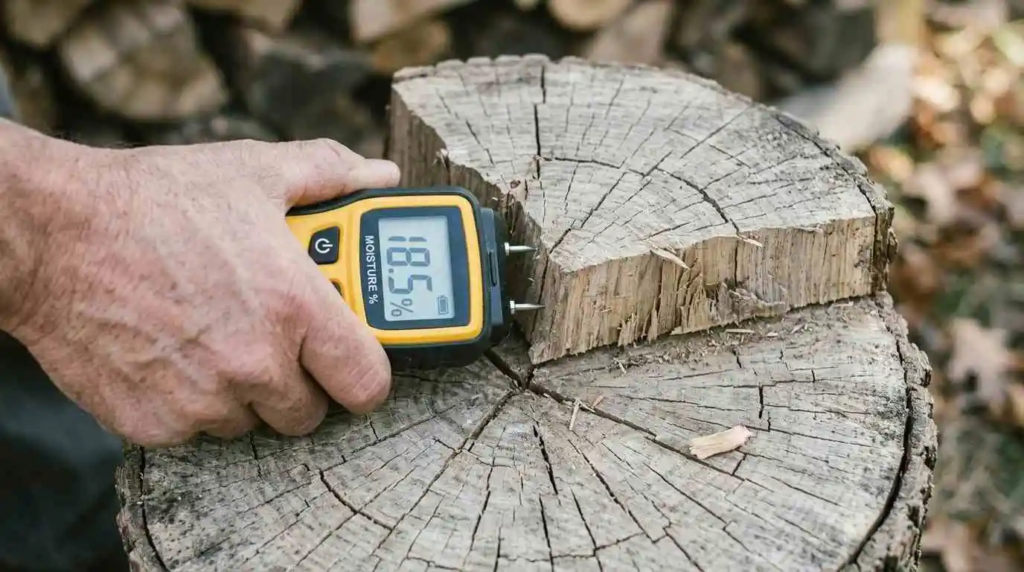
The biggest mistake people make isn’t the type of wood; it’s the moisture in the wood. Freshly cut wood (called “green” wood) is basically a sponge.
If you try to burn it, all the heat goes into evaporating the water inside, which creates a hissing sound and a thick, nasty smoke.
To avoid a “smokestack” in your living room, you need wood that’s properly dried until its moisture content is below 20%.
How to spot seasoned wood:
- The Sound: Knock two logs together. If they sound like bowling pins (a hollow “clink”), they’re ready. If they make a dull “thud,” they’re still wet.
- The Look: Look for cracks in the ends and a greyish, weathered color.
- The Weight: Dried wood is surprisingly light compared to a fresh, heavy log.
- The Test: If you want a definitive answer instead of guesswork, a cheap moisture meter (press the pins into a freshly split face) will confirm you’re under that 20% mark.
Choosing Your Vibe: The Best Species for the Hearth
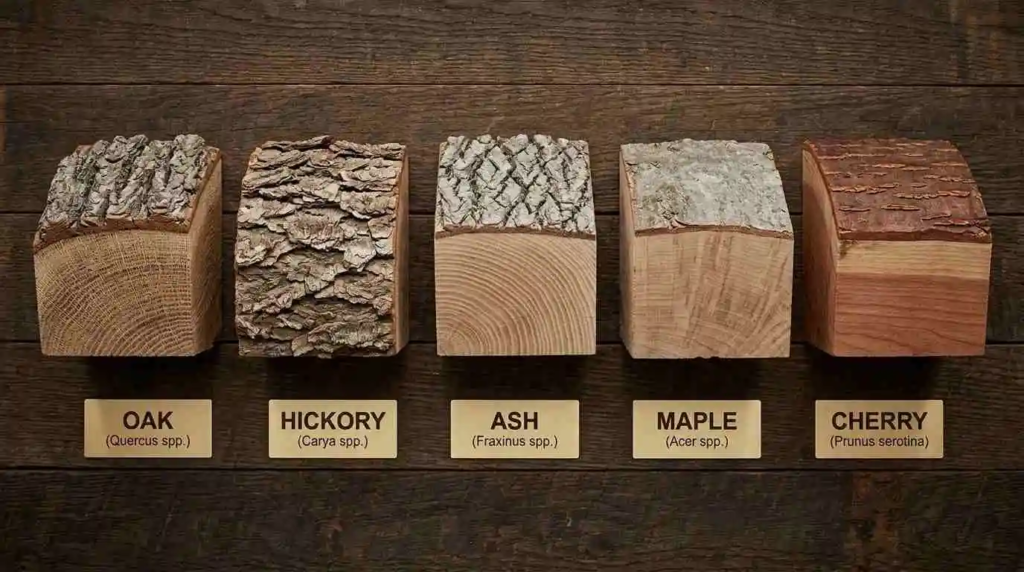
Every wood has its own “personality.” Depending on what you’re looking for, here are our top picks — with approximate heat output so you’re not just picking on vibes alone:
| Wood Type | Personality | Approx. BTUs/Cord | Best For… |
|---|---|---|---|
| Oak | The Reliable Workhorse | ~24–29 million | Long, slow burns that keep the house warm all night |
| Hickory | The Powerhouse | ~24–28 million | The highest heat output for those sub-zero nights |
| Ash | The Clean Burner | ~23–24 million | Very low smoke, easy to light, splits clean |
| Maple | The Balanced Choice | ~21–24 million | Steady heat with a pleasant, sweet aroma |
| Cherry | The Romantic | ~20–21 million | Aromatic ambiance fires with a sweet scent |
Want the full breakdown on any of these? We’ve got dedicated guides on Oak firewood benefits, Ash firewood properties, and Maple firewood qualities — or see the full BTU comparison chart in our home heating guide.
How Much Wood Do You Need for an Evening Fire?
You don’t need a full cord in the living room to enjoy a good fire. As a rough guide:
- A casual weeknight fire (2–3 hours): 4–6 split logs, plus a bit of kindling to start.
- A full evening by the fire (4+ hours, guests over): 8–12 logs.
- Weekly use through the season: a half cord or a bundle of Campfire Bundles will usually cover you comfortably.
Only bring in what you’ll burn that night or the next couple of days. Wood stored indoors for long stretches can invite pests, so keep your main stack outside and just carry in a small rack’s worth at a time.
Keeping Your Fireplace Safe and Clean
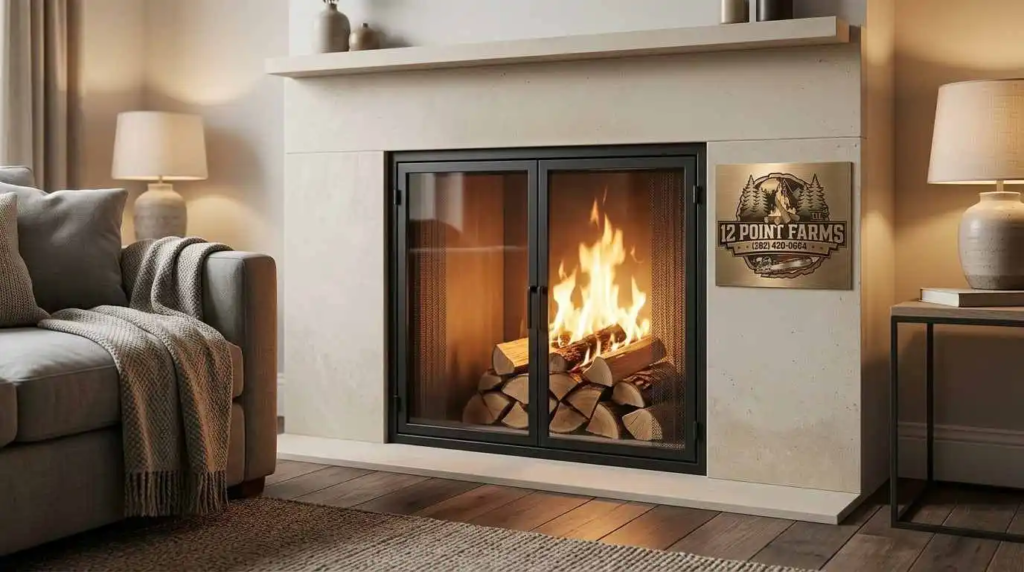
Safety is the one area where we never compromise. Burning the wrong stuff doesn’t just make a mess; it can be dangerous.
- Avoid “The Junk”: Never burn pallet wood, painted boards, or pressure-treated lumber. The chemicals used to treat them are toxic when inhaled.
- Watch the Creosote: Using unseasoned wood or high-resin pine causes creosote — a black, tar-like soot — to build up in your chimney. This is the #1 cause of chimney fires. An annual professional sweep and inspection is the simplest way to stay ahead of it.
- Check Your Airflow: A clean chimney and an open damper are just as important as the wood itself — a closed or partially blocked damper traps smoke indoors instead of drawing it up and out.
- Use a Screen or Glass Doors: A spark screen or glass fireplace doors keep embers and sparks contained, especially important if you have kids, pets, or rugs nearby. Glass doors also improve efficiency by controlling airflow into the firebox.
- Install a Carbon Monoxide Detector: Any indoor combustion appliance, including a fireplace, warrants a working CO detector nearby. It’s inexpensive insurance for something that matters a lot.
Why Trust 12 Point Farms LLC?
We live and breathe the outdoors, and we know that a good fire starts long before you strike the match. It starts with how the wood is sourced, split, and dried.
Seasoned vs. Kiln-Dried — which is right for your fireplace?
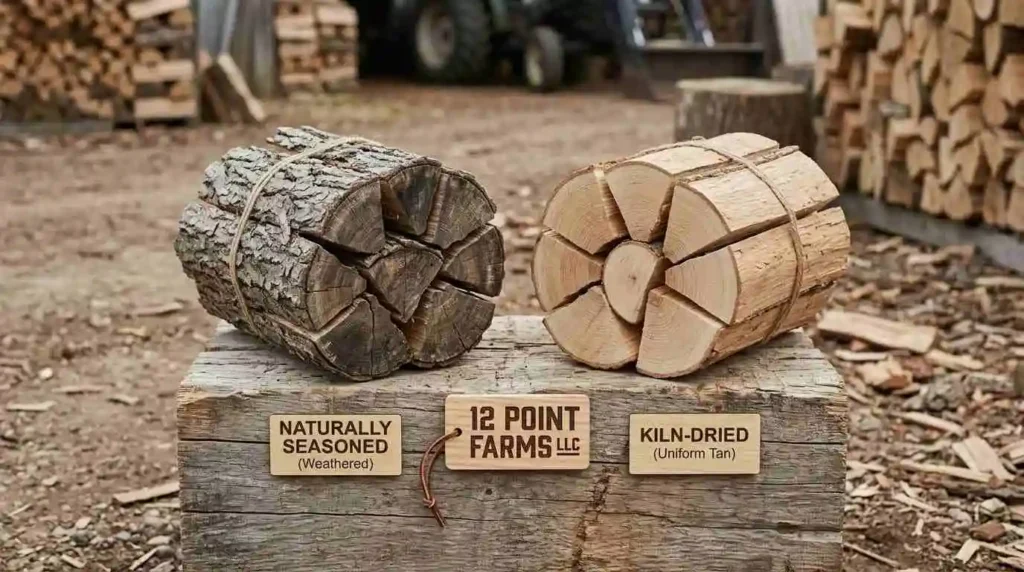
Both give you clean, low-moisture wood, just by different paths. Seasoned firewood is air-dried naturally over several months, and it’s our most economical option. Kiln-dried firewood goes through controlled heat drying, which pushes moisture content down fast and consistently — meaning quicker lighting, noticeably less smoke, and no surprises from log to log. If your fireplace gets regular indoor use, especially in a room without great ventilation, kiln-dried is worth the small premium for the cleaner burn alone.
At 12 Point Farms LLC, we’re committed to providing our community with premium hardwood — seasoned or kiln-dried — that burns hot, stays clean, and makes your home feel like a sanctuary. We don’t just sell logs; we sell the peace of mind that comes with knowing your hearth is fueled by the best. Browse our full lineup of firewood products and fire starter kits →
Firewood for Indoor Fireplaces, Delivered Across Wisconsin
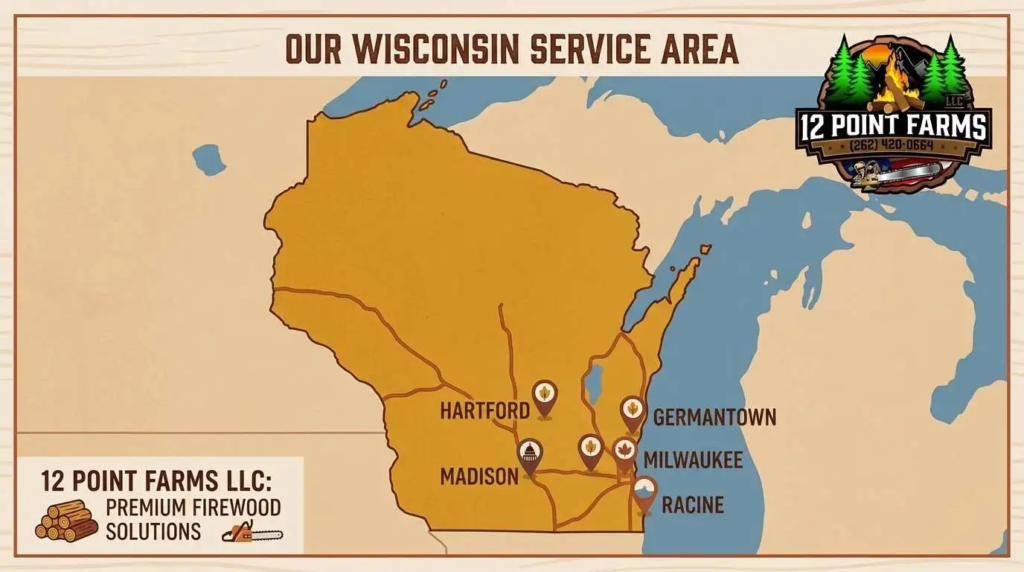
Great fireplace wood starts with where it comes from — and ours comes from right here. We cut, split, and season our hardwood out of our Hartford, WI wood yard, serving Washington County and communities across Wisconsin. Shorter distance between our yard and your hearth means we can actually guarantee the dryness, not just promise it.
We deliver premium seasoned firewood to homes throughout the region, including:
- Firewood delivery in Madison, WI
- Firewood delivery in Racine, WI
- Firewood delivery in Waukesha, WI
- Face cord firewood in Germantown, WI
Not sure which wood type or quantity fits your fireplace? Check out our full Firewood Info hub for more guides, or skip straight to pricing with a free, no-obligation quote.
Frequently Asked Questions
What is the best firewood to burn indoors?
Dense, well-seasoned hardwoods like oak, hickory, and ash are the best choice for indoor fireplaces — they burn hot, produce less smoke than softwoods, and leave a clean-burning coal bed. Cherry and maple are popular for their pleasant aroma.
Is pine safe to burn in an indoor fireplace?
Pine can be used as kindling to get a fire started, but it’s not ideal as a main indoor fuel — its high resin content burns fast, sparks more, and contributes to creosote buildup faster than hardwood.
How do I know if my firewood is dry enough to burn indoors?
Properly seasoned wood sounds hollow when two logs are knocked together, looks greyish with cracked ends, and feels noticeably lighter than a fresh-cut log. A moisture meter reading under 20% confirms it’s ready.
Is kiln-dried firewood better than seasoned firewood for a fireplace?
Both work well when properly dried. Kiln-dried firewood offers more consistent, guaranteed-low moisture and lights faster with less smoke, which makes it a great option for frequent indoor use. Seasoned firewood is the traditional, budget-friendly choice and burns just as cleanly when fully cured.
How much firewood do I need for one evening by the fireplace?
A typical few-hour evening fire uses about 4 to 6 split logs plus kindling. A longer evening with guests might use 8 to 12 logs.