There is a rhythm to life at 12 Point Farms LLC. We see it in the changing leaves, the first frost on the tractors, and the rising curls of smoke from neighborhood chimneys. But as much as we love the warmth of a hearth, we know that bringing fire into the center of your home is a responsibility that shouldn’t be taken lightly. When we talk about firewood safety indoors, we aren’t just talking about preventing big disasters.
We’re talking about the little things: keeping your indoor air crisp and clean, stopping stray sparks from ruining a rug, and ensuring that the only thing “roaring” in your living room is the fire itself—not a chimney fire. Whether you’ve been burning wood for decades or you just installed your first glass-door stove, let’s walk through how to keep your home safe, soot-free, and serene this winter.
The Foundation of Safety: Equipment for Firewood Safety Indoors
Before you even strike a match, your hardware needs to be in “game-day” shape. Think of your stove or fireplace as an engine; it needs a tune-up to run cleanly.
The Annual Inspection
We cannot stress this enough: Hire a certified chimney sweep once a year. Creosote—a tar-like byproduct of burning wood—is the leading cause of chimney fires.
It builds up silently inside your flue. A professional doesn’t just clean it out; they look for structural cracks in the masonry or liners that could allow heat to reach your home’s wooden framing.
The “Zone of Defense”
Every hearth needs a “no-fly zone.” This means keeping flammable items at least three feet away from the stove. This includes:
- Curtains and furniture.
- Christmas trees (a major seasonal hazard).
- Even your kindling basket. It’s tempting to keep the next few logs right against the stove to “pre-warm” them, but that’s a recipe for unintended ignition.
Managing the “Big Three”: Smoke, Sparks, and Ash
A safe fire is a controlled fire. When things go wrong, it’s usually because one of these three elements has escaped the firebox.
Reducing Smoke Inhalation
If you smell smoke in the house, something is wrong. Modern stoves are designed to be airtight, but “back-puffing” can happen. To keep your indoor air quality high:
- Check the Damper: It sounds simple, but many smoky living rooms are the result of a forgotten damper.
- The “Prime the Flue” Trick: Before lighting your main fire, hold a lit piece of rolled-up newspaper near the top of the firebox. This warms the cold air trapped in the chimney, creating a “draft” that pulls smoke up and out immediately.
- The Moisture Factor: Burning wet wood is the fastest way to create a smoky, smoldering mess. At 12 Point Farms LLC, we ensure our wood is seasoned so it burns hot and clean, keeping the smoke where it belongs—outside.
Taming the Sparks
Sparks are the “fireworks” of the hearth, and while they look pretty, they are essentially tiny embers looking for a place to land.
- Screen It: If you have an open fireplace, a high-quality metal mesh screen is non-negotiable.
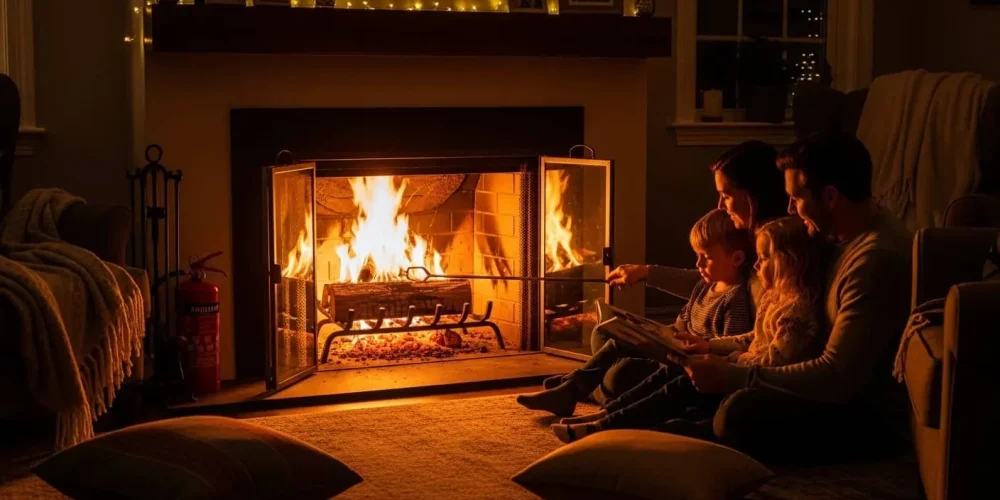
- Glass Doors: If you have a stove, keep the doors latched. Even a “quick” pop-in to stir the coals can send a spark flying onto a hardwood floor or carpet.
- Hearth Pads: Ensure your stove sits on a non-combustible hearth pad that extends at least 18 inches in front of the door. This catches those inevitable “jumpers” when you open the door to add a log.
The Hidden Danger: Ash Disposal and Firewood Safety Indoors
Did you know that wood ashes can stay hot enough to start a fire for up to four days? Never, ever vacuum up “cool” ashes or dump them in a plastic trash can.
- The Metal Bucket Rule: Use a dedicated metal ash bucket with a tight-fitting lid.
- Storage: Place that bucket outside on a non-combustible surface (like concrete or dirt), at least ten feet away from any structures.
The Science of the “Clean Burn” for Firewood Safety Indoors
Firewood safety indoors is largely a matter of chemistry. When wood burns completely, it produces heat, water vapor, and carbon dioxide. When it burns incompletely, it produces carbon monoxide (CO) and creosote.
Hardwood vs. Softwood (Safety Edition)
While we love a good Cedar log for its scent, softwoods contain high amounts of resin. This resin burns very quickly and can “spit” more sparks than hardwoods.
For a safer, more predictable indoor experience, stick to oak, maple, or hickory. They burn more slowly and steadily, reducing the risk of your stove overheating (over-firing).
Carbon Monoxide: The Silent Guest
Every home that burns wood must have a functioning carbon monoxide detector. CO is odorless and colorless.
If your stove isn’t venting properly, or if you have a “tight” modern home with no makeup air, CO can build up. Install detectors on every level of the home, especially near sleeping areas.
The Human Element: Smart Fire Starting for Firewood Safety Indoors
How you build the fire matters as much as what you burn.
- Avoid the “Liquid Shortcut”: Never use gasoline, kerosene, or charcoal lighter fluid to start an indoor fire. The vapors can explode or create a fireball that exits the stove.
- The Top-Down Method: Try placing your large logs on the bottom and your kindling on top. As the kindling burns, it heats the chimney and ignites the logs below more slowly, reducing the initial “smoke-out” that often happens with traditional teepee fires.
- Supervise the Burn: It’s a classic rule for a reason. Never leave a fire unattended. If you’re heading to bed, make sure the stove doors are locked and the air intake is adjusted to a “slow burn” setting rather than wide open.
Why Seasoned Wood Matters for Firewood Safety Indoors
At 12 Point Farms LLC, we don’t just sell wood because it’s a great way to stay warm; we sell seasoned wood because it’s the safest way to stay warm.
When you burn “green” wood, you are essentially asking your chimney to handle a massive amount of steam and unburned fuel (smoke).
This creates a thick layer of creosote. By the time mid-February rolls around, that creosote can ignite, leading to a chimney fire that sounds like a freight train running through your house.
By choosing our seasoned firewood, you’re ensuring:
- Lower Creosote Build-up: Keeping your flue clearer for longer.
- Higher Heat: Which ensures the draft stays strong and pulls toxins out of your home.
- Less Frustration: No more huffing and puffing at a smoldering log, which keeps you from having to keep the stove door open for long periods.
Conclusion: Peace of Mind by the Fire
Living with wood heat is a beautiful, tactile experience. It connects us to the seasons and gives us a sense of security that no power grid can match. But like anything worth doing, it’s worth doing right.
By prioritizing firewood safety indoors, you aren’t just protecting your property; you’re protecting the atmosphere of your home. You’re making sure that the memories made around the fire are only about the warmth and the company—not the hazards.
At 12 Point Farms LLC, we’re here to help you stock your hearth with the best fuel possible, but we’re also here to be a resource for your home’s safety.
Your Home Safety Checklist
- Chimney swept and inspected this season?
- Smoke and Carbon Monoxide detectors tested?
- Metal ash bucket ready and placed outside?
- Hearth rug or non-combustible pad in place?
- 12 Point Farms seasoned hardwood stacked and dry?
Do you have questions or need a guide on which wood species is safest for your specific stove type? Give us a call or stop by the farm. We’d love to help you prep for a safe, cozy winter.