
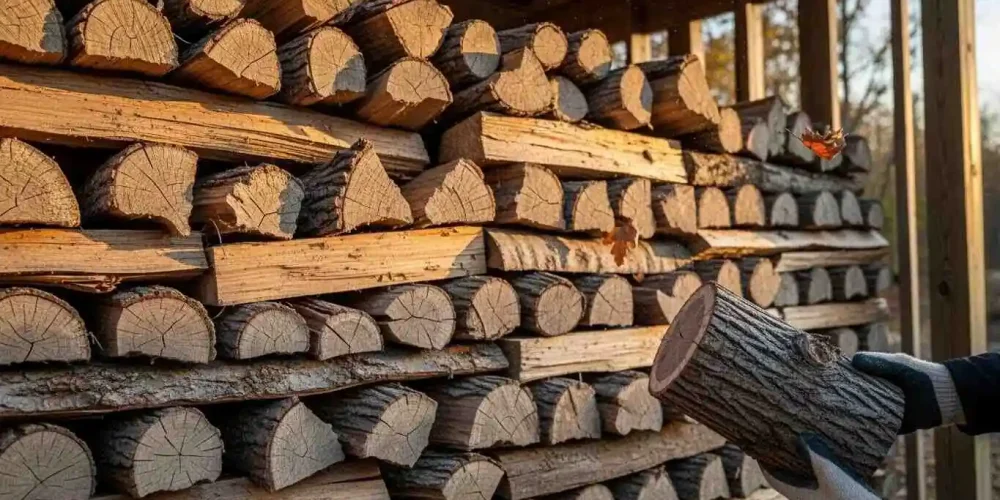
If you’ve ever tried to burn freshly cut firewood, you already know the answer: it doesn’t work very well. The fire smolders, smoke pours out, and you end up frustrated instead of warm. The reason is simple—firewood seasoning time hasn’t been allowed to do its job.
If you’ve ever tried to burn freshly cut firewood, you already know the answer: it doesn’t work very well. The fire smolders, smoke pours out, and you end up frustrated instead of warm.
That’s because firewood needs time to dry. This drying period—called firewood seasoning time is one of the most important parts of burning wood safely and efficiently.
At 12 Point Farms LLC, we deal with wood the way people always have: by cutting it, stacking it, and letting time and air do the work.
So, how long does firewood really need to season before you can burn it? The honest answer is: it depends. Let’s break it down in plain language.
What “Seasoned” Firewood Actually Means
When wood is first cut, it’s full of water. That fresh-cut wood is called green firewood, and it can hold more water than you’d expect—often 40% or more.
Seasoned firewood is simply wood that’s had enough time for that moisture to escape. Once the moisture content drops below about 20%, the wood burns the way it should: hot, steady, and clean.
Seasoned vs Green Firewood (In Real Life)
Green firewood:
- Is heavy
- Smokes a lot
- Hisses when it burns
- Gives off very little heat
Seasoned firewood:
- Feels lighter
- Lights easily
- Burns hotter
- Produces far less smoke
If your fire is struggling, it’s usually not the stove—it’s the wood.
How Long Does Firewood Take to Season?
For most people, the average firewood seasoning time falls between 6 and 12 months. That means if you cut wood this spring, it should be ready by winter—if it’s handled properly.
Here’s a realistic rule of thumb:
- Softwoods: about 6–9 months
- Most hardwoods: 9–12 months
- Dense hardwoods like oak: 12–24 months
Yes, oak can take two full years to season. It’s great firewood—but only if you’re patient.
Hardwood vs Softwood Seasoning Time
Drying Time for Hardwood Firewood
Hardwoods like oak, maple, hickory, and beech are dense. That density is what makes them burn long and hot—but it also means water escapes more slowly.
If you burn hardwood for home heating, expect a longer drying time. Oak is the slowest, while ash and cherry tend to season a bit faster.
Softwood Firewood Drying Time
Softwoods—pine, spruce, fir—dry much faster because they’re less dense. You can often burn them safely within 6 to 9 months.
They light easily and are great for kindling, but they burn faster and don’t give the long, steady heat hardwoods do.
Best Wood for Faster Seasoning
If timing matters, some woods are simply easier to work with.
The best wood for faster seasoning includes:
- Ash: one of the quickest hardwoods to dry
- Birch: dries well if split early
- Cherry: seasons faster than most
- Pine: quick drying but fast burning
These woods won’t replace oak for overnight heat, but they’re great when you need usable firewood sooner.
What Affects Firewood Seasoning Time?
People often ask why one woodpile dries faster than another. It usually comes down to a few simple things.
Key Factors That Affect Firewood Seasoning
- Wood species: denser woods take longer
- Split size: smaller splits dry faster
- Airflow: wind and open space matter
- Sun exposure: sunlight speeds drying
- Humidity: Damp climates slow everything down
One big mistake is leaving logs unsplit. Whole rounds can take years to dry. Splitting early makes a huge difference.
How to Season Firewood the Right Way for Proper Firewood Seasoning Time
You don’t need fancy equipment—just good habits.
1. Cut and split the wood early, ideally in late winter or spring
2. Split it right away, not months later
3. Stack it off the ground so moisture can escape
4. Leave space between rows for air to move
5. Cover only the top, not the sides
If air can move through the stack, the wood will dry. If air can’t, it won’t
Firewood Moisture Content Levels (Without the Guessing)
The best way to know if wood is ready is by checking its moisture content.
- Above 30%: still green
- 20–25%: partly seasoned
- Below 20%: ready to burn
A simple moisture meter takes the guesswork out of it. Just split a piece and test the fresh inside—not the outside.
How to Tell If Firewood Is Seasoned (No Tools Needed)
Even without a meter, seasoned firewood usually shows clear signs:
- Cracks on the ends
- Gray or weathered color
- Feels lighter than expected
- Makes a hollow sound when knocked together
- Burns without hissing or excessive smoke
If your fire smokes more than it heats, the wood likely needs more time.
Why Burning Unseasoned Firewood Is a Bad Idea
Burning wet wood doesn’t just waste your time—it can create real problems:
- Poor heat output
- Heavy smoke
- Faster creosote buildup
- Higher chimney fire risk
Seasoned firewood isn’t about perfection—it’s about safety and efficiency.
Plan Firewood Seasoning Time One Season Ahead
The simplest advice we give at 12 Point Farms LLC is this:
Always be seasoning next year’s firewood. If you stay one season ahead, you’ll never be stuck burning wet wood when the cold hits.
So, how long does firewood need to season before burning?
Most of the time, 6 to 12 months—longer for dense hardwoods, shorter for softwoods.
Split it early, stack it right, and give it time. Do that, and your fires will burn hotter, cleaner, and with far less trouble.