Firewood Cutting Safety
Firewood cutting safety is not something to rush or ignore. Cutting wood may look simple, but one wrong move, dull tool, or poor stance can lead to serious injuries. From choosing the right equipment to understanding proper technique, safety should guide every step of the process. When you follow proven firewood cutting safety practices, you protect your body, work more efficiently, and reduce the risk of accidents that can easily be avoided.
There is something deeply satisfying about a neatly stacked woodpile. It’s more than just fuel; it’s the promise of a warm home and a quiet evening by the fire.
But if you’ve ever spent a Saturday morning with a chainsaw in hand or an axe over your shoulder, you know that the job is as demanding as it is rewarding.
At 12 Point Farms LLC, we live and breathe outdoor life. We’ve spent countless hours in the woods, and if there’s one thing we’ve learned, it’s that nature doesn’t offer second chances.
Whether you’re a seasoned pro or a weekend warrior, firewood cutting safety isn’t just a checklist—it’s the most important tool in your kit.
Respect the Risks: Firewood Cutting Hazards
Before you make that first cut, take a second to look around. The woods can be unpredictable. Wood under tension can “spring” back, and heavy rounds can shift when you least expect them.
Understanding firewood cutting hazards is about staying two steps ahead of the equipment.
- The Kickback Zone: This is the #1 danger with a chainsaw. If the nose of the bar hits a knot or a hidden branch, the saw can kick up and back toward your face faster than you can react.
- The “Widow-Maker”: Always look up. Dead branches hanging in the canopy can be shaken loose by the vibration of your saw.
- Gravity: A 20-inch oak round can weigh over 100 lbs. If you’re cutting on a slope, that log is a rolling hazard the moment it’s severed.
Pro Chainsaw Safety Tips for Firewood
The chainsaw is a marvel of efficiency, but it doesn’t have a brain—you have to be the brain for it. To master chainsaw safety tips for firewood, start with these basics:
Dress for the Job
You wouldn’t go into a forge without an apron, so don’t start a saw without Chainsaw Chaps. These are made of layers of ballistic fibers (like Kevlar) designed to jam the sprocket and stop the chain instantly if you slip. Pair them with eye protection, ear muffs, and sturdy boots.
The “Thumb-Wrap” Grip
One of the most common mistakes is a loose grip. Always wrap your left thumb under the front handle. This “closed-loop” grip ensures that if the saw kicks back, your hand stays on the tool rather than flying off.
Sharpen Often
A dull chain is a dangerous chain. If you’re leaning into the saw to make it cut, stop. A sharp saw should pull itself into the wood. Forcing a dull blade increases your fatigue, and a tired cutter is a vulnerable cutter.
How to Avoid Injuries While Splitting Wood
Splitting wood is a great workout, but it’s also where many “preventable” accidents happen. Learning how to avoid injuries while splitting wood usually comes down to your setup.
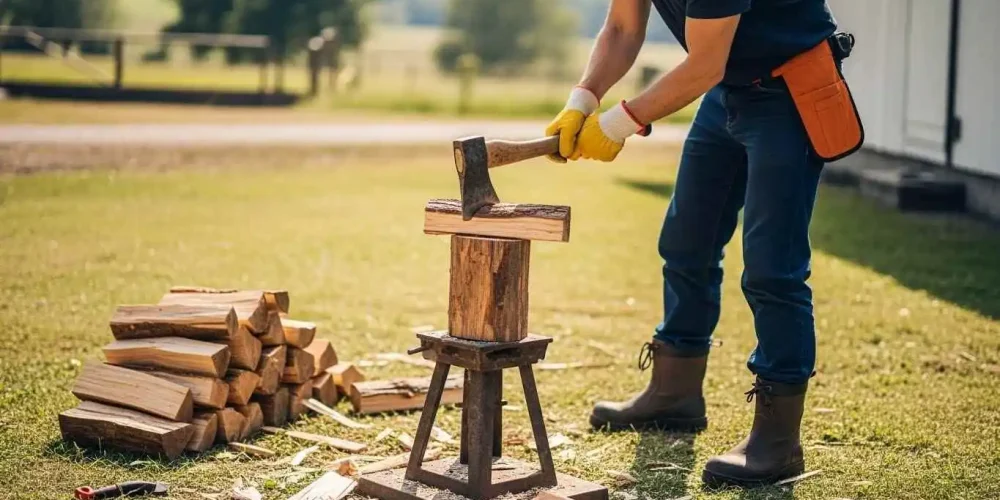
Use a Chopping Block: Never split wood directly on the ground. A solid chopping block (usually a wide, heavy stump) acts as a backstop. If your axe swings through the log, it hits the wood of the block rather than your toes or a rock that could cause a ricochet.
Clear Your Space: Splitting wood is a spectator sport—but from a distance. Make sure kids, pets, and helpers are at least 10 to 15 feet away. A flying wedge or a jagged piece of hickory can travel with surprising speed.
Proper Stance and Grip to Improve Firewood Cutting Safety
If your back is aching after twenty minutes, your form might be off. Using the proper stance and grip for chopping wood makes the job easier and keeps you in control.
The “Athletic” Stance
Stand with your feet slightly wider than your shoulders. When you swing, don’t just use your arms; use your core and legs. As the axe descends, drop your hips slightly. This adds power and ensures that if you miss, the arc of the axe ends in the block, not your shin.
The Sliding Hand
Start your swing with your dominant hand near the head of the axe and your other hand at the bottom of the handle. As you bring the axe down, slide your top hand down to meet the bottom one. This “slide” gives you maximum velocity and much better accuracy.
Firewood Cutting Best Practices: The Pro Approach
To keep your woodpile growing and your limbs intact, follow these firewood cutting best practices:
- Work with a Buddy: Never head into the woods to fell trees alone. If something goes wrong, you need someone there to call for help.
- Uphill is the Safe Hill: When “bucking” (cutting a downed log into segments), always stand on the uphill side. You don’t want a 500-lb log chasing you down the mountain.
- Clear the Trip Hazards: Before you start the saw, spend five minutes clearing away the loose “slash” and vines around your feet. You need a clear path to step back once a cut is finished.
Choosing the Right Tool for the Task: Firewood Cutting Safety
| The Tool | Best For… | Safety Tip |
| Splitting Maul | Large, knotty rounds | Heavy head; let gravity do the work. |
| Splitting Axe | Smaller, straight-grained wood | Keep the blade razor-sharp. |
| Gas Chainsaw | Heavy-duty forest work | Always engage the chain brake when walking. |
| Electric Chainsaw | Backyard cleanup | Watch your cord (if corded) or battery life. |
Let 12 Point Farms LLC Ensure Firewood Cutting Safety
We love the smell of fresh-cut wood as much as anyone, but we also know that life gets busy. Sometimes, you just want the warmth without the risk of a back strain or a chainsaw mishap.
At 12 Point Farms LLC, we take the “hazard” out of your winter prep. We handle the felling, the bucking, and the splitting with professional-grade equipment and years of experience. When you buy from us, you’re getting:
- Safety First: No dangerous DIY projects required.
- Perfectly Seasoned Wood: Our wood is dried to the ideal moisture content, so it lights easily and burns hot.
- Premium Selection: We stock the best hardwoods like Oak and Hickory for long-lasting fires.
Ready for a Stress-Free Winter?
Why spend your weekend dodging “widow-makers” and hauling heavy logs? You can browse our current inventory of premium firewood and have it delivered straight to your driveway.Visit our Shop to Order Your Seasoned Firewood Delivery Today!